Assam Governor reviews Lok Bhavan welfare schemes, pushes for transparency
Synopsis
Assam Governor Lakshman Prasad Acharya called out a persistent gap in welfare delivery at a Lok Bhavan review meeting on 25 June — directing officials to build real monitoring muscle, not just run awareness drives. With last-mile delivery still a weak link in state welfare administration, the push for accountability frameworks signals the Raj Bhavan is watching closely.
Key Takeaways
Assam Governor Lakshman Prasad Acharya chaired a welfare scheme review at Lok Bhavan, Guwahati on 25 June 2025 .
The Governor directed officials to ensure efficient, transparent, and time-bound delivery of welfare benefits across Assam.
Schemes are framed around PM Modi 's people-centric governance vision and the Antyodaya principle.
Officials were directed to intensify public awareness campaigns and establish a robust monitoring mechanism .
Commissioner and Secretary S.S.
Meenakshi Sundaram and senior Lok Bhavan officers attended and briefed the Governor.
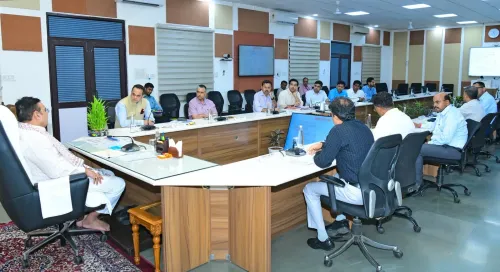
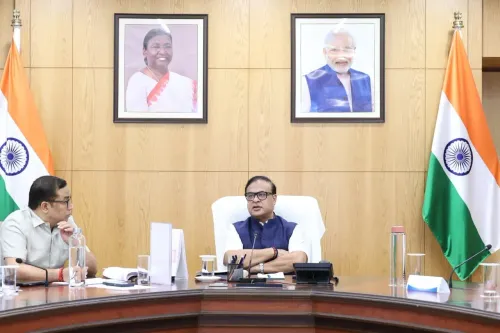
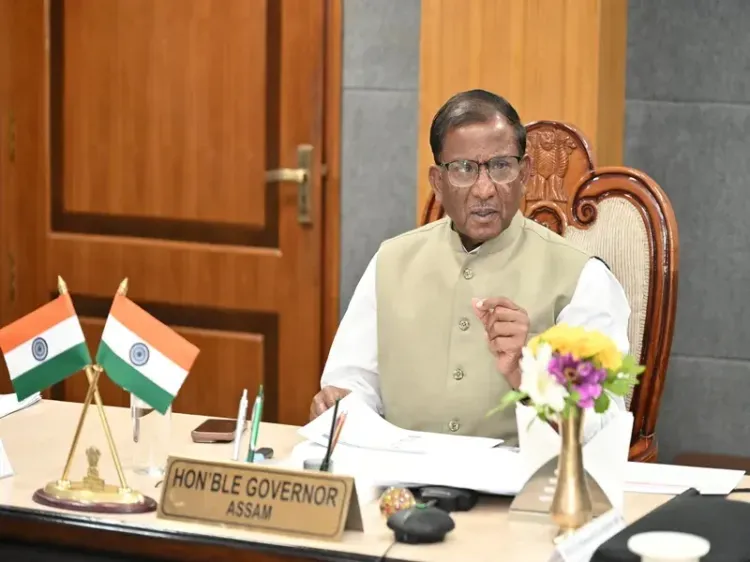
Assam Governor Lakshman Prasad Acharya on Thursday, 25 June chaired a review meeting at Lok Bhavan in Guwahati to assess the implementation of welfare schemes and public outreach programmes, directing officials to ensure efficient, transparent, and time-bound delivery of benefits to citizens across the state.
What the Review Covered
The Governor examined the progress, reach, and effectiveness of ongoing welfare initiatives being executed through Lok Bhavan. He noted that the schemes have been designed in alignment with Prime Minister Narendra Modi's vision of people-centric governance and the principle of Antyodaya — the idea of uplifting the last person in the queue — with the goal of delivering measurable improvements in beneficiaries' lives.
Key Directives Issued
Acharya stressed that welfare programmes must be executed with greater efficiency, accountability, and transparency so that intended beneficiaries receive assistance without delay. He called for intensified public awareness campaigns, improved accessibility to government initiatives, and the establishment of a robust monitoring mechanism. The Governor also emphasised adopting a more citizen-centric approach in programme execution.
He urged all officers and staff associated with Lok Bhavan to work with dedication toward the broader objective of inclusive development and public welfare across Assam.
Officials Present
Commissioner and Secretary to the Governor S.S. Meenakshi Sundaram, along with senior officers and staff of Lok Bhavan, attended the meeting and briefed the Governor on the status of ongoing schemes and outreach initiatives.
Why This Review Matters
The meeting comes as the state government continues to focus on strengthening last-mile delivery of welfare schemes and improving public service mechanisms through better administrative coordination and monitoring. Notably, last-mile delivery gaps have remained a recurring challenge in welfare administration across several Indian states, making accountability frameworks critical to actual impact.
Acharya reiterated that effective implementation, transparency, and continuous monitoring would be central to ensuring that the benefits of government welfare programmes reach every eligible citizen in the state. Further reviews are expected as the administration tracks progress on the ground.
Point of View
But the specificity of Acharya's directives — monitoring mechanisms, citizen-centric execution, intensified awareness drives — suggests the Raj Bhavan has identified concrete gaps rather than issuing boilerplate instructions. The invocation of Antyodaya is politically significant: it ties Lok Bhavan's agenda directly to the Centre's framing, which could accelerate administrative compliance from state machinery. The real question is whether these directives translate into verifiable outcome metrics or remain aspirational. Welfare scheme reviews in India frequently produce directives; what they rarely produce is a public accountability trail.
NationPress
24 Sept 2026
Frequently Asked Questions
What did Assam Governor Lakshman Prasad Acharya review on 25 June?
Governor Acharya chaired a review meeting at Lok Bhavan in Guwahati on 25 June to assess the implementation, progress, and effectiveness of welfare schemes and public outreach programmes being run through Lok Bhavan. He directed officials to ensure transparent and time-bound delivery of benefits to citizens.
What directives did the Assam Governor issue to officials?
The Governor directed officials to intensify public awareness campaigns, improve accessibility to government schemes, and establish a robust monitoring mechanism for effective implementation. He also stressed the need for greater efficiency, accountability, and a citizen-centric approach in executing welfare programmes.
What is the Antyodaya principle referred to in the meeting?
Antyodaya is a governance principle focused on prioritising the welfare of the most marginalised sections of society — literally meaning 'rise of the last person.' Governor Acharya noted that Lok Bhavan's welfare schemes are conceptualised around this principle and PM Modi's vision of people-centric governance.
Who attended the Lok Bhavan welfare review meeting?
Commissioner and Secretary to the Governor S.S. Meenakshi Sundaram attended the meeting along with senior officers and staff of Lok Bhavan. They briefed the Governor on the status of ongoing schemes and outreach initiatives.
Why is last-mile delivery of welfare schemes significant in Assam?
Last-mile delivery — ensuring benefits actually reach intended beneficiaries at the grassroots level — remains a persistent challenge in welfare administration across Indian states, including Assam. The Governor's emphasis on monitoring and accountability reflects a broader effort to close the gap between scheme design and on-ground impact.