Assam CM Office: Canopy Bridges Aid Golden Langurs
Synopsis
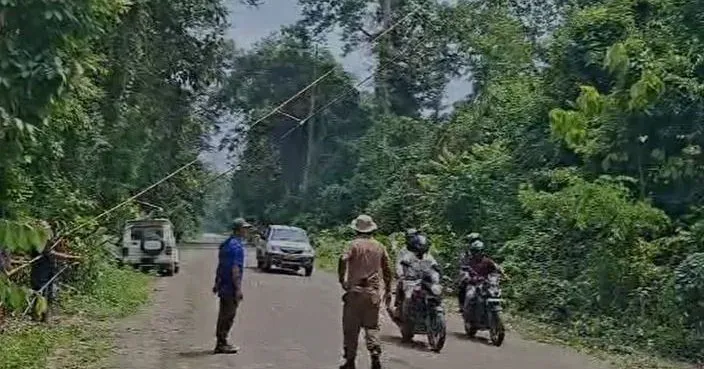
Canopy bridges installed along Assam's Bismuri–Saralpara Road are providing safe aerial crossings for the endangered Golden Langur, the Chief Minister's Office highlighted on June 20, 2026 — blending road connectivity with Schedule I species conservation in a model that could spread across Northeast India.
Key Takeaways
The Chief Minister's Office of Assam on June 20, 2026 spotlighted canopy bridges on the Bismuri–Saralpara Road designed for endangered Golden Langurs .
The Golden Langur is listed under Schedule I of India's Wildlife (Protection) Act, 1972 , the highest protection category.
The bridges allow arboreal primates to cross above traffic, addressing habitat fragmentation caused by road infrastructure.
Manas National Park , a UNESCO World Heritage Site in western Assam , is the primary protected habitat of the species.
If usage data validates effectiveness, similar canopy structures could be rolled out on additional roads within the Golden Langur range.
The initiative aligns with India's national biodiversity frameworks emphasising ecological corridors alongside development projects.
The Chief Minister's Office of Assam on Saturday, June 20, 2026 highlighted a conservation initiative along the Bismuri–Saralpara Road, where canopy bridges have been installed to protect the endangered Golden Langur — a move the office described as 'a remarkable blend of conservation and connectivity.'
Context
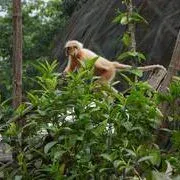
The canopy bridges along the Bismuri–Saralpara Road in Assam are designed to allow Golden Langurs to cross safely above the road, preventing habitat fragmentation caused by the linear infrastructure cutting through their forest range. The Golden Langur (Trachypithecus geei) is one of India's most endangered primates, found almost exclusively in a narrow belt of western Assam and the adjoining foothills of Bhutan.
Under India's Wildlife (Protection) Act, 1972, the Golden Langur is listed under Schedule I, affording it the highest level of legal protection. Despite this, road expansion and agricultural encroachment have steadily eroded the connectivity between forest patches the species depends on for foraging and breeding.
Policy Backdrop
Chief Minister Himanta Biswa Sarma, who has led Assam since 2021, has positioned the state as an active participant in integrating wildlife safeguards into infrastructure planning. The Bismuri–Saralpara initiative reflects a broader national push to embed wildlife crossings — including canopy bridges, underpasses, and culverts — into road projects across biodiversity-rich Northeast India.
Comparable canopy bridge installations have been deployed elsewhere in India for arboreal primates, particularly in landscapes where road widening or new alignments bisect contiguous forest. The approach is consistent with India's commitments under national biodiversity frameworks, which call for maintaining ecological corridors alongside economic development goals.
Manas National Park, a UNESCO World Heritage Site in western Assam, anchors the primary habitat of the Golden Langur. Conservation efforts in the region increasingly focus on maintaining forest connectivity between protected areas and community forests beyond park boundaries — precisely the challenge that canopy bridges on roads like Bismuri–Saralpara seek to address.
Stakeholders and Impact
Wildlife conservation organisations working in the Golden Langur range have long advocated for infrastructure mitigation measures, arguing that even short road stretches can sever arboreal movement corridors and isolate primate populations. Rural communities living alongside the road also stand to benefit from reduced human–wildlife conflict that can arise when animals are forced to descend to ground level to cross roads.
The state forest department and wildlife NGOs active in western Assam are among the key stakeholders monitoring whether the bridges are being used by the target species, a step critical to validating the model for replication on other roads within the Golden Langur's range.
What's Next
Wildlife managers and conservationists will be watching for population monitoring data from state forest surveys that could quantify the bridges' effectiveness in maintaining gene flow between fragmented Golden Langur groups. If usage data proves positive, similar canopy structures could be extended to additional roads passing through the species' habitat corridor.
The Bismuri–Saralpara model, if validated, could serve as a replicable template for other Northeast Indian states grappling with the same tension between expanding road networks and protecting Schedule I species — setting a precedent for how infrastructure and conservation can be co-designed rather than treated as competing priorities.
Point of View
The Himanta Biswa Sarma administration is also making a deliberate political statement: that development and ecology need not be adversarial in Northeast India. The broader significance lies in whether this becomes a mandated standard for road projects in primate habitats, or remains a one-off showcase. Monitoring data from state forest surveys in the coming months will be the real test of whether the bridges deliver measurable conservation outcomes.
NationPress
19 Sept 2026
Frequently Asked Questions
What are canopy bridges and how do they help Golden Langurs in Assam?
Canopy bridges are rope or cable structures strung above roads that allow arboreal animals like the Golden Langur to move between forest patches without descending to the ground and risking road traffic. On the Bismuri–Saralpara Road in Assam , these bridges help maintain habitat connectivity for one of India's most endangered primates.
Why is the Golden Langur endangered?
The Golden Langur ( Trachypithecus geei ) is endangered primarily due to habitat loss, deforestation, and fragmentation of its narrow forest range in western Assam and adjoining Bhutan foothills. It is listed under Schedule I of India's Wildlife (Protection) Act, 1972 , which mandates strict protection.
Where is the Bismuri–Saralpara Road located?
The Bismuri–Saralpara Road is located in western Assam , within or near the habitat range of the Golden Langur , which overlaps with the landscape surrounding Manas National Park , a UNESCO World Heritage Site .
What is the Assam government doing for wildlife conservation?
Under Chief Minister Himanta Biswa Sarma , Assam has been integrating wildlife protection measures into infrastructure projects, including the installation of canopy bridges on roads that pass through primate habitats, consistent with India's national biodiversity commitments.
Can canopy bridges be used for other animals in Northeast India?
Yes, canopy bridges and similar wildlife crossings have been used for various arboreal species across India. In Northeast India , where biodiversity is especially rich, the model could be extended to other roads and other species if monitoring data from the Bismuri–Saralpara installation confirms effective usage by target animals.