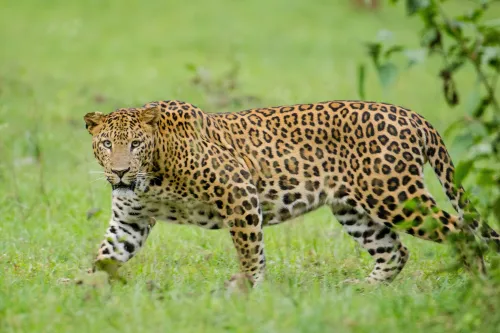
CM Himanta flags Assam's first Black Panther camera-trap sighting
Synopsis
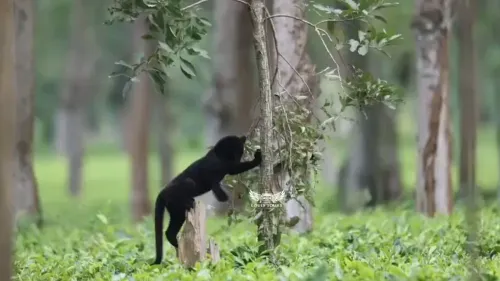
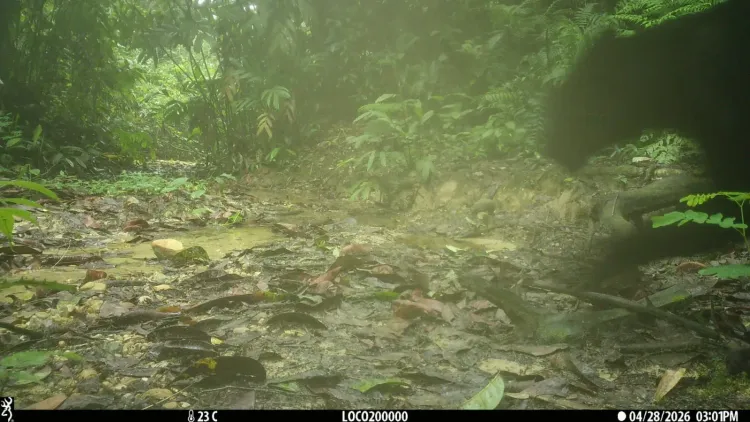
A Black Panther has been captured on a camera trap in Lakhimpur's Dulung Reserve Forest — the first such sighting in the area. Assam Chief Minister Himanta Biswa Sarma called it a 'rare and remarkable' find, crediting sustained conservation efforts for protecting the state's wildlife habitats.
Key Takeaways
A Black Panther (melanistic leopard) was recorded on a camera trap in Dulung Reserve Forest , Lakhimpur district , Assam — a first for the area.
Assam Chief Minister Himanta Biswa Sarma shared the news on 15 June 2026 , calling it a 'rare and remarkable sighting.' The sighting is attributed to the Assam Forest Department's expanding camera-trap network across the state's reserve forests.
Black Panthers are melanistic variants of the leopard and are among the hardest large carnivores to document in the wild.
The record is expected to contribute to national leopard population assessments coordinated by the Wildlife Institute of India and the National Tiger Conservation Authority .
Authorities may use the data to propose expanded camera-trap grids and corridor protection in Lakhimpur and neighbouring districts.
Assam Chief Minister Himanta Biswa Sarma on Monday, 15 June 2026, announced that a Black Panther has been recorded on a camera trap in the Dulung Reserve Forest in Lakhimpur district — the first such documented sighting in the area, underscoring the biodiversity value of the state's protected forest network.
Context
A Black Panther is a melanistic variant of the leopard (Panthera pardus), characterised by dark pigmentation that makes it exceptionally difficult to spot in the wild. Camera-trap imagery is often the only reliable method to confirm its presence in dense forest cover. Lakhimpur, located in upper Assam, contains several reserve forests that border the foothills of Arunachal Pradesh and form part of a larger wildlife corridor in the Brahmaputra valley.
Chief Minister Sarma described the sighting as 'a rare and remarkable' event, adding that 'the presence of this elusive predator highlights the ecological significance of our reserve forests and reflects the success of sustained conservation efforts in protecting Assam's wildlife habitats.'
Policy Backdrop
The Assam Forest Department has steadily expanded its camera-trap network across the state's reserve forests over recent years, with the goal of documenting elusive carnivores and mapping habitat connectivity. These efforts complement nationwide species-monitoring protocols coordinated by the Wildlife Institute of India and the National Tiger Conservation Authority, which conduct periodic all-India leopard population assessments.
Melanistic leopards are rarely captured in official surveys because their dark coats make visual detection and photographic identification considerably harder than for normally patterned individuals. A confirmed camera-trap record therefore carries significant weight in population and distribution studies.
Stakeholders and Impact
Assam Forest Department field staff and wildlife researchers stand at the centre of this development, as the sighting validates the department's investment in ground-level monitoring infrastructure. For local communities living near Dulung Reserve Forest, the confirmation of a large predator in the area may prompt renewed attention to human-wildlife interface management.
Conservation scientists working on big-cat corridor protection in northeastern India are likely to view the record as evidence that habitat in Lakhimpur and its adjoining districts retains the ecological integrity needed to support apex predators. The finding may also strengthen the case for extending camera-trap grids to neighbouring forest patches to map the animal's range more precisely.
What's Next
Wildlife authorities are expected to analyse the camera-trap images to assess whether the individual is a resident or a transient moving through the corridor. The data could feed into the next All India Leopard Estimation exercise and inform any state proposals for enhanced corridor protection in Lakhimpur and adjoining districts.
The sighting adds to a growing body of evidence that sustained, evidence-based conservation in Assam's reserve forests is yielding measurable results — and raises the prospect of more systematic surveys to document the full extent of the melanistic leopard's presence in the region.
Point of View
And a verified melanistic leopard record in Lakhimpur puts the region's habitat quality on the scientific map. For the BJP-led state government, which has framed forest protection as part of its broader development narrative in Assam, the announcement serves a dual purpose: validating departmental investment in camera-trap infrastructure and projecting ecological stewardship ahead of future policy discussions on corridor protection. The real test will be whether this sighting translates into expanded survey grids and formal habitat-connectivity proposals.
NationPress
15 Sept 2026
Frequently Asked Questions
What is a Black Panther and why is the Assam sighting significant?
A Black Panther is a melanistic leopard with dark pigmentation that makes it extremely difficult to spot. The camera-trap record in Dulung Reserve Forest, Lakhimpur is the first documented sighting of this kind in the area, making it a landmark moment for wildlife monitoring in Assam.
Where exactly was the Black Panther spotted in Assam?
The Black Panther was captured on a camera trap in Dulung Reserve Forest in Lakhimpur district , located in upper Assam near the foothills bordering Arunachal Pradesh.
Who announced the Black Panther sighting in Assam?
Assam Chief Minister Himanta Biswa Sarma announced the sighting on 15 June 2026 via a post on X, sharing images from the camera trap and calling it a 'rare and remarkable' find.
What conservation efforts led to this Black Panther sighting in Assam?
The Assam Forest Department has been expanding its camera-trap network across reserve forests to monitor elusive carnivores. These efforts align with national protocols overseen by the Wildlife Institute of India and the National Tiger Conservation Authority.
What happens next after the Black Panther is found in Lakhimpur?
Wildlife authorities are expected to study the images to determine if the animal is a resident or transient, and the data may inform the next All India Leopard Estimation exercise as well as proposals for corridor protection in Lakhimpur and neighbouring districts.