CM Himanta flags Assam's pygmy hog rescue on Mann ki Baat
Synopsis
Prime Minister Modi spotlighted Assam's long-running pygmy hog captive breeding and reintroduction effort on Mann ki Baat, with CM Himanta Biswa Sarma amplifying the recognition — putting one of India's rarest mammals back in the national conversation.
Key Takeaways
CM Himanta Biswa Sarma shared PM Narendra Modi 's Mann ki Baat mention of Assam's pygmy hog conservation work on 29 September 2026 .
The pygmy hog is critically endangered and found almost exclusively in Assam's tall grassland habitats.
Assam's forest department has run captive breeding and reintroduction programmes for the species over multiple decades .
Mann ki Baat , launched in October 2014 , is used by the Prime Minister to give national visibility to state-level achievements.
The recognition aligns with the central government's pattern of using mass-media platforms to highlight biodiversity projects in the northeast.
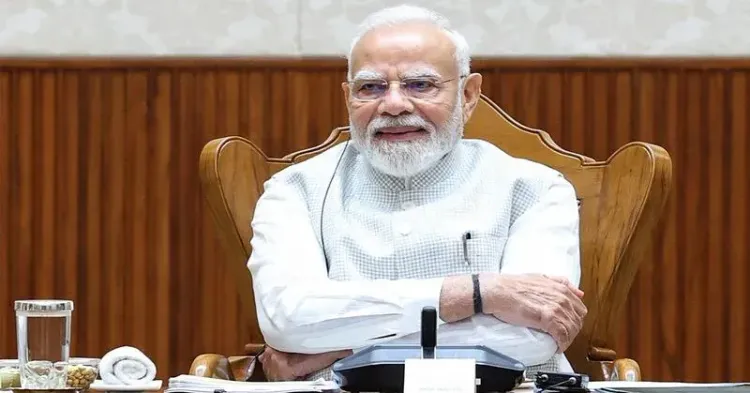
The world's smallest and rarest wild pig — the pygmy hog — is making a quiet comeback in Assam, and Prime Minister Narendra Modi made sure the country heard about it. Assam Chief Minister Himanta Biswa Sarma shared the moment on Tuesday, 29 September 2026, amplifying the PM's spotlight on the state's conservation work through the monthly radio address Mann ki Baat.
A critically endangered species, decades in the making
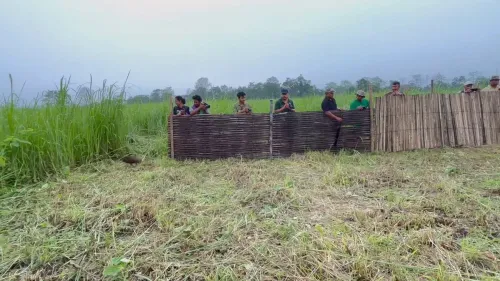
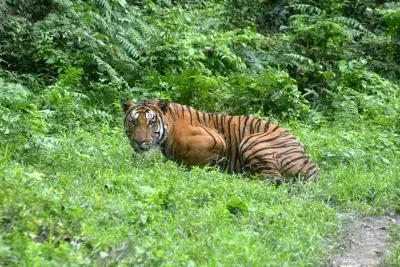
The pygmy hog (Porcula salvania) is found almost exclusively in Assam's tall grasslands — a habitat that has shrunk dramatically over the past century. Classified as critically endangered, the species once teetered on the edge of extinction before Assam's forest department and wildlife conservation groups launched sustained captive breeding and reintroduction programmes that have spanned multiple decades.
These efforts represent one of India's most patient conservation bets: breeding animals in controlled environments, then releasing them into protected grassland corridors in the hope that wild populations can stabilise. The work is painstaking, slow, and rarely makes national headlines — until a platform like Mann ki Baat intervenes.
Why a PM radio address changes the conservation calculus
Mann ki Baat, the Prime Minister's monthly radio programme, has been broadcast since October 2014. Its reach across rural and semi-urban India makes it a uniquely powerful megaphone for state-level initiatives that would otherwise stay confined to specialist circles. When Modi names a specific biodiversity project on air, it signals central recognition — and often unlocks renewed administrative attention and public curiosity.
For Assam, the mention is more than ceremonial. The state's north-eastern grasslands are a globally significant biodiversity hotspot, and external visibility can translate into stronger funding pipelines and inter-agency cooperation. CM Sarma's decision to share the Mann ki Baat reference on social media extends that reach further, framing the conservation story as a point of state pride within the BJP's broader governance narrative.
Assam's role in India's northeast biodiversity push
As convenor of the North-East Democratic Alliance (NEDA), Sarma has positioned Assam as the anchor state for the region's development and ecological agenda. Highlighting the pygmy hog programme fits a pattern: using national platforms to draw attention to northeast India's unique natural heritage while reinforcing the state government's administrative credibility on environment issues.
The broader signal is clear — conservation in India's northeast is no longer a quiet departmental affair. It is being woven into the national political conversation, one radio episode at a time.
If the pygmy hog's recovery holds, Assam's grasslands may yet write one of Indian wildlife conservation's most unlikely success stories.
Point of View
Amplifying the mention serves a dual purpose: it validates years of quiet departmental work and reinforces his own positioning as a steward of Assam's ecological identity. The move also reflects a maturing conservation-communication strategy, where field-level wildlife recovery is increasingly packaged as a governance deliverable rather than a niche scientific achievement. Watch whether the spotlight translates into measurable policy follow-through — funding, habitat protection orders, or inter-state grassland corridor agreements.
NationPress
29 Sept 2026
Frequently Asked Questions
What is the pygmy hog and why is it endangered?
The pygmy hog is the world's smallest wild pig, found almost exclusively in Assam's tall grasslands. It is classified as critically endangered due to severe habitat loss as its native grassland ecosystem has shrunk over the past century.
What is Assam doing to save the pygmy hog?
Assam's forest department, in partnership with wildlife conservation groups, has run captive breeding and reintroduction programmes for the pygmy hog spanning multiple decades, releasing bred animals into protected grassland corridors.
Why did PM Modi mention the pygmy hog on Mann ki Baat?
PM Modi used his monthly Mann ki Baat radio address to highlight Assam's conservation efforts, a practice the programme has followed since 2014 to give national visibility to state-level environmental and governance achievements.
What is Mann ki Baat and when did it start?
Mann ki Baat is a monthly radio address by Prime Minister Narendra Modi, launched in October 2014, used to discuss public issues and showcase initiatives from across India to a wide national audience.
Where is the pygmy hog found in India?
The pygmy hog is found almost exclusively in the tall grasslands of Assam in northeastern India, making the state's conservation programmes critical to the species' global survival.