CM Himanta Flags Rare Albino Hog Deer at Kaziranga
Synopsis
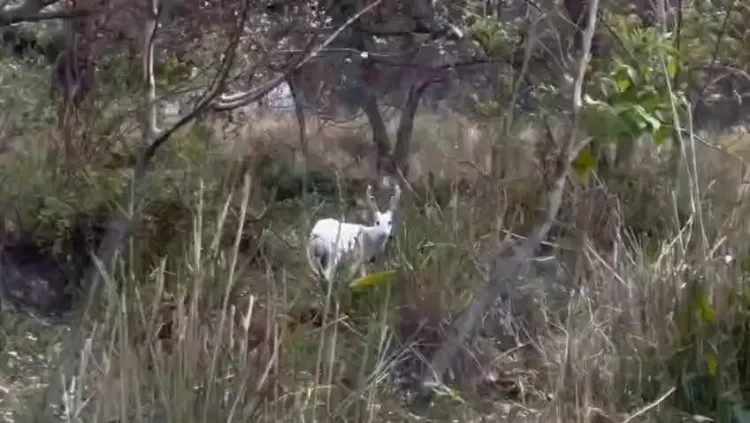
Assam Chief Minister Himanta Biswa Sarma shared footage of an albino hog deer at Kaziranga National Park on 27 May 2026, calling the rare sighting a reflection of Assam's conservation resolve and the state's commitment to protecting even the rarest species.
Key Takeaways
Assam CM Himanta Biswa Sarma shared a video of a rare albino hog deer spotted at Kaziranga National Park on 27 May 2026 .
Albinism in hog deer is a rare genetic occurrence, typically seen only in long-protected, stable wildlife populations.
Kaziranga is a UNESCO World Heritage Site and a Project Tiger reserve, offering the hog deer dual layers of legal protection since 1974 .
The hog deer is listed under Schedule I of India's Wildlife Protection Act, 1972 , the highest category of legal protection.
Conservation authorities and wildlife researchers are expected to document and monitor the individual ahead of the next Kaziranga wildlife census.
Assam Chief Minister Himanta Biswa Sarma on Tuesday, 27 May 2026, shared a video of an albino hog deer spotted inside Kaziranga National Park, calling the sighting a symbol of the richness of Assam's wildlife and reaffirming the state's commitment to conserving even the rarest species.
Context
Albinism — a rare genetic condition that results in little or no pigmentation — is occasionally documented in wildlife populations that have been under sustained protection for decades. The hog deer (Axis porcinus) is a Schedule I species under India's Wildlife Protection Act, 1972, and Kaziranga is one of its last significant strongholds. The appearance of an albino individual within the park is considered a marker of a stable, breeding population.
Sarma wrote on X: 'Not every day does one witness something this rare. The sighting of an albino hog deer in Kaziranga stands as a symbol of the richness of our wildlife. It highlights our resolve to conserve and ensure that even the rarest species continue to thrive in the forests of Assam.'
Policy Backdrop
Kaziranga National Park, a UNESCO World Heritage Site, was first designated a reserve forest in 1905 and elevated to national park status in 1974. It was subsequently included under Project Tiger, launched in 1973, giving it the dual protection of a tiger reserve and a UNESCO-listed habitat. These overlapping frameworks have collectively underpinned anti-poaching operations and habitat management across the park's roughly 430 sq km core area.
Successive Assam governments have maintained the park's protected-area status in line with central biodiversity policy. The state has periodically deployed additional anti-poaching units and invested in flood-mitigation corridors — critical because annual Brahmaputra floods temporarily inundate large sections of the park, forcing wildlife onto higher ground and increasing vulnerability to poaching.
Stakeholders and Impact
Conservation authorities, wildlife researchers, and tourism operators are the most immediate stakeholders. A confirmed albino sighting typically draws significant scientific and public interest, with potential to boost eco-tourism in the Golaghat and Nagaon districts that border the park. Wildlife biologists may seek to document and monitor the individual to track its survival prospects, as albino animals can face higher predation risk due to reduced camouflage.
For the North-East Democratic Alliance (NEDA), of which Sarma serves as convenor, high-profile conservation moments also carry political resonance — reinforcing the BJP-led government's environmental stewardship credentials in a region where forest cover and biodiversity are deeply tied to local identity and livelihoods.
What's Next
Wildlife officials are expected to log the sighting in Kaziranga's biodiversity records ahead of the next scheduled wildlife census. Conservationists will watch whether the state's upcoming budget allocations reflect increased investment in park infrastructure, anti-poaching technology, and flood-resilience measures — all of which directly determine whether rare genetic variants like this albino hog deer can survive to maturity. The sighting adds fresh momentum to ongoing calls for expanded buffer zones around the park.
Point of View
' the Chief Minister signals continuity with established national policy while claiming local ownership of outcomes. The albino sighting, rare as it is, serves as tangible evidence that decades of protected-area investment are yielding biodiversity dividends. Analysts will note that such moments also reinforce NEDA's broader Northeast governance narrative ahead of any electoral or policy cycle.
NationPress
22 Sept 2026
Frequently Asked Questions
What is an albino hog deer and why is it rare?
An albino hog deer is a hog deer born with a genetic condition that causes little or no pigmentation, resulting in a white or pale appearance. It is extremely rare because albinism occurs due to a recessive gene, and such animals also face higher predation risk, making survival to adulthood uncommon.
Where was the albino hog deer spotted?
The albino hog deer was spotted inside Kaziranga National Park in Assam, a UNESCO World Heritage Site and one of the most protected wildlife habitats in India.
What is the conservation status of hog deer in India?
The hog deer is listed under Schedule I of India's Wildlife Protection Act, 1972, which provides it the highest level of legal protection, prohibiting hunting, poaching, or trade.
What did Assam CM Himanta Biswa Sarma say about the sighting?
CM Sarma said the sighting 'stands as a symbol of the richness of our wildlife' and highlighted the state's 'resolve to conserve and ensure that even the rarest species continue to thrive in the forests of Assam.'
Why is Kaziranga National Park significant for wildlife conservation?
Kaziranga National Park is a UNESCO World Heritage Site established as a national park in 1974 and included under Project Tiger. It is globally known for its population of one-horned rhinoceros, tigers, and hog deer, and represents one of India's most successful conservation ecosystems.