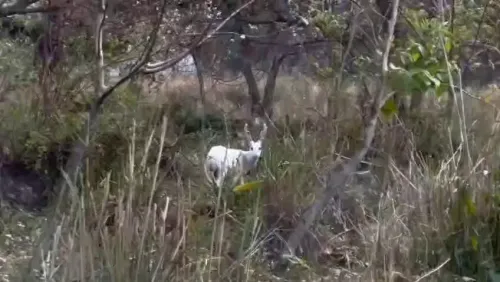
CM Assam Office Flags Rare Albino Hog Deer at Kaziranga

Synopsis
The Chief Minister's Office of Assam flagged the sighting of a rare albino hog deer at Kaziranga National Park on 27 May 2026, describing it as proof of the state's conservation achievements. Kaziranga, a UNESCO World Heritage Site, is home to the world's largest one-horned rhino population and a wide range of endangered ungulates.
Key Takeaways
The Chief Minister's Office of Assam shared the rare albino hog deer sighting on 27 May 2026 .
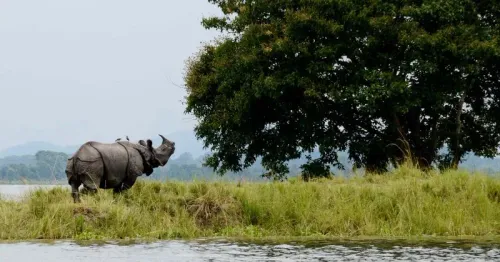
Kaziranga National Park is a UNESCO World Heritage Site (inscribed 1985 ) and hosts the world's largest population of the Indian one-horned rhinoceros .
The hog deer ( Axis porcinus ) is classified as Endangered on the IUCN Red List, making an albino individual especially notable.
Assam's wildlife management model combines the Wildlife Protection Act, 1972 with centrally sponsored schemes such as Project Tiger .
The sighting aligns with India's reporting obligations under the Convention on Biological Diversity and the National Biodiversity Action Plan .
The next Kaziranga mega-herbivore census and legislative budget allocations will shape how such rare events are systematically recorded.
The Chief Minister's Office of Assam on Wednesday, 27 May 2026 highlighted the sighting of a rare albino hog deer inside Kaziranga National Park, calling it 'a breathtaking reminder of Assam's unmatched wildlife richness and conservation success.'
Context
Albinism in wild deer is an exceptionally uncommon genetic condition, making any confirmed sighting a significant event for field researchers and conservationists. The hog deer (Axis porcinus), a medium-sized ungulate native to the floodplain grasslands of South and Southeast Asia, is already classified as Endangered on the IUCN Red List, lending added weight to the observation. The sighting was accompanied by an image shared directly from the official CMO account, amplifying its reach among wildlife and policy audiences.Policy Backdrop
Kaziranga National Park, a UNESCO World Heritage Site since 1985, spans the Brahmaputra floodplain in central Assam and is best known for hosting the world's largest population of the Indian one-horned rhinoceros. Declared a national park in 1974 under the framework of the Wildlife Protection Act, 1972, the park has since expanded its mandate to protect a wide spectrum of ungulates, large cats, and avifauna. Assam's rhino conservation programme, intensified after 2005, demonstrated that sustained anti-poaching operations and community-based habitat management can yield measurable population recovery — a template now cited in broader national wildlife planning. India's centrally sponsored schemes, including Project Tiger and the Integrated Development of Wildlife Habitats, have channelled resources into buffer-zone management and wildlife corridors across the Eastern Himalayas biodiversity hotspot. Kaziranga's model of combining strict protection with controlled eco-tourism has become a reference point for other high-biodiversity states. The Government of Assam has increasingly used verified rare sightings to communicate conservation outcomes to national and international audiences, consistent with India's reporting obligations under the Convention on Biological Diversity and its updated National Biodiversity Action Plan.Stakeholders and Impact
For wildlife conservationists and researchers, an albino hog deer sighting reinforces that Kaziranga's grassland and wetland habitats remain healthy enough to support genetically diverse populations. Eco-tourism operators in the Golaghat and Nagaon districts, which border the park, stand to benefit from heightened public interest generated by such rare observations. Fringe communities whose livelihoods are tied to forest produce and tourism also have a direct stake in the park's ecological integrity, as a thriving wildlife population underpins the area's long-term economic appeal.What's Next
Attention will now turn to the results of Kaziranga's next mega-herbivore census, which tracks population trends across rhinos, elephants, and deer species including the hog deer. Any supplementary budget allocations announced in the Assam Legislative Assembly for park infrastructure, camera-trap networks, and genetic research could determine how systematically such rare sightings are documented going forward. The sighting also offers an opportunity for the state to push for updated IUCN assessments and to strengthen the scientific case for expanding protected corridors along the Brahmaputra floodplain.Point of View
And attaching the albino hog deer narrative to that legacy reinforces a broader arc of ecological governance success. The move also dovetails with India's push to demonstrate progress under its updated National Biodiversity Action Plan ahead of global reviews. Whether it translates into concrete policy action — expanded corridors, larger census budgets, or genetic research programmes — will be the real test of intent.
NationPress
20 Sept 2026
Frequently Asked Questions
What is an albino hog deer and why is the Kaziranga sighting significant?
An albino hog deer is an individual of the species Axis porcinus that lacks normal pigmentation due to a rare genetic condition. The sighting is significant because hog deer are already classified as Endangered on the IUCN Red List, and albinism in wild populations is extremely uncommon, suggesting the habitat at Kaziranga is healthy enough to sustain genetically diverse herds.
Where is Kaziranga National Park located?
Kaziranga National Park is located in central Assam , northeastern India, straddling the Golaghat and Nagaon districts along the southern bank of the Brahmaputra river. It was declared a national park in 1974 and became a UNESCO World Heritage Site in 1985 .
What animals is Kaziranga National Park known for?
Kaziranga is best known for hosting the world's largest population of the Indian one-horned rhinoceros . It also supports significant populations of elephants, tigers, wild water buffalo, swamp deer, and various ungulates including the hog deer, making it one of India's most biodiverse protected areas.
How does the Government of Assam protect wildlife in Kaziranga?
The Government of Assam manages Kaziranga through anti-poaching operations, community-based habitat protection, and controlled eco-tourism under the legal framework of the Wildlife Protection Act, 1972 . The state also draws on centrally sponsored schemes such as Project Tiger and the Integrated Development of Wildlife Habitats for funding and technical support.
What is India's obligation under the Convention on Biological Diversity?
India is a signatory to the Convention on Biological Diversity and is required to periodically report on the status of its ecosystems, species, and genetic resources through its National Biodiversity Action Plan . Publicising rare wildlife sightings and conservation outcomes, such as the albino hog deer at Kaziranga, contributes to the evidence base for these international reporting obligations.