CM Assam Launches Swachh Abhiyan 2.0 to Clean Up Guwahati
Synopsis
The Chief Minister's Office of Assam has launched Swachh Abhiyan 2.0 in Guwahati, framing cleanliness as a people's movement backed by a locality-level cash-prize contest. The campaign builds on the national Swachh Bharat Mission framework, adding financial incentives to drive sustained behavioural change among city residents.
Key Takeaways
The Chief Minister's Office of Assam announced Swachh Abhiyan 2.0 on 31 May 2026 .
The campaign targets Guwahati , Assam's largest city and commercial hub.
A cash-prize contest for localities is the central incentive mechanism of the drive.
The initiative adapts the national Swachh Bharat Mission (Urban) 2.0 framework at the state level.
The Guwahati Municipal Corporation is the primary civic body responsible for implementation.
Success could lead to scaling of the model to other urban centres across Assam .
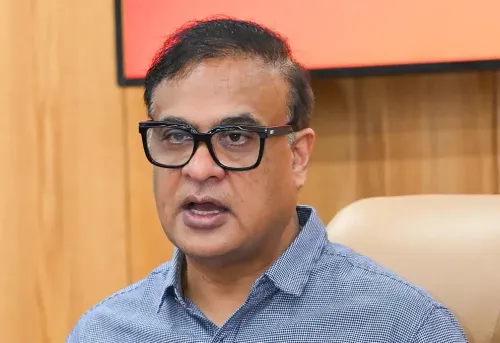
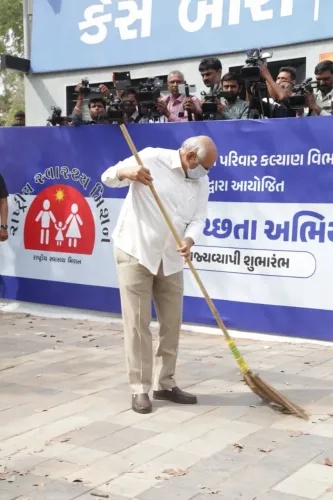
The Chief Minister's Office of Assam on Sunday, 31 May 2026, announced the rollout of Swachh Abhiyan 2.0 in Guwahati, framing the initiative as a people's movement aimed at making cleanliness a collective civic responsibility across the city.
The official post stated: 'A cleaner Guwahati begins with collective action. Swachh Abhiyan 2.0 is set to make cleanliness a people's movement across the city.' The campaign introduces a cash-prize contest for localities, designed to incentivise neighbourhoods to compete on cleanliness standards — a model that moves beyond infrastructure investment toward sustained behavioural change among residents.
Context
Guwahati, the largest city and commercial hub of Assam, has been the focal point of multiple urban civic improvement drives in recent years. As the state capital region's population and economic activity have grown, so have the challenges of solid-waste management, public-space upkeep, and sanitation compliance. Swachh Abhiyan 2.0 is the state government's latest structured response to these persistent urban challenges. The campaign draws its name and spirit from the national Swachh Bharat Mission, launched on 2 October 2014 by the Government of India to eliminate open defecation and improve solid-waste management. The Swachh Bharat Mission (Urban) 2.0 guidelines, issued by the Ministry of Housing and Urban Affairs in 2021, shifted the emphasis toward sustaining open-defecation-free status and accelerating waste processing — a framework that state-level campaigns like this one are now adapting.Policy Backdrop
Assam under Chief Minister Himanta Biswa Sarma, who has helmed the state since May 2021, has increasingly aligned state urban development priorities with central mission frameworks while adding local incentive layers. The locality-level cash-prize contest embedded in Swachh Abhiyan 2.0 reflects a broader pattern seen across Indian states: using financial rewards and community competition to raise citizen participation in waste segregation and public-space maintenance. The Guwahati Municipal Corporation (GMC), the civic body responsible for waste management and sanitation in the city, is the primary implementation arm for such campaigns. The contest format places direct responsibility on residential localities, encouraging neighbourhood-level organisation and peer accountability rather than relying solely on top-down enforcement.Stakeholders and Impact
Guwahati's residents and urban local bodies stand as the immediate stakeholders. For citizens, the cash-prize contest offers a tangible incentive to organise at the locality level — forming waste-segregation committees, maintaining common areas, and sustaining cleanliness practices beyond a single drive. For the GMC and state urban development officials, the campaign provides a structured mechanism to measure and rank civic performance across the city's wards. The broader implication is a shift in the state's governance approach to urban cleanliness: from periodic clean-up drives to an institutionalised, competitive, and reward-linked framework. Similar models in other Indian states have recorded measurable improvements in public-space cleanliness scores when financial incentives are sustained over multiple cycles.What's Next
The outcomes of the locality-wise cash-prize contest will be closely watched as a test of whether competitive incentives can translate into durable behavioural change in Guwahati. Should the model demonstrate measurable impact, the state government may consider scaling Swachh Abhiyan 2.0 to other towns and urban centres across Assam. The campaign's success could also inform how other northeastern states adapt central cleanliness mission frameworks to local urban realities.Point of View
Incentive-linked civic framework — a meaningful evolution in how Indian state governments operationalise central cleanliness mandates. The cash-prize contest model is politically astute: it creates visible, ward-level competition that generates local media attention and community ownership without requiring large additional budgetary outlays. Within the broader arc of Swachh Bharat Mission 2.0, this represents the 'behavioural sustainability' phase that urban policy experts have long argued is the harder and more consequential challenge after physical infrastructure is in place. The real test will be whether the contest mechanism is sustained across multiple cycles or remains a one-time campaign.
NationPress
24 Sept 2026
Frequently Asked Questions
What is Swachh Abhiyan 2.0 in Guwahati?
Swachh Abhiyan 2.0 is a state-level cleanliness campaign launched by the Assam government in Guwahati that frames civic cleanliness as a people's movement and includes a cash-prize contest for localities to encourage community participation.
Who launched Swachh Abhiyan 2.0 in Assam?
The campaign was announced by the Chief Minister's Office of Assam, under Chief Minister Himanta Biswa Sarma, on 31 May 2026.
What is the cash-prize contest in Swachh Abhiyan 2.0?
The campaign features a locality-level competition in which neighbourhoods across Guwahati are evaluated on cleanliness standards, with cash prizes awarded to top-performing localities to incentivise sustained civic upkeep.
How is Swachh Abhiyan 2.0 related to Swachh Bharat Mission?
Swachh Abhiyan 2.0 is Assam's state-level adaptation of the national Swachh Bharat Mission (Urban) 2.0 framework, which was issued by the Ministry of Housing and Urban Affairs in 2021 to sustain open-defecation-free status and improve waste processing.
Which body implements Swachh Abhiyan 2.0 in Guwahati?
The Guwahati Municipal Corporation is the primary civic body responsible for implementing the campaign, overseeing waste management and sanitation across the city's wards.