CM Assam Pitches Mayong-Pobitora Circuit on World Tourism Day

Synopsis
On World Tourism Day 2026, the Chief Minister's Office of Assam promoted the Mayong-Pobitora circuit, blending Morigaon's legendary tantric culture with Pobitora's world-class Greater One-Horned Rhino density under the 'Awesome Assam' brand.
Key Takeaways
World Tourism Day 2026 (27 September) was the hook for Assam's CMO to spotlight the Mayong-Pobitora circuit .
Mayong in Morigaon district is celebrated as India's 'land of sorcery,' rooted in indigenous tantric traditions.
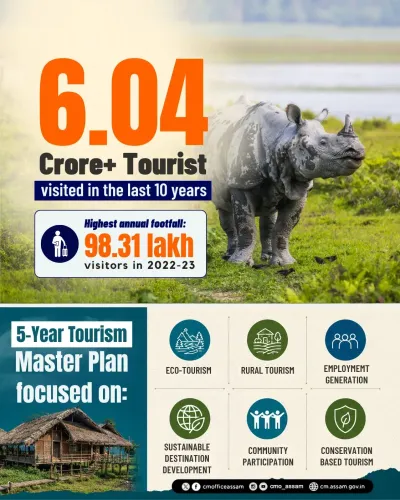
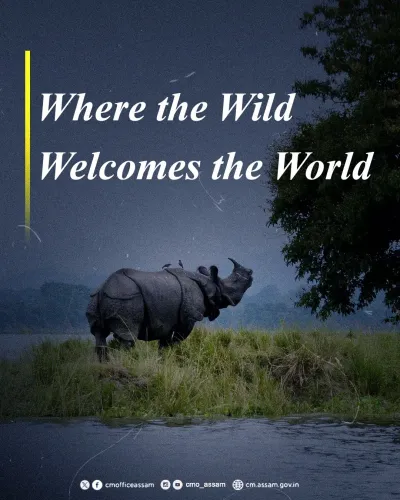
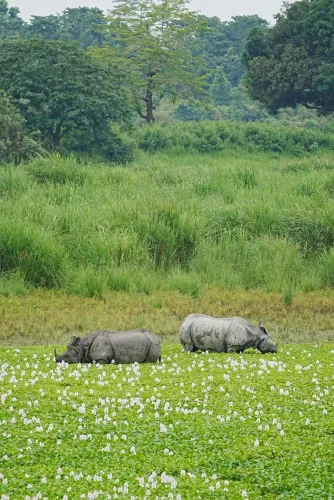
Pobitora Wildlife Sanctuary , near Guwahati, hosts one of the world's highest densities of the Greater One-Horned Rhinoceros .
The push is part of Assam's long-running 'Awesome Assam' brand strategy to diversify tourism beyond Kaziranga.
Promoting the circuit also reinforces species conservation incentives for local communities in the Brahmaputra valley.
Where ancient sorcery meets the snort of a rhino — that is the pitch the Chief Minister's Office of Assam made on World Tourism Day, 27 September 2026, spotlighting the Mayong-Pobitora circuit as a must-visit destination that fuses indigenous mythology, tribal culture, and one of the planet's densest concentrations of the Greater One-Horned Rhinoceros.
Mayong: Assam's village of sorcery and tantric lore
Mayong, nestled in Morigaon district, carries a reputation unlike almost any other village in India. For centuries it has been known as the land of magic — a place where indigenous tantric practices, folk healing, and oral mythology are still alive in the community's memory. Visitors drawn here are not just ticking off a heritage site; they are stepping into a living cultural ecosystem where the line between history and legend deliberately blurs.
That distinctiveness is exactly what the Assam government is banking on. By pairing Mayong with a wildlife destination in the same regional corridor, the state is building a circuit that offers something neither site could deliver alone.
Pobitora's rhino density — a world-class wildlife statistic
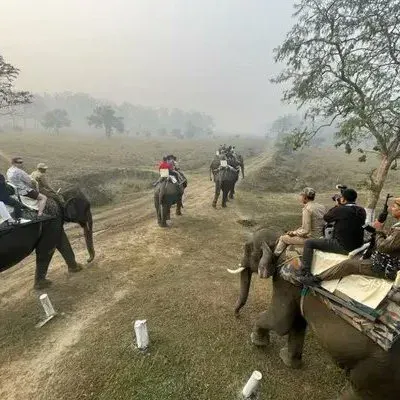
Pobitora Wildlife Sanctuary, located close to Guwahati in the Brahmaputra valley, holds one of the highest densities of the Greater One-Horned Rhinoceros anywhere on earth — a conservation achievement that often goes unnoticed in the global shadow of Kaziranga National Park. The sanctuary's compact geography means sightings are frequent and close, making it a genuinely compelling wildlife experience for both first-time visitors and seasoned naturalists.
Promoting Pobitora also serves a conservation purpose: increased responsible tourism translates into stronger community incentives to protect the habitat, reinforcing species-recovery work that has been central to Assam's wildlife policy for decades.
'Awesome Assam' and the strategy of going beyond Kaziranga
The post lands inside a deliberate, multi-year effort. The state's 'Awesome Assam' tourism brand, active since the mid-2010s, has consistently tried to move visitor footfall beyond the state's flagship parks and into smaller, culturally rich corridors. The Mayong-Pobitora push is a textbook expression of that strategy — spreading economic benefit to communities in Morigaon district while relieving pressure on over-visited zones.
World Tourism Day, the annual observance championed by the UN World Tourism Organization on 27 September each year, gave the CMO a global hook to amplify the message. The timing is sharp: the post-monsoon season in Assam is when roads dry, wildlife becomes more visible, and the state enters its prime tourist window.
If the rhinos of Pobitora and the sorcerers of Mayong can together pull travellers off India's beaten tourist trail, Assam's circuit experiment may well become a model for culturally layered wildlife tourism across the northeast.
Point of View
Not just safari drives. Politically, it also frames the BJP-led state government as a steward of both conservation and indigenous heritage, two voter-relevant themes in a state where forest-edge communities and tribal identities carry significant electoral weight. The long-term test will be whether supporting infrastructure — roads, homestays, guide training — actually materialises to make the circuit viable at scale.
NationPress
27 Sept 2026
Frequently Asked Questions
Where is the Mayong-Pobitora circuit located in Assam?
The circuit links Mayong village in Morigaon district with Pobitora Wildlife Sanctuary , both situated in the Brahmaputra valley of Assam, roughly within driving distance of Guwahati .
Why is Mayong famous in Assam?
Mayong is traditionally known as the 'land of magic and sorcery,' with deep roots in indigenous tantric practices and folk mythology that have been passed down through generations of local communities.
What makes Pobitora Wildlife Sanctuary special?
Pobitora Wildlife Sanctuary is recognised for having one of the world's highest densities of the Greater One-Horned Rhinoceros , making wildlife sightings frequent and up-close compared with larger, more spread-out parks.
What is the 'Awesome Assam' tourism campaign?
' Awesome Assam ' is the state government's tourism brand, active since the mid-2010s, designed to market Assam's wildlife, cultural heritage, and natural landscapes to both domestic and international visitors.
When is World Tourism Day observed and who organises it?
World Tourism Day is observed annually on 27 September and is promoted by the UN World Tourism Organization to highlight tourism's cultural and economic significance globally.