Assam CMO: Pobitora Sanctuary Earns Over Rs 81.5 Lakh in 2025-26
Synopsis
The Chief Minister's Office of Assam announced that Pobitora Wildlife Sanctuary in Morigaon district recorded a rise in tourist footfall and generated over Rs 81.5 lakh in revenue during 2025-26, underscoring the state's push to monetise smaller protected areas alongside flagship sites such as Kaziranga.
Key Takeaways
Pobitora Wildlife Sanctuary earned over Rs 81.5 lakh in revenue in 2025-26 , per the Assam CMO.
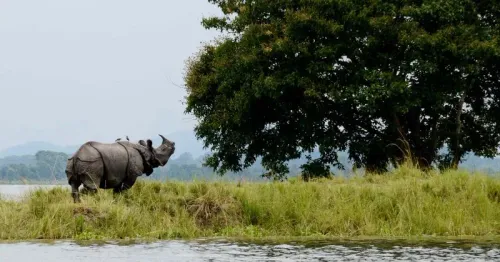
The sanctuary, in Morigaon district , hosts one of the densest populations of the greater one-horned rhino in India.
Tourist footfall recorded a clear surge during the fiscal year, the CMO said.
Revenue gains support reinvestment in habitat management and anti-poaching efforts.
The announcement reflects Assam's broader push to develop smaller sanctuaries alongside Kaziranga.
The Chief Minister's Office of Assam on 4 June 2026 announced that Pobitora Wildlife Sanctuary has recorded a notable surge in tourist footfall, generating revenue of over Rs 81.5 lakh during the 2025-26 fiscal year. The figures, shared on the official handle, point to growing traction for one of Assam's smaller but ecologically significant protected areas.
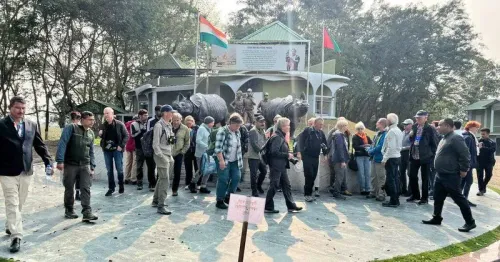
In its post, the CMO stated that 'Pobitora Wildlife Sanctuary records a surge in tourist footfall, generating over Rs 81.5 lakh in revenue during 2025-26.' The announcement was accompanied by a visual from the sanctuary and a link to a regional report carrying the detailed numbers.
Context
Pobitora Wildlife Sanctuary, located in Assam's Morigaon district, is internationally recognised for hosting one of the highest densities of the greater one-horned rhinoceros anywhere in India. Spread across a compact floodplain landscape on the southern bank of the Brahmaputra, the sanctuary has long served as a satellite conservation site and a 'spillover' habitat for rhinos from Kaziranga National Park.
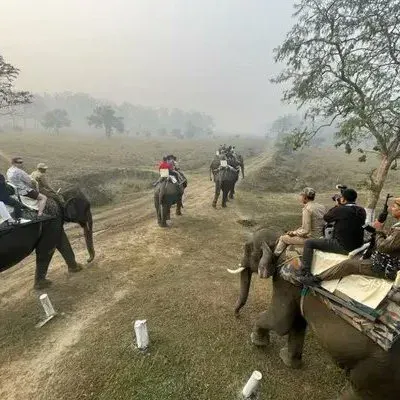
Despite its modest size compared with Kaziranga, Pobitora has steadily emerged as a weekend wildlife destination for visitors from Guwahati, roughly 50 km away, as well as domestic and foreign tourists seeking jeep and elephant safaris.
Policy backdrop
Assam has pursued eco-tourism development in its rhino-bearing landscapes since the 2000s, with the state forest department aligning local initiatives with national Project Rhino conservation efforts. The strategy has paired anti-poaching deployments with infrastructure upgrades — improved approach roads, interpretation centres, safari logistics and community-run homestays around buffer zones.
Revenue from entry fees, safari charges and allied services is reported annually by the forest department as a performance metric. The latest disclosure from the CMO situates Pobitora within this broader accountability framework, signalling that smaller sanctuaries are being measured not only on wildlife numbers but also on visitor economics.
Stakeholders and impact
Higher footfall has direct implications for local communities in fringe villages, where guides, drivers, homestay operators and handicraft sellers depend on the seasonal visitor flow. Tourist spending typically extends beyond ticketing to food, transport and accommodation in and around Mayong and other nearby settlements.
For the Government of Assam, rising revenue strengthens the case for reinvesting in habitat management, including grassland upkeep, water-body restoration and patrolling — all critical for rhino survival in a sanctuary that faces recurring pressure from Brahmaputra floods and habitat fragmentation.
Conservation managers have also flagged the need to balance visitor growth with carrying capacity. Pobitora's small core area means that unchecked tourism could disturb rhino movement and grazing patterns, making zoning and visitor caps an ongoing policy question.
What's next
Attention will turn to the state forest department's next annual tourism and revenue figures, and to any fresh budget allocations for sanctuary infrastructure upgrades. Officials are expected to weigh proposals for expanded safari slots, digital ticketing and community-tourism tie-ups in the buffer.
The broader signal from the CMO's disclosure is that Assam intends to position its protected-area network — not just Kaziranga but also Pobitora, Manas, Orang and Nameri — as both biodiversity assets and revenue-generating destinations. How that balance is struck at Pobitora, given its size and ecological sensitivity, will shape the template for smaller sanctuaries across the Northeast.
Point of View
Not just species counts, to justify continued investment in conservation. By spotlighting Pobitora rather than only Kaziranga, the state is signalling that secondary rhino habitats are central to its tourism map. The trade-off, however, is real: Pobitora's small core area makes it vulnerable to overuse, and revenue growth will need to be matched by carrying-capacity controls. Expect future announcements to pair earnings data with habitat and visitor-management metrics.
NationPress
22 Sept 2026
Frequently Asked Questions
Where is Pobitora Wildlife Sanctuary located?
Pobitora Wildlife Sanctuary is located in Assam's Morigaon district, on the southern bank of the Brahmaputra, roughly 50 km east of Guwahati.
How much revenue did Pobitora Wildlife Sanctuary earn in 2025-26?
According to the Chief Minister's Office of Assam, Pobitora Wildlife Sanctuary generated over Rs 81.5 lakh in revenue during the 2025-26 fiscal year.
Why is Pobitora Wildlife Sanctuary famous?
It is known for hosting one of the highest densities of the greater one-horned rhinoceros in India, despite being far smaller than Kaziranga National Park.
What activities can tourists do at Pobitora?
Visitors typically take jeep and elephant safaris to view rhinos, wild buffalo, deer and a rich variety of birdlife in the sanctuary's grasslands and wetlands.
How far is Pobitora from Guwahati?
Pobitora is about 50 km from Guwahati, making it a popular short-trip wildlife destination from the city.