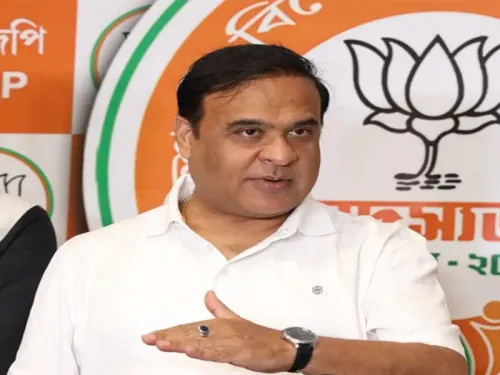
CM Himanta: Assam Police joins OVSE for offline Aadhaar checks
Synopsis
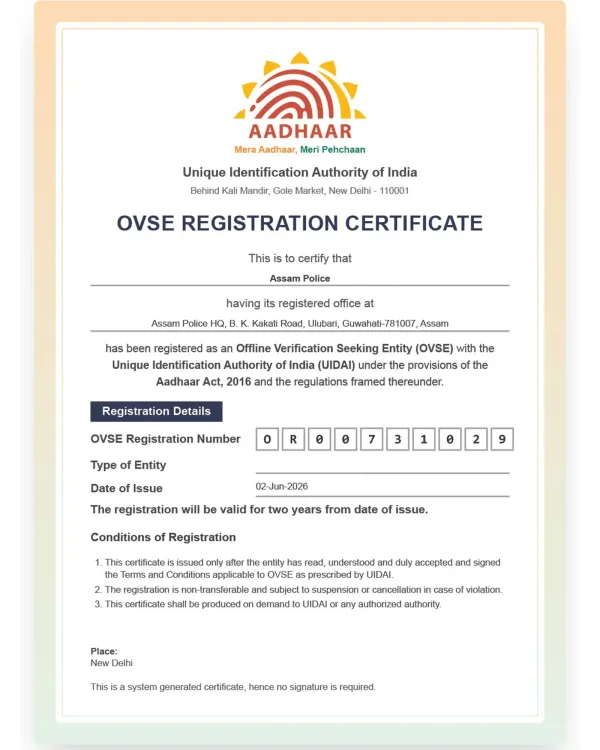
Assam Police has been registered as an Offline Verification Seeking Entity under UIDAI, becoming the first such state agency in North East India. The move lets patrol units verify Aadhaar QR codes without internet access, targeting connectivity-poor hill, char and border areas while hardening defences against forged identity documents.
Key Takeaways
Assam Police is now registered as an Offline Verification Seeking Entity (OVSE) under UIDAI , the first state agency in North East India to achieve this.
CM Himanta Biswa Sarma stated it is only the third police force nationally to receive OVSE status.
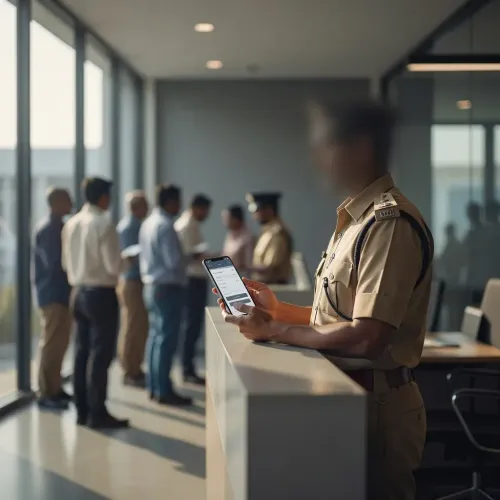
Officers can scan an Aadhaar QR code to verify identity entirely offline, with no dependence on internet speed.
The move directly addresses connectivity gaps in hill districts , char areas , and border villages of Assam.
Four key services — tenant verification , character verification , passport police-verification , and arms-licence verification — are expected to become faster.
The cryptographically sealed QR code makes forged or photocopied Aadhaar cards significantly harder to use against police.
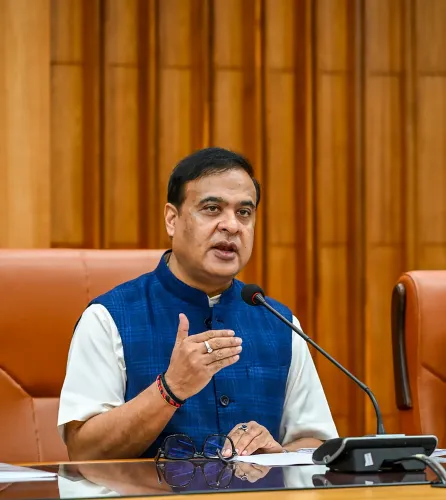
Assam Chief Minister Himanta Biswa Sarma announced on Friday, 17 July 2026 that Assam Police has been registered as an Offline Verification Seeking Entity (OVSE) under the Unique Identification Authority of India (UIDAI), making it the first state agency in North East India to receive this designation and, according to the Chief Minister, only the third police force nationally to do so.
Context
The OVSE registration allows police personnel to verify an individual's identity by scanning the Aadhaar QR code on a mobile device without requiring an active internet connection. CM Sarma explained that the QR code carries an 'unforgeable digital seal', making it significantly harder for a criminal or illegal infiltrant to present a fake or photocopied Aadhaar card to mislead officers on patrol.
The announcement comes as large swathes of Assam — including hill districts, riverine char areas, and border villages — continue to face unreliable or slow internet connectivity, limiting the effectiveness of online authentication systems in those zones.
Policy Backdrop
UIDAI, established in January 2009, introduced offline Aadhaar verification — including QR-code-based checks — specifically to address connectivity gaps in rural and remote regions. The legal basis for Aadhaar-based authentication rests on the Aadhaar Act, 2016, which governs how agencies may use the identity platform for service delivery and verification.
The OVSE framework is part of a broader push under the Digital India initiative to extend reliable identity verification to areas where real-time biometric or online authentication is not feasible. State police forces registering as OVSEs receive access to a secure, cryptographically signed QR payload that can be decoded and validated entirely on-device.
Stakeholders and Impact
For Assam Police personnel deployed in remote postings, the change means patrol parties can instantly validate identity documents without radioing in for a network-dependent check. CM Sarma specifically highlighted four citizen-facing services that will become faster: tenant verification, character verification, passport police-verification, and arms-licence verification.
Residents in border villages and char areas — communities that have historically faced delays in police verification processes due to connectivity constraints — stand to benefit most directly. The development also has a security dimension: Assam shares international borders with Bangladesh and Bhutan, and offline identity verification is seen as a tool to counter the use of forged documents by illegal infiltrators in those corridors.
What's Next
The registration of Assam Police as an OVSE is likely to prompt other North-Eastern states — several of which face similar terrain and connectivity challenges — to explore equivalent registrations under UIDAI. Central guidelines on expanding offline Aadhaar use in policing could accelerate that adoption across the region.
CM Sarma framed the development as part of a continuing drive toward 'efficient, watertight and people-friendly policing' in Assam, signalling that further integrations of digital identity tools into state law-enforcement workflows remain on the agenda.
Point of View
Low-friction governance move that addresses a real operational gap — identity fraud and verification delays in low-connectivity zones — rather than a headline-grabbing scheme launch. For CM Sarma, it reinforces a consistent political narrative of technology-enabled security in a state with acute border-management sensitivities. The timing also positions Assam as a model for other North-Eastern states, extending the Chief Minister's influence in his role as NEDA convenor. If other states follow, this could quietly become one of the more consequential policing-technology adoptions in the region under the Digital India umbrella.
NationPress
16 Oct 2026
Frequently Asked Questions
What is an Offline Verification Seeking Entity (OVSE) under UIDAI?
An OVSE is an organisation registered with UIDAI that is authorised to verify a person's Aadhaar identity by scanning the QR code on the Aadhaar card without needing an internet connection, using a cryptographically signed offline payload.
Why did Assam Police register as an OVSE?
Large parts of Assam — including hill districts, char areas, and border villages — have poor internet connectivity. OVSE status lets patrol units verify identity documents instantly on-device, without depending on network speed.
Which police forces in India are registered as OVSEs?
According to CM Himanta Biswa Sarma's announcement, Assam Police is the overall third police force in India to be registered as an OVSE, and the first in the North-East. The identities of the other two forces were not specified in the post.
How does offline Aadhaar QR verification prevent fake ID cards?
The Aadhaar QR code carries a digital signature issued by UIDAI that cannot be forged. A scanning device validates the signature locally, making it very difficult for anyone to use a photocopied or fabricated Aadhaar card to mislead police.
Which police services in Assam will become faster due to OVSE registration?
CM Sarma cited tenant verification, character verification, passport police-verification, and arms-licence verification as the everyday services that will become faster and simpler for citizens.