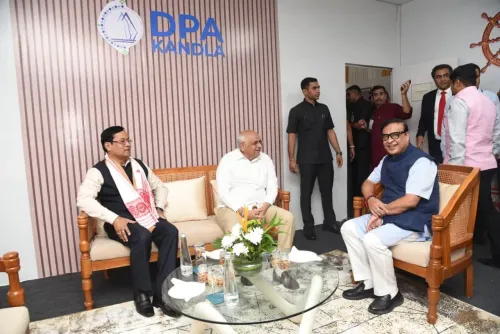
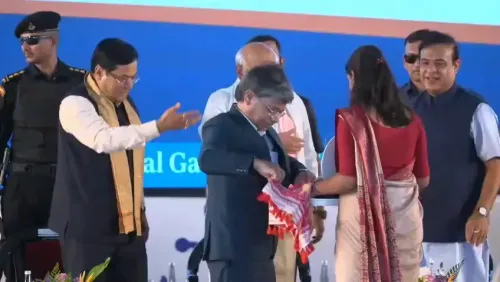
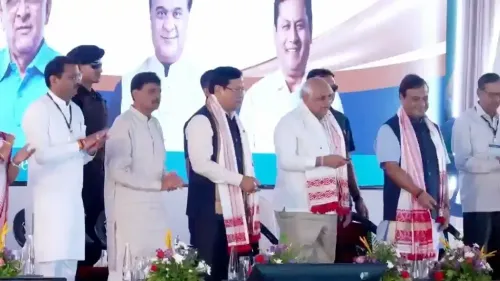
CM Himanta flags off Assam PSU's e-Methanol plant at Kandla
Synopsis
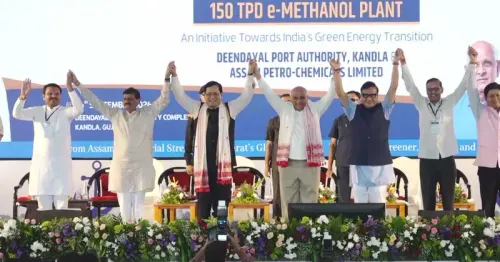
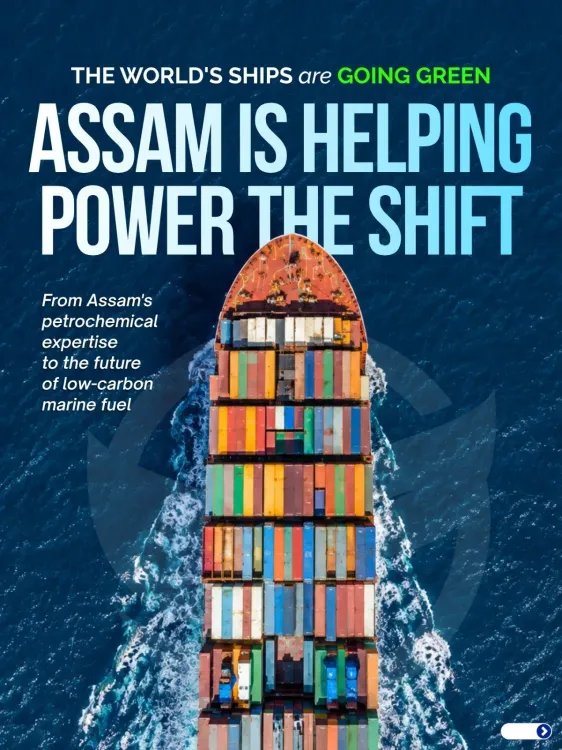
Assam Chief Minister Himanta Biswa Sarma announced on September 26, 2026, that state PSU APL Namrup is breaking ground on an e-Methanol facility at Deendayal Port, Kandla — a cross-state green-fuel push aimed at decarbonising Indian maritime trade.
Key Takeaways
APL Namrup , Assam's petrochemical PSU, is beginning construction of an e-Methanol facility at Deendayal Port, Kandla .
The announcement was made by Assam CM Himanta Biswa Sarma on September 26, 2026 .
E-Methanol is a green alternative marine fuel produced using green hydrogen and captured CO₂, producing near-zero sulphur emissions.
The project reflects cross-state collaboration — an Assam PSU supplying green-fuel technology to a major Gujarat port .
The initiative aligns with India's National Green Hydrogen Mission (2023) and the country's net-zero 2070 pledge .
A successful rollout at Kandla could catalyse similar green-bunkering investments at other major Indian ports.
India's port at Kandla, Gujarat is about to get a very different kind of fuel — one brewed not from crude oil but from green hydrogen and captured carbon. Assam Chief Minister Himanta Biswa Sarma announced on Saturday, September 26, 2026, that Assam Petrochemicals Limited (APL) Namrup, the state's public-sector petrochemical unit, is beginning construction of an e-Methanol production facility at Deendayal Port — marking what he called 'a new chapter in India's green maritime journey.'
Why e-Methanol and why Kandla
E-Methanol — methanol synthesised using green hydrogen and CO₂ — is rapidly emerging as one of the most viable alternative marine fuels. It is liquid at ambient temperatures, can be stored in conventional tanks, and produces near-zero sulphur emissions when burned. For a port like Deendayal Port, which handles enormous cargo volumes on India's western coast, access to a bunkering-ready green fuel would be transformative.
The International Maritime Organization has tightened its decarbonization targets, pushing shipping lines to seek cleaner bunkering options at every major port of call. India's own net-zero 2070 pledge adds domestic urgency to that global pressure. Kandla is therefore a logical starting point: it is one of India's highest-throughput ports, and greening its fuel supply sends a signal across the entire coastal trade network.
APL Namrup's cross-state leap
APL Namrup was established as Assam's methanol-and-petrochemicals anchor, historically serving the state's own industrial base in the Northeast. Its pivot to producing e-Methanol for a Gujarat port is a striking example of cross-state industrial collaboration — an Assam PSU exporting green-fuel technology to India's western seaboard rather than simply supplying local demand.
This pattern — leveraging a northeastern state's industrial capacity for a national green infrastructure goal — aligns with the National Green Hydrogen Mission, approved in 2023, which explicitly targets hard-to-abate sectors including shipping as key offtake markets for green-fuel derivatives. APL's move positions Assam as a contributor to that mission, not just a beneficiary.
What the construction start means for Indian shipping
The groundbreaking at Deendayal Port is the beginning of a build — capacity figures and a commercial timeline are still to be confirmed publicly. But the significance of breaking ground should not be undersold: India has, until now, spoken largely in policy documents about green maritime fuels. An actual construction start at a major port converts aspiration into concrete.
Shipping lines calling at Kandla will be watching closely. If APL Namrup's e-Methanol facility delivers competitive volumes, it could accelerate similar investments at other major ports — Mumbai, Mundra, Chennai, Visakhapatnam — and reduce the gap between India's IMO commitments and real-world bunkering availability.
A northeastern state PSU, a western port giant, and a global decarbonization deadline — when those three forces align in one construction site, the maritime map of India starts to shift.
Point of View
And it repositions a northeastern state PSU as a contributor to national decarbonization — not merely a regional player. For CM Himanta Biswa Sarma, the announcement serves a dual purpose: it burnishes Assam's industrial credentials while associating BJP governance in the Northeast with a forward-looking green economy narrative. The critical test will be whether APL Namrup can deliver competitive volumes fast enough to influence bunkering decisions by international shipping lines, before rival green-fuel hubs in the Middle East and Southeast Asia lock in those contracts.
NationPress
26 Sept 2026
Frequently Asked Questions
What is e-Methanol and why is it important for shipping?
E-Methanol is methanol produced using green hydrogen and captured carbon dioxide. It is important for shipping because it is liquid at room temperature, compatible with existing storage infrastructure, and produces near-zero sulphur emissions, making it a practical alternative to conventional marine fuels as the IMO tightens emission rules.
Where is the APL Namrup e-Methanol facility being built?
The facility is being constructed at Deendayal Port in Kandla, Gujarat — one of India's highest-throughput ports on the western coast.
How does this project connect to India's National Green Hydrogen Mission?
India's National Green Hydrogen Mission , approved in 2023 , specifically targets hard-to-abate sectors such as shipping as offtake markets for green-fuel derivatives like e-Methanol. APL Namrup's Kandla facility is a direct industrial expression of that policy.
What impact could the Kandla e-Methanol plant have on other Indian ports?
If the Deendayal Port facility delivers competitive fuel volumes, it could act as a proof-of-concept, accelerating similar green-bunkering investments at other major Indian ports such as Mumbai, Mundra, Chennai, and Visakhapatnam.