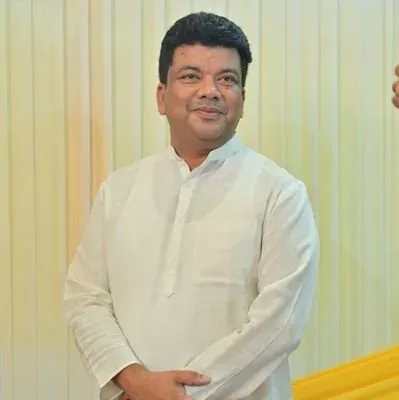
Assam Speaker Ranjeet Kumar Dass urges farmers to adopt multiple cropping
Synopsis
Assam Assembly Speaker Ranjeet Kumar Dass has called on farmers to shift to double and triple cropping, singling out mustard cultivation as a strategic lever to cut India's edible oil import bill — a quiet but pointed message at a time when commodity market volatility is exposing the cost of agricultural dependence.
Key Takeaways
Assam Assembly Speaker Ranjeet Kumar Dass on 17 June urged farmers to adopt multiple cropping practices to boost agricultural productivity.
Dass linked farm output directly to India's self-reliance goals, calling on all sectors to perform at full potential.
The Speaker highlighted government efforts to reduce farmer dependence on middlemen and moneylenders for seeds, fertilisers, and inputs.
He specifically pushed for expanded mustard cultivation to reduce India's dependence on imported edible oils.
Farmers were advised to use government schemes for tractors, power tillers, and harvesters , and to apply fertilisers judiciously to protect soil health.
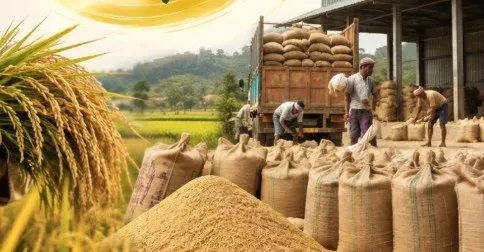
Assam Assembly Speaker Ranjeet Kumar Dass on Wednesday, 17 June called on farmers in the state to embrace multiple cropping practices and fully utilise available government support schemes, linking agricultural productivity directly to India's broader goal of economic self-reliance.
Agriculture as a Pillar of Self-Reliance
Addressing reporters in Guwahati, Dass said farming would be central to realising the country's vision of becoming a self-sufficient global economic power. He stressed that no single sector could carry the burden alone — farmers, entrepreneurs, teachers, and all segments of society must collectively raise their productivity and standards.
'The country can become truly self-reliant only when every sector performs to its full potential. Farmers have a crucial role to play by increasing both the quantity and quality of agricultural production,' he said.
Government Support and Reducing Middlemen
Dass highlighted several ongoing government initiatives aimed at improving returns for farmers and cutting dependence on middlemen. He noted that support mechanisms are being reinforced so cultivators no longer need to rely on moneylenders for purchasing seeds, fertilisers, and other agricultural inputs.
The Speaker also pointed to crop insurance schemes that provide financial protection against losses from natural calamities and adverse weather, describing them as essential tools for encouraging farmers to invest more confidently in their land.
Push for Mustard Cultivation and Edible Oil Independence
Dass placed particular emphasis on expanding mustard cultivation as a strategic priority, arguing that reducing India's dependence on imported edible oils is critical given the volatility of international commodity markets. He described the current season as an ideal window for mustard farming and urged cultivators to adopt double-cropping and triple-cropping wherever feasible.
Machinery Access and Sustainable Farming
The Speaker encouraged farmers to avail government assistance for tractors, power tillers, harvesters, and other agricultural machinery to modernise their operations. He also cautioned against the overuse of fertilisers, warning that excessive application for short-term yield gains undermines soil health and threatens long-term agricultural sustainability.
What This Means for Assam's Farm Sector
Assam's agriculture sector, dominated by paddy, tea, and oilseeds, has historically struggled with fragmented landholdings and limited mechanisation. Dass's remarks come amid a broader national push to raise farm incomes and reduce import dependency in edible oils — a sector where India spent significantly on imports in recent years. How effectively state-level outreach translates into on-ground adoption of multi-cropping will be closely watched in the coming kharif and rabi cycles.
Point of View
But the structural constraints — fragmented landholdings, erratic irrigation, and credit access gaps — are the real barriers, not awareness. Crop insurance and machinery subsidies exist on paper; the question is whether Assam's farm extension machinery is robust enough to convert a Speaker's address into actual field-level behaviour change. The mustard push is strategically sound given India's edible oil import burden, but state-level advocacy without district-level implementation targets rarely moves the needle.
NationPress
19 Sept 2026
Frequently Asked Questions
What did Assam Assembly Speaker Ranjeet Kumar Dass say about farming?
Speaker Ranjeet Kumar Dass urged Assam farmers on 17 June to adopt multiple cropping practices and make full use of government support schemes to enhance productivity. He linked agricultural growth directly to India's goal of economic self-reliance.
Why did Dass emphasise mustard cultivation specifically?
Dass highlighted mustard cultivation as a way to reduce India's dependence on imported edible oils, noting that international market fluctuations make domestic oilseed production strategically important. He called the current period ideal for mustard farming.
What government schemes did the Assam Speaker refer to?
Dass referred to crop insurance schemes that protect farmers against natural calamities and adverse weather, as well as government assistance for agricultural machinery including tractors, power tillers, and harvesters. He also mentioned support mechanisms to reduce reliance on moneylenders for farm inputs.
What is double-cropping and triple-cropping?
Double-cropping and triple-cropping refer to the practice of growing two or three successive crops on the same land within a single agricultural year, rather than leaving fields fallow between seasons. Dass urged Assam farmers to adopt these practices wherever land and water resources permit.
Why did Dass caution against excessive fertiliser use?
The Speaker warned that over-application of fertilisers for short-term yield gains degrades soil health over time, threatening the long-term productivity of farmland. He stressed that sustainable farming practices are essential for durable agricultural growth.