Assam Tea Hits ₹800/kg at Guwahati Auction
Synopsis
Premium Assam tea realised ₹800 per kg at the Guwahati Tea Auction Centre, the Chief Minister's Office of Assam announced on 29 May 2026. The price signals strong buyer appetite for high-quality origin teas even as the sector contends with ageing bushes, rising input costs and wage pressures.
Key Takeaways
Premium Assam tea fetched ₹800 per kilogram at the Guwahati Tea Auction Centre as of 29 May 2026 .
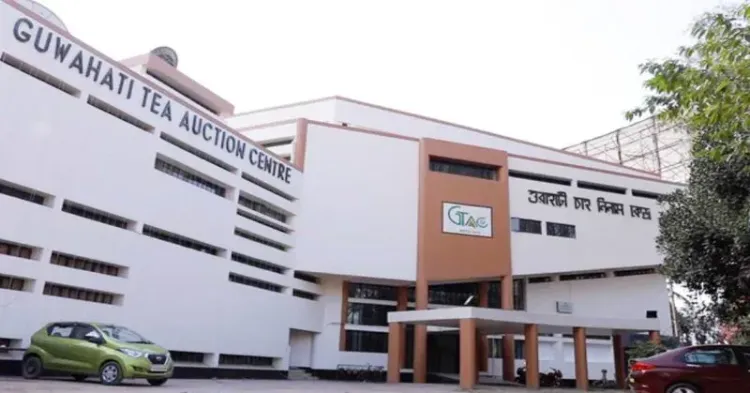
The Guwahati Tea Auction Centre , established in 1970 , is the world's largest tea auction facility and the primary price-discovery platform for Northeast Indian teas.
Assam accounts for more than half of India's total tea production, making its auction results a national industry benchmark.
The strong realisation comes against a backdrop of structural stress including ageing bush populations, rising input costs and recurring wage disputes.
The Tea Board of India has been promoting GI protection and value-added branding to shift the industry toward premium segments.
Sustained premium pricing would benefit tea garden workers , small tea growers and exporters across the supply chain.
The Chief Minister's Office of Assam on Friday, 29 May 2026 highlighted that premium Assam tea fetched ₹800 per kilogram at the Guwahati Tea Auction Centre, signalling robust demand even as the broader industry navigates persistent structural stress.
Context
The price realisation of ₹800 per kg at the Guwahati Tea Auction Centre is a notable marker for the premium segment of Assam's tea trade. The auction centre, established in 1970 to decentralise tea trading away from Kolkata, is now the world's largest tea auction facility and serves as the primary price-discovery mechanism for teas from Northeast India. Weekly sales at the centre set benchmarks that ripple across the entire supply chain, from estate owners to small growers and export traders.
Assam produces more than half of India's total tea output, making the state's auction results a closely watched indicator of the national industry's health. A strong per-kilogram realisation in the premium bracket suggests buyers — both domestic retailers and international importers — are willing to pay up for traceable, high-quality origin teas.
Policy Backdrop
The Tea Board of India, the statutory regulator under the Ministry of Commerce and Industry, has in recent years pushed a multi-pronged strategy to lift average realisations: Geographical Indication (GI) protection for Assam Orthodox tea, value-added branding initiatives, and targeted support schemes for the state's large population of small tea growers who cultivate bought-leaf for major estates. These efforts are designed to shift the industry's centre of gravity toward premium and specialty segments rather than commodity bulk teas.
The backdrop of 'industry stress' referenced in the post reflects well-documented structural pressures: ageing bush populations across many estates, rising labour and input costs, recurring wage disputes, and erratic monsoon patterns that affect both yield and quality. Government replantation subsidy programmes and worker welfare packages have been under discussion as long-term remedies, though implementation has been uneven.
Stakeholders and Impact
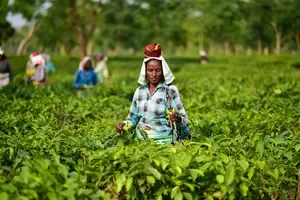
Tea garden workers — who number in the hundreds of thousands across Assam — stand to benefit indirectly when auction prices rise, as higher realisations can ease the financial pressure on estate managements during wage negotiations. Small tea growers, who supply a significant share of the green leaf processed by large factories, also gain when premium pricing filters down through the bought-leaf procurement chain.
For exporters, a strong domestic auction price signals competitive quality that can be leveraged in specialty and orthodox tea markets in Europe, Japan, and the Middle East, where demand for single-origin, traceable teas has grown steadily. The Guwahati auction result therefore carries significance well beyond the state's borders.
What's Next
Observers will watch subsequent weekly auctions at both Guwahati and Kolkata to determine whether the ₹800 per kg level represents a sustained trend or a one-off premium lot result. Consistency in high-end price discovery would strengthen the case for expanded GI branding and replantation investment. Any new announcements from the Tea Board of India or the Assam state government on replantation subsidies, worker welfare funds, or export promotion packages in the coming weeks will be closely tracked by industry stakeholders as a signal of policy intent matching market momentum.
Point of View
But the framing of it as evidence of 'strong demand' sits in deliberate tension with the 'industry stress' caveat in the same headline, suggesting the government wants credit for a bright spot without dismissing grower grievances. The broader policy arc here is one of premiumisation: both the Centre and the state have invested political capital in GI branding and small-grower support, and a headline auction price feeds that narrative. Whether it translates into sustained income gains for the roughly one million workers dependent on Assam's tea gardens will be the real test of whether the premium segment can lift the industry's floor, not just its ceiling.
NationPress
19 Sept 2026
Frequently Asked Questions
What is the current price of Assam tea at Guwahati auction?
Premium Assam tea fetched ₹800 per kilogram at the Guwahati Tea Auction Centre as reported on 29 May 2026 , though prices vary widely by grade and lot quality.
Why is the Guwahati Tea Auction Centre important?
The Guwahati Tea Auction Centre , established in 1970 , is the world's largest tea auction facility and serves as the primary price-discovery mechanism for teas from Assam and the broader Northeast India region.
What problems does the Assam tea industry face?
The Assam tea sector faces ageing bush populations, rising input and labour costs, recurring wage disputes, and erratic weather patterns that affect both yield and quality — challenges that have persisted for years despite government intervention.
How does Tea Board of India support Assam tea growers?
The Tea Board of India supports Assam growers through Geographical Indication (GI) protection for orthodox varieties, value-added branding programmes, and targeted schemes for small tea growers who supply bought-leaf to larger factories.
Who benefits when Assam tea auction prices rise?
Higher auction realisations benefit tea garden workers through eased wage-negotiation pressure, small tea growers through better bought-leaf procurement rates, and exporters who can leverage strong domestic prices in specialty international markets.