CM Himanta Flags Assam Tea Record at Guwahati Auction
Synopsis
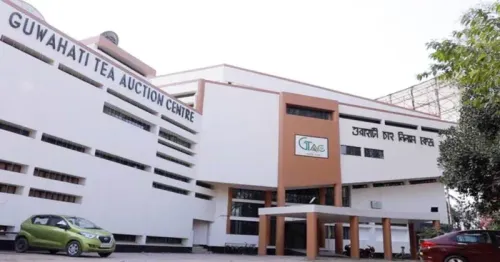
Assam Chief Minister Himanta Biswa Sarma on 27 May 2026 cited a new record of ₹800/kg set by Deckiajuli Tea at the Guwahati Tea Auction Centre, attributing the milestone to state policy support and rising global demand for premium Assam Tea.
Key Takeaways
Deckiajuli Tea Estate set a new price record of ₹800 per kg at the Guwahati Tea Auction Centre .
CM Himanta Biswa Sarma attributed the record to growing global demand and sustained state policy support.
Assam Tea accounts for over half of India's total tea production and has a 200-year production history.
The Tea Board of India , established in 1953 , regulates quality, production, and export standards for the sector.
Rising auction prices benefit tea planters, garden workers, and exporters, and support India's premium tea export positioning.
Subsequent auction cycles at Guwahati and Kolkata will indicate whether the record price reflects a sustained trend.
Assam Chief Minister Himanta Biswa Sarma on Wednesday, 27 May 2026, highlighted a new auction record set by Deckiajuli Tea at the Guwahati Tea Auction Centre, where the estate fetched a price of ₹800 per kg — a figure the Chief Minister cited as evidence of growing global demand and the premium value commanded by Assam Tea.
Context
Deckiajuli Tea Estate, located in Assam, produces both orthodox and CTC varieties catering to domestic and export markets. The Guwahati Tea Auction Centre is the primary auction platform for Northeast India, handling large volumes of Assam-origin teas and serving as a key price-discovery mechanism for the industry. A price of ₹800/kg at this platform represents a notable benchmark in a market where commodity-grade Assam teas typically trade at significantly lower levels.
In his post, CM Sarma stated: 'Deckiajuli Tea has created a new record at the Guwahati Tea Auction Centre with a price of ₹800/kg, reflecting the growing global demand and premium value of Assam Tea.' He added that the state remains committed to 'strengthening Assam's iconic 200 year old tea industry' through 'focused initiatives and sustained policy support.'
Policy Backdrop
Assam Tea accounts for over half of India's total tea output and carries a production history spanning 200 years. The Tea Board of India, constituted in 1953 under the Tea Act, regulates production, export, and quality standards across tea-growing regions including Assam. State governments have worked alongside the Board to pursue quality upgradation, geographical indication (GI) protection, and replantation programmes aimed at shifting the industry from bulk commodity sales toward higher-value orthodox and specialty grades.
The current state administration has framed record auction prices as direct outcomes of sustained policy interventions — including replantation support, irrigation improvements, and certification initiatives — that align with national export promotion objectives. The emphasis on global demand also fits a broader pattern of Northeast India leveraging traditional agro-products for economic growth, a theme that has featured prominently under the North-East Democratic Alliance (NEDA), of which CM Sarma serves as convenor.
Stakeholders and Impact
The primary beneficiaries of rising auction prices are Assam's tea planters and garden owners, who gain improved margins on premium lots. However, the broader impact extends to the estimated lakhs of tea garden workers — many of them from economically vulnerable communities — whose wages and welfare are tied to the financial health of the estates. Higher realisation at auction, if sustained, can translate into reinvestment in worker welfare and garden infrastructure.
Exporters also stand to benefit, as record domestic auction prices signal to international buyers that Assam Tea is repositioning as a premium product rather than a bulk commodity. This shift has implications for India's overall tea export earnings and its competitiveness against origins such as Kenya and Sri Lanka in global specialty markets.
What's Next
Industry observers will watch subsequent auction cycles at both Guwahati and Kolkata to determine whether the ₹800/kg benchmark for Deckiajuli Tea reflects a durable price trend or a one-off premium lot result. Any forthcoming state budget allocations or Tea Board of India project approvals targeting Assam gardens will be closely scrutinised as indicators of the policy commitment CM Sarma has signalled. A sustained upward trajectory in auction prices could strengthen the case for expanded GI branding and direct-to-consumer export channels for Assam's specialty teas.
Point of View
If it holds up as a verified benchmark, would represent a meaningful shift in the price ceiling for Assam's specialty lots and lend credibility to the state's push toward premium and orthodox varieties over bulk CTC output. More broadly, the post fits a pattern of Northeast India's political leadership using agro-sector milestones to signal economic agency and attract investment, particularly under the NEDA framework. The real test will be whether this record is backed by consistent policy follow-through — replantation funding, worker welfare improvements, and export facilitation — rather than remaining a headline data point.
NationPress
10 Oct 2026
Frequently Asked Questions
What is the new price record set by Deckiajuli Tea?
Deckiajuli Tea set a new record at the Guwahati Tea Auction Centre with a price of ₹800 per kg, as highlighted by Assam Chief Minister Himanta Biswa Sarma on 27 May 2026.
Where is Deckiajuli Tea Estate located?
Deckiajuli Tea Estate is located in Assam, Northeast India, and produces both orthodox and CTC tea varieties for domestic and export markets.
What is the Guwahati Tea Auction Centre?
The Guwahati Tea Auction Centre is the primary tea auction platform for Northeast India, serving as the main price-discovery mechanism for Assam-origin teas.
How much of India's tea does Assam produce?
Assam accounts for over half of India's total tea output and has a tea production history spanning approximately 200 years.
What policies support Assam's tea industry?
The Tea Board of India, constituted in 1953 under the Tea Act, regulates the sector nationally, while the Assam state government has pursued replantation support, irrigation improvements, GI protection, and quality certification to promote premium tea production.