Assam amends Minor Mineral Concession Rules to curb leakages, boost royalty compliance
Synopsis
Assam has overhauled its minor mineral rules, introducing a ₹150-per-cubic-metre transit fee on sand and stone from other states and making royalty and GST compliance mandatory before minerals enter Assam. Chief Minister Himanta Biswa Sarma framed the Cabinet decision as a dual push — plugging revenue leakages while holding miners accountable for environmental restoration.
Key Takeaways
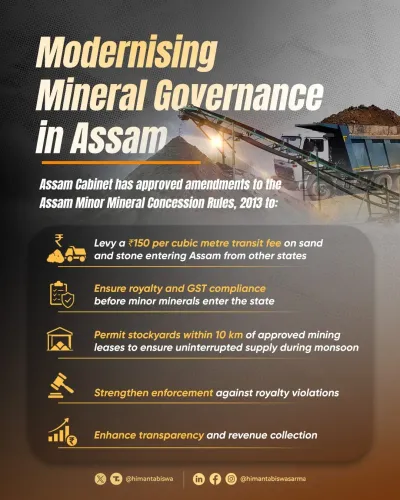
Assam Cabinet approved amendments to the Assam Minor Mineral Concession Rules, 2013 on 12 July .
A transit fee of ₹150 per cubic metre will be levied on sand and stone entering Assam from other states.
Royalty payment and GST compliance are now mandatory before minor minerals can be transported into the state.
Stockyards are permitted within a 10-km radius of approved mining lease areas to ensure monsoon-season supply continuity.
The amendments aim to curb illegal mining, plug revenue leakages and strengthen environmental accountability.
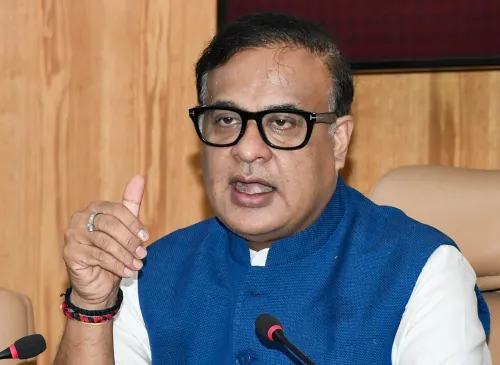
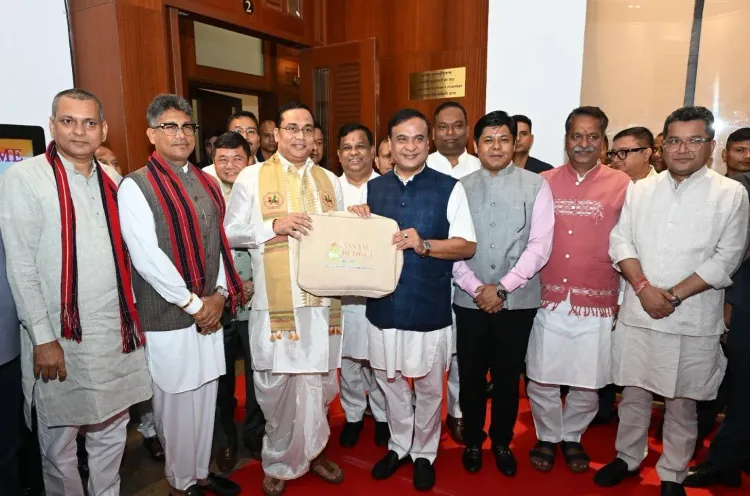
Assam Chief Minister Himanta Biswa Sarma on Sunday, 12 July announced that the state Cabinet has approved amendments to the Assam Minor Mineral Concession Rules, 2013, aimed at tightening royalty compliance, plugging revenue leakages and promoting sustainable management of natural resources. The revised framework is expected to overhaul mineral governance across the state.
Key Amendments Approved
Under the revised rules, a transit fee of ₹150 per cubic metre will be levied on sand and stone transported into Assam from other states. The amendments also make it mandatory to ensure royalty payment and Goods and Services Tax (GST) compliance before minor minerals are permitted to cross into the state — a step authorities say will check illegal transportation and improve tax collection.
To address supply disruptions during the monsoon season, the government has additionally permitted the establishment of stockyards within a 10-km radius of approved mining lease areas, ensuring uninterrupted availability of construction materials.
What the Chief Minister Said
Sharing the Cabinet decision in a post on social media platform X, Chief Minister Sarma said: 'Those who benefit from our natural resources must also contribute to restoring green cover. The amended Minor Mineral Concession Rules bring greater transparency, ensure royalty and GST compliance, curb leakages and strengthen sustainable growth.' He described the reforms as part of the government's broader push to modernise mineral governance by balancing economic growth with environmental responsibility.
Enforcement and Transparency Measures
The amendments seek to strengthen enforcement against royalty violations and enhance transparency in the extraction, transportation and trade of minor minerals. Officials indicated that the revised framework will improve monitoring of mineral movement, minimise revenue losses and create a more accountable mining ecosystem.
Notably, the move comes amid longstanding concerns across several Indian states about illegal sand mining and under-reporting of mineral extraction — a problem that has historically dented state revenues and damaged river ecosystems.
Expected Impact
State officials believe the new provisions will streamline the supply chain for construction materials while ensuring mining activities comply with both environmental and financial regulations. The amended rules are also expected to curb illegal mining practices and promote sustainable utilisation of natural resources through stricter regulatory oversight. The government anticipates an improvement in state revenue collections as a direct outcome of tighter compliance requirements.
With implementation details to follow, the mining industry and local contractors will be watching how swiftly the new transit fee and compliance mandates are operationalised on the ground.
Point of View
And the ₹150 transit fee is a concrete mechanism, not just a policy aspiration. The harder test will be enforcement: transit fees are only as effective as the checkpoints that collect them, and border monitoring in the Northeast has historically been patchy. The GST-compliance-before-entry mandate is structurally sound, but it risks creating bottlenecks at entry points if digital verification infrastructure is not in place. The stockyard provision is pragmatic for monsoon continuity, but proximity rules will need vigilant oversight to prevent them from being used as cover for unregulated stockpiling.
NationPress
11 Oct 2026
Frequently Asked Questions
What changes have been made to the Assam Minor Mineral Concession Rules?
The Assam Cabinet has amended the Assam Minor Mineral Concession Rules, 2013, introducing a ₹150-per-cubic-metre transit fee on sand and stone from other states, making royalty and GST compliance mandatory before minerals enter Assam, and permitting stockyards within 10 km of approved mining lease areas.
Why has Assam introduced a transit fee on sand and stone?
The ₹150-per-cubic-metre transit fee is designed to check illegal transportation of minerals and improve tax collection. It is part of a broader effort to plug revenue leakages and ensure that minerals entering the state have met all royalty and GST obligations.
How will the amended rules affect construction material supply during monsoon?
The government has permitted stockyards within a 10-km radius of approved mining lease areas specifically to ensure uninterrupted supply of construction materials during the monsoon season, when active mining is often curtailed.
Who announced the mineral rule amendments and how?
Assam Chief Minister Himanta Biswa Sarma announced the Cabinet-approved amendments in a post on social media platform X on Sunday, 12 July, outlining the key provisions and the government's environmental and revenue objectives.
What is the broader significance of these mining reforms for Assam?
The amendments are part of the state government's push to modernise mineral governance by balancing economic growth with environmental responsibility. Officials expect the revised framework to improve state revenue, curb illegal mining and create a more accountable and transparent mining ecosystem.