Assam plans to double Farmer Producer Companies, boost potato farming
Synopsis
Assam Agriculture Minister Pijush Hazarika has set an ambitious agenda: double the state's Farmer Producer Companies, launch a Rajmah Mission in Barak Valley, and expand potato cultivation through a private industry tie-up in Nalbari. The push signals a deliberate shift away from paddy monoculture toward a diversified, market-linked agricultural model for the Northeast.
Key Takeaways
Assam Agriculture Minister Pijush Hazarika directed officials to double the number of Farmer Producer Companies (FPCs) in the state on 2 November 2026 .
The review meeting at Krishi Bhawan, Khanapara assessed progress of the Makhana Mission , Edible Oil Palm Mission , and Pulse Mission .
A proposed Rajmah Mission for the Barak Valley was also reviewed.
In a separate meeting, Hazarika discussed expanding potato farming in partnership with a private unit operating in Nalbari , which currently works with around 1,200 potato farmers .
The state government aims to transform Assam into a leading horticulture-based state through district-specific agricultural planning.
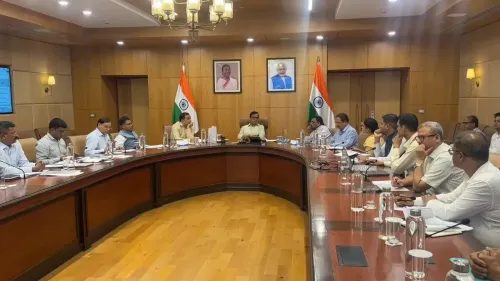
Assam Agriculture Minister Pijush Hazarika on Monday, 2 November 2026, directed senior officials to work towards doubling the number of Farmer Producer Companies (FPCs) in the state, while pushing for wider crop diversification and stronger market linkages to raise farmers' incomes. The directives came at a review meeting chaired by Hazarika at Krishi Bhawan in Khanapara, Guwahati.
Key Directives from the Review Meeting
At the meeting — attended by the Agriculture Department Commissioner and senior officials — Hazarika assessed progress across several flagship programmes, including the Makhana Mission, the Edible Oil Palm Mission, and the Pulse Mission. He also reviewed the proposed Rajmah Mission in the Barak Valley, a hill-terrain region with potential for high-value legume cultivation.
The Minister stressed the need to move beyond conventional paddy cultivation, urging officials to promote alternative crops including makhana, agarwood, edible oil palm, coconut, and dragon fruit, alongside other horticultural produce. He also directed officials to ensure timely implementation of departmental schemes, strengthen accountability, and deepen grassroots engagement so that government initiatives deliver tangible benefits to farmers.
Assam's Horticulture Ambition
Hazarika articulated the state government's broader vision of transforming Assam into a leading horticulture-based state by leveraging the distinct agricultural potential of individual districts. This district-specific approach, according to the Minister, is intended to move the state away from a one-crop dependency that has historically limited farmer incomes.
Notably, this push aligns with a wider national trend of state governments seeking to reduce paddy monoculture and diversify agricultural output to improve rural incomes and reduce water stress.
Expanding Potato Farming and Industry Partnerships
In a separate engagement, Hazarika met with representatives of a private agri-industry unit that operates a processing plant in Nalbari. The unit currently works with around 1,200 potato farmers across Assam and has a significant and growing requirement for potatoes.
Discussions focused on expanding the company's farmer base, strengthening market linkages, and scaling up potato production to meet the company's operational requirements. Hazarika emphasised that assured market access is critical to improving income for potato growers, and called for broader farmer enrolment under the partnership model.
What This Means for Assam's Farmers
The doubling of FPCs, if executed, would give more farmers access to collective bargaining power, shared infrastructure, and direct market access — mechanisms that have demonstrably improved farmer incomes in states like Maharashtra and Gujarat where FPC models are more mature. The challenge for Assam will be moving from policy intent to ground-level implementation, a gap that has historically slowed agricultural reform in the Northeast.
Hazarika stated that strengthening the agriculture sector, encouraging crop diversification, and promoting industry-farmer partnerships would remain key priorities of the state government in the months ahead.
Point of View
But Assam's agricultural reform record demands scrutiny. States with mature FPC ecosystems — Maharashtra and Gujarat — built them over years with sustained credit access, logistics support, and market infrastructure. Assam's Northeast geography adds a layer of complexity that headline targets do not capture. The Nalbari potato partnership is a concrete industry-linkage model worth watching, but it covers just 1,200 farmers in a state where millions depend on agriculture. The real test is whether the state can replicate that model at scale before the next budget cycle resets priorities.
NationPress
2 Nov 2026
Frequently Asked Questions
What are Farmer Producer Companies and why does Assam want to double them?
Farmer Producer Companies (FPCs) are collective entities that allow farmers to pool resources, negotiate better prices, and access markets directly. Assam Agriculture Minister Pijush Hazarika has directed officials to double their number in the state to strengthen market linkages and improve farmer incomes.
What is the Rajmah Mission in Barak Valley?
The Rajmah Mission is a proposed agricultural programme for the Barak Valley region of Assam, focused on promoting rajmah (kidney bean) cultivation as part of the state's broader crop diversification push. The Minister reviewed its progress at a meeting on 2 November 2026.
How does the potato farming expansion in Nalbari work?
A private agri-industry unit operating a plant in Nalbari currently partners with around 1,200 potato farmers in Assam. Hazarika held discussions on expanding this farmer base and scaling up potato production to meet the company's growing requirements, with assured market access as a key incentive for growers.
Which crops is Assam promoting beyond paddy?
Assam is pushing alternatives including makhana, agarwood, edible oil palm, coconut, dragon fruit, and other horticultural produce, as part of a strategy to reduce dependence on conventional paddy cultivation and raise farmer incomes.
What is Assam's vision for its agricultural sector?
The state government aims to transform Assam into a leading horticulture-based state by exploiting the distinct agricultural potential of each district. Key priorities include expanding FPCs, promoting crop diversification, and building farmer-industry partnerships.