Assam polygamy dismissal rule: BJP demands nationwide rollout
Synopsis
Assam has amended its civil service rules to make polygamy a sacking offence for government employees — and senior BJP leaders from Giriraj Singh to Bihar's party chief are already demanding every state follow suit. With the Uniform Civil Code debate simmering nationally, Himanta Biswa Sarma's move could become the template for a wider employment-linked crackdown on multiple marriages across India.
Key Takeaways
Assam Cabinet approved amendments to the Assam Services (Discipline and Appeal) Rules, 1964 on 3 November 2026 , making polygamy grounds for dismissal.
Employees found practising polygamy will lose their jobs and be permanently barred from future government employment in Assam .
The rule applies to government employees across all religious communities , not just one group.
Union Minister Giriraj Singh and BJP Bihar President Sanjay Saraogi called for all states to adopt similar rules.
BJP spokesperson Pratul Shahdeo said polygamy practitioners should also face legal action and imprisonment , going beyond the service rule.
The move is linked by BJP leaders to the broader push for a Uniform Civil Code across India.
The Assam Cabinet's decision to make polygamy and unauthorised second marriages grounds for dismissal from government service drew widespread support from Bharatiya Janata Party (BJP) leaders on Wednesday, 4 November 2026, with several calling for the policy to be extended to every state in India. The move, announced by Assam Chief Minister Himanta Biswa Sarma on 3 November, amends decades-old service rules and applies across all religious communities.
What the Assam Cabinet Decided
The Assam Cabinet has approved amendments to the Assam Services (Discipline and Appeal) Rules, 1964, inserting polygamy as an explicit ground for dismissal from government service. Under the revised rules, any state government employee found practising polygamy will not only lose their current post but will also be permanently disqualified from future government employment in the state.
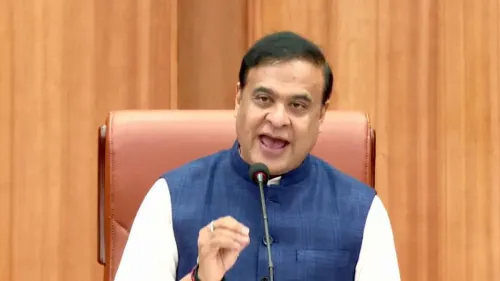
Announcing the decision, Chief Minister Sarma stated: 'The Assam Cabinet has decided that if any Assam government employee is found to be polygamous, he or she will be dismissed from service.' He described it as a significant change in the state's service rules, adding that strict disciplinary action would follow for violations.
BJP Leaders Back the Move, Demand National Policy
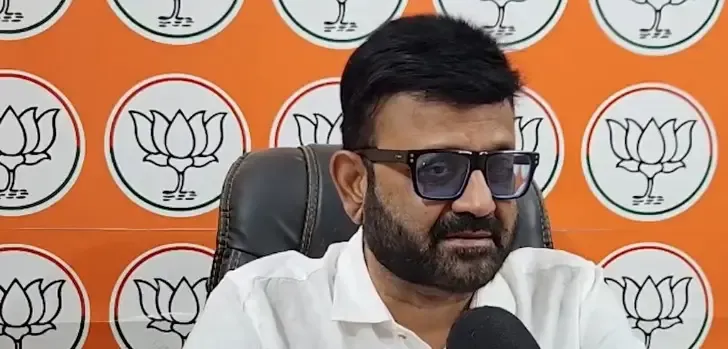
BJP spokesperson Pratul Shahdeo, speaking from Ranchi, called polygamy a social evil and argued that the Assam initiative should inspire a pan-India response. 'Polygamy is a social evil that women have to suffer greatly from. Tell me, would any father want his daughter to become someone's second or fourth wife?... Chief Minister Himanta Biswa Sarma has taken a positive initiative in this regard. Those who practice polygamy should not only be disqualified from government jobs but should also face legal action and imprisonment,' he said.
Union Minister Giriraj Singh offered a brief but pointed endorsement: 'I think every state should implement this now.'
BJP Bihar President Sanjay Saraogi described the decision as 'a historic step towards women's empowerment and social justice,' and Bihar Minister Ram Kripal Yadav echoed the sentiment, saying the practice of multiple marriages 'makes women's lives miserable, both in their family life and on a personal level.'
Legal and Policy Context
Polygamy — having more than one spouse simultaneously — is prohibited under Hindu, Christian, and Parsi personal law, but had historically been permissible for Muslim men under personal law provisions. BJP leaders framed the Assam move as complementary to the broader push for a Uniform Civil Code (UCC), which seeks to bring all religious communities under a single set of civil laws governing marriage, divorce, and inheritance. Notably, the amended Assam rules apply to government employees across all religious communities, not exclusively to any one group.
This comes amid ongoing national debate over the UCC, with Uttarakhand having already enacted a version of the code in 2024 — the first state to do so. The Assam amendment, while narrower in scope, extends the principle into the domain of public employment.
Significance and What Comes Next
The amendment targets government employees specifically, making it a disciplinary rather than a purely criminal measure. Critics may question whether the rule adequately addresses polygamy outside the public sector, or whether enforcement mechanisms are robust enough to prevent misuse. No formal opposition response had been recorded at the time of reporting.
With BJP leaders in Bihar and at the Centre publicly backing a national rollout, pressure on other BJP-governed states to adopt similar provisions is likely to grow. How the Centre responds — particularly in the context of the UCC debate — will be closely watched in the coming weeks.
Point of View
The party insulates itself from minority-targeting critiques. But the harder question — whether a dismissal rule for government employees meaningfully reduces polygamy in a country where most of the workforce is in the informal economy — goes unanswered. Enforcement rigour, not the headline, will determine whether this is transformative or symbolic.
NationPress
4 Nov 2026
Frequently Asked Questions
What has the Assam government decided about polygamy and government jobs?
The Assam Cabinet has amended the Assam Services (Discipline and Appeal) Rules, 1964, to make polygamy a ground for dismissal from government service. Employees found to have multiple spouses will lose their jobs and be permanently disqualified from future government employment in the state.
Does the Assam polygamy rule apply to all communities or only Muslims?
The rule applies to all Assam government employees regardless of religion. Chief Minister Himanta Biswa Sarma explicitly stated that the provision covers employees across all religious communities.
Why are BJP leaders calling for this policy to be adopted in every state?
Senior BJP figures, including Union Minister Giriraj Singh, have framed the Assam move as a model for nationwide women's empowerment and a step toward enforcing the spirit of a Uniform Civil Code. They argue that polygamy causes serious harm to women and that a uniform public-employment bar would signal social reform across all states.
How does this connect to the Uniform Civil Code debate?
BJP leaders have directly linked the Assam amendment to the broader UCC push, which seeks a single set of civil laws on marriage, divorce, and inheritance for all communities. Uttarakhand enacted a version of the UCC in 2024; the Assam service rule is a narrower, employment-focused parallel measure.
What penalties are BJP leaders seeking beyond job dismissal?
BJP spokesperson Pratul Shahdeo argued that dismissal alone is insufficient and called for legal action and imprisonment against those practising polygamy. However, these additional penalties go beyond what the current Assam Cabinet amendment formally introduces.