Assam's Lakhpati Baidews Carry Relief to Flood-Hit Upper Assam
Synopsis
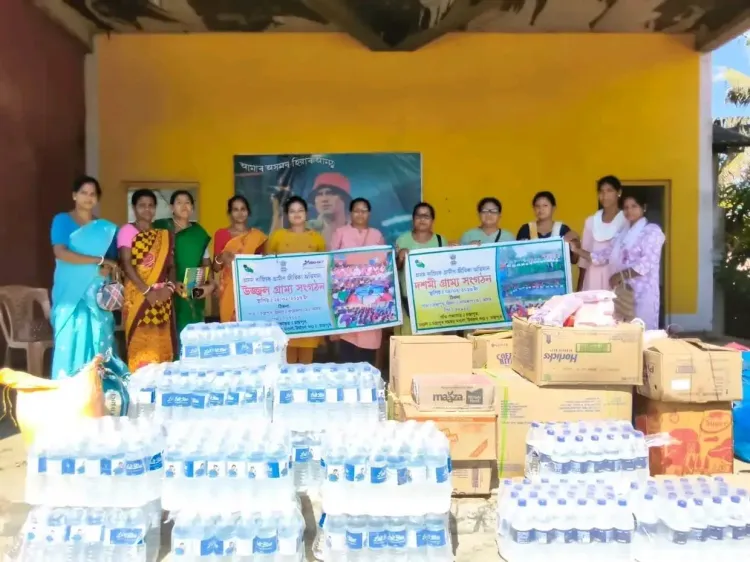
Lakhpati Baidews, SHG members, Cluster Level Federations and Village Organisations are delivering flood relief from their own savings to families across Sivasagar, Charaideo and Dibrugarh in Upper Assam, the Chief Minister's Office highlighted on July 30, 2026.
Key Takeaways
The Chief Minister's Office of Assam on July 30, 2026 highlighted SHG-led flood relief across Sivasagar, Charaideo and Dibrugarh .
Lakhpati Baidews , SHG members, CLFs and VOs are funding and delivering relief from their own savings.
The Assam State Rural Livelihoods Mission , operational since 2012 , built the federated SHG structure now enabling rapid disaster response.
The Lakhpati Baidew scheme targets rural women's annual household income above one lakh rupees through enterprise support under DAY-NRLM.
Upper Assam districts face predictable annual flooding, making established women's federations a recurring channel for local, fast-moving relief.
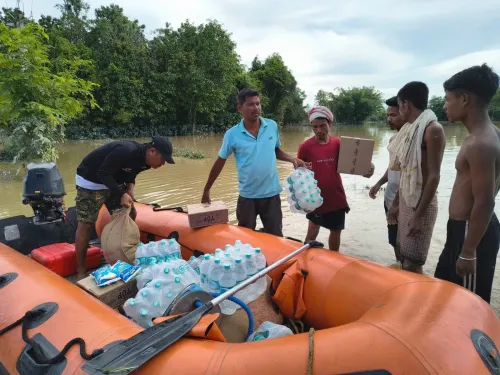
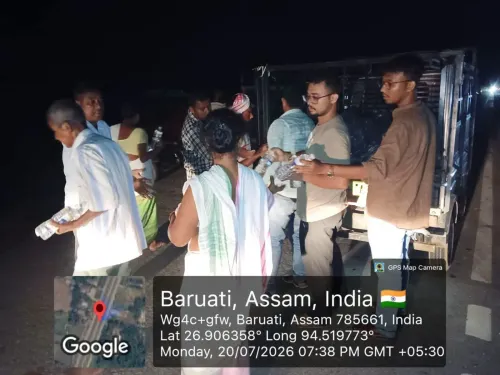
When the floodwaters rose across Upper Assam this monsoon season, it was not just government machinery that moved — it was women, pooling their own savings and walking to the doorsteps of neighbours who had lost everything. The Chief Minister's Office of Assam on Thursday, July 30, 2026, spotlighted the on-ground response of Lakhpati Baidews, Self Help Group members, Cluster Level Federations (CLFs), and Village Organisations (VOs) carrying relief to flood-affected families across Sivasagar, Charaideo, Dibrugarh, and surrounding districts.
From Savings Accounts to Flood-Affected Doorsteps
The post describes the relief effort in direct terms: 'From their own savings to their own hands' — a phrase that captures the self-funded, community-driven character of the response. These are not outside volunteers or state-deployed teams alone. They are SHG women, already organised into federated structures, redirecting the financial muscle they have built through years of thrift and enterprise into immediate humanitarian action.
The Lakhpati Baidew programme, run under the Assam State Rural Livelihoods Mission (ASRLM), was designed to push rural women's household incomes past the one lakh rupee annual threshold through enterprise and credit support. That income-building infrastructure is now doubling as a disaster-response network — a real-world stress test the programme's architects likely anticipated but rarely get credit for.
Why the SHG Federation Structure Makes This Possible
Assam's SHG ecosystem was built from 2012 onward as the state arm of the central government's DAY-NRLM (Deendayal Antyodaya Yojana — National Rural Livelihoods Mission). Over more than a decade, individual groups were federated upward into Village Organisations at the hamlet level and then into Cluster Level Federations at the block level. That layered architecture means decisions, funds, and people can move fast — no bureaucratic chain required.
Sivasagar and Dibrugarh are recurrently flood-prone Upper Assam districts, battered by the Brahmaputra and its tributaries every monsoon. The communities there are not strangers to inundation. Neither are the SHG networks embedded in them — making this year's response a continuation of an established pattern, not a one-off gesture.
A Decade of Institution-Building, Visible in a Crisis
What the Chief Minister's Office is signalling here is more than a welfare update. It is a proof-of-concept moment for federated rural institutions: that women's collectives, given enough time, capital, and organisational depth, become the first and fastest responders when the state's formal machinery is still mobilising. The relief reaching families in Charaideo and beyond is arriving because someone, years ago, decided that building a federation layer above SHGs was worth the effort.
The scale of relief distributed and whether formal coordination with the Assam State Disaster Management Authority follows will determine how far this community-led momentum can reach.
In Assam's flood season, the most powerful relief vehicle is often a woman with a ledger, a federation behind her, and the savings to act before anyone asks her to.
Point of View
Showcasing self-funded, women-led relief deflects from scrutiny of formal disaster response capacity while reinforcing the Lakhpati Baidew brand. More substantively, it reflects a genuine national pattern: federated SHG structures built under DAY-NRLM are increasingly the fastest first-responders in rural disasters, outpacing state machinery in reach and speed. Whether Assam formalises this community-led capacity into its disaster management architecture will be the real policy test to watch.
NationPress
30 Jul 2026
Frequently Asked Questions
What is the Lakhpati Baidew scheme in Assam?
The Lakhpati Baidew scheme is an Assam government initiative under the Assam State Rural Livelihoods Mission that supports rural women in Self Help Groups to achieve an annual household income of at least one lakh rupees through enterprise development and credit access.
Which districts are affected by floods in Upper Assam in 2026?
The Chief Minister's Office highlighted flood-affected families in Sivasagar, Charaideo and Dibrugarh as districts where SHG women are delivering relief, all located in Upper Assam.
What are Cluster Level Federations (CLFs) in Assam?
Cluster Level Federations are block-level federations of Self Help Groups under Assam's rural livelihoods structure. They manage higher-order financial and social activities and serve as an organisational layer above individual SHGs and Village Organisations.
How are SHG women funding flood relief in Assam?
According to the Chief Minister's Office post, SHG members, Lakhpati Baidews and their federations are using their own savings — accumulated through years of thrift and enterprise activity — to fund and deliver relief to flood-affected families.
What is the Assam State Rural Livelihoods Mission?
The Assam State Rural Livelihoods Mission (ASRLM), launched in 2012, is the state-level implementation arm of the central government's DAY-NRLM programme. It promotes women's Self Help Groups, federates them into Village Organisations and Cluster Level Federations, and supports livelihoods and enterprise development in rural Assam.