Ambedkar University Delhi protest enters Day 7 over 'iron cage' security curbs
Synopsis
Seven days in, Ambedkar University Delhi's campus has become the site of a deepening standoff — students allege an 'iron cage' of barricades and security checks has gutted their freedom, while the administration insists the measures are routine protocol. The overnight claim of a blocked ambulance during a student's medical emergency has sharply raised the stakes.
Key Takeaways
The AISA -led student protest at Ambedkar University Delhi entered its seventh day on 4 October 2026 .
Protesters describe new security arrangements as an 'iron cage' , demanding removal of barricades and restoration of free movement.
AISA alleged that a student collapsed at 3 am Friday night and that the administration delayed ambulance entry for medical evacuation — a claim the university disputed.
The university closed parts of the campus on Saturday for alleged maintenance, which AISA said disrupted classes and examinations.
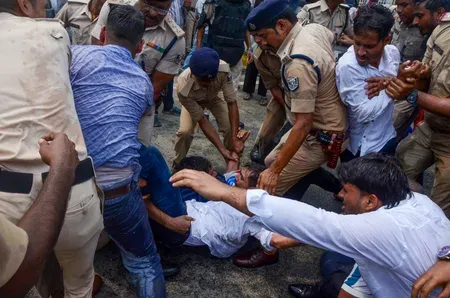
The administration alleged some students 'manhandled' security guards and referred the matter to Delhi Police .
AISA has called on civil society and human rights bodies to intervene as both sides maintain starkly opposing accounts.
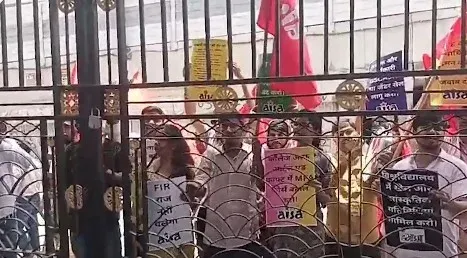
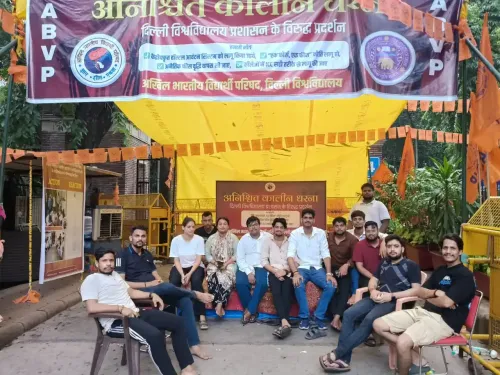
A student protest at Ambedkar University Delhi (AUD) entered its seventh consecutive day on Saturday, 4 October 2026, with demonstrators continuing to demand the removal of tightened security measures they have described as an 'iron cage' and 'aggressive barricading' that curtails free movement on campus. The agitation, led by the Left-backed All India Students' Association (AISA), centres on stricter checks at campus gates and physical barriers that protesters say have fundamentally changed daily life at the university.
Overnight Escalation and Medical Emergency Allegations
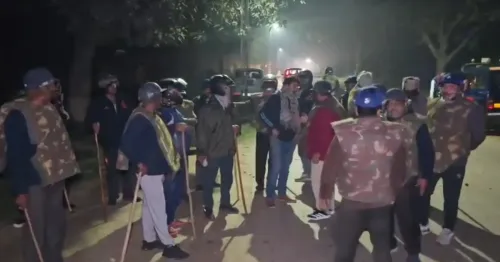
Tensions reportedly peaked late Friday night after protesting students alleged that security personnel blocked food and drinking water from being brought inside the campus. More seriously, AISA alleged that a protesting student collapsed at around 3 am and that the university administration delayed medical evacuation by preventing both an ambulance and police vehicles from entering the premises. The university, however, stated that its medical team was actively monitoring the health of all students participating in the protest and keeping a close watch on their condition — offering a sharply contrasting account of the incident.
Campus Closure and Examination Disruption
On Saturday, AISA further alleged that the administration shut the campus to students, causing some to miss scheduled classes and examinations. The student body claimed no actual maintenance activity was visible at the affected locations. The university maintained that the library, laboratories, and certain other blocks had been closed for maintenance and safety reasons, and that students had been notified in advance. 'The measure is purely for safety and maintenance reasons,' the university's public relations office said in a statement.
Competing Claims Over Protest Location and Security Conduct
The administration asserted that the sit-in was being conducted without its permission and that a designated space had already been allocated for peaceful protests. It alleged that demonstrators were instead occupying areas near the library and classrooms, disrupting other students. The university also alleged that some students had 'manhandled' security guards and said the matter had been referred to the Delhi Police for action. AISA denied any provocation, insisting that security personnel escalated the situation without cause.
Student Demands and Calls for Outside Intervention
Protesters have put forward four key demands: removal of the so-called 'iron cages' and internal barricades; restoration of campus democracy; accountability over the alleged obstruction of emergency medical access; and direct negotiations between protesting students and the university administration. AISA has also appealed to civil society groups, legal rights organisations, and human rights bodies to intervene and seek accountability from the administration. The university, for its part, said it was already engaged in dialogue and had responded to all 'permissible and legitimate demands', urging students to maintain peace and refrain from spreading misinformation.
With no resolution in sight after a week of protests, the standoff at Ambedkar University Delhi is likely to intensify unless both sides agree to structured, direct talks — the central demand around which all others hinge.
Point of View
If substantiated, moves this from an administrative dispute into a serious accountability matter. What is striking is the total breakdown of institutional trust: both sides are issuing contradictory statements on every single flashpoint, from the maintenance shutdown to the medical emergency. Universities are, by design, spaces that should have robust internal grievance mechanisms; the fact that AISA is now appealing to external human rights bodies suggests those mechanisms have either failed or were never accessible. The longer this drags on without direct negotiations, the higher the risk that a routine security review becomes a symbol of campus authoritarianism — a narrative that will follow the institution well beyond this protest.
NationPress
4 Oct 2026
Frequently Asked Questions
What is the Ambedkar University Delhi student protest about?
Students at Ambedkar University Delhi, led by the All India Students' Association (AISA), are protesting against tightened security measures including stricter gate checks and physical barricades they describe as an 'iron cage'. The protest entered its seventh day on 4 October 2026, with demonstrators demanding the removal of barriers and direct talks with the administration.
What happened during the medical emergency alleged by AISA?
AISA alleged that a protesting student collapsed at around 3 am on Friday night and that the university administration delayed medical evacuation by preventing an ambulance and police vehicles from entering the campus. The university denied this, stating its medical team was continuously monitoring all protesters.
Why was the campus reportedly closed on Saturday?
The university said the library, laboratories, and some other blocks were shut for scheduled maintenance and safety work, and that students had been informed in advance. AISA disputed this, alleging no actual maintenance was taking place and that the closure caused students to miss classes and examinations.
What are the key demands of the protesting students?
The students have four main demands: removal of the 'iron cage' barricades and internal barriers; restoration of campus democracy; accountability over the alleged blocking of emergency medical access; and direct negotiations between student representatives and the university administration.
How has the university responded to the protest?
The university has said it is engaged in dialogue and has already addressed all 'permissible and legitimate demands'. It alleged that the sit-in is unauthorised, that a designated protest area was provided but ignored, and that some students manhandled security staff — a matter it has referred to Delhi Police.