Why Did a Delhi Court Remand Youth Congress Members to Police Custody?
Synopsis
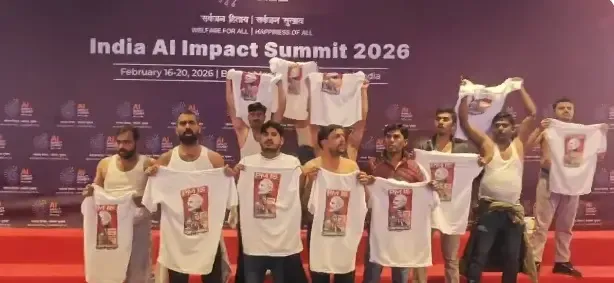
In a significant turn of events, a Delhi court has placed four members of Youth Congress in police custody following their shirtless protest at the India AI Impact Summit. The demonstration has sparked political outrage and raised questions about corporate influence versus national interests.
Key Takeaways
The protest was aimed at raising awareness about significant economic and political issues.
Four Youth Congress members were placed under police custody.
The incident has drawn sharp criticism from political opponents.
Security measures were quickly enacted to maintain order during the protest.
Investigations into the protest's organization are ongoing.
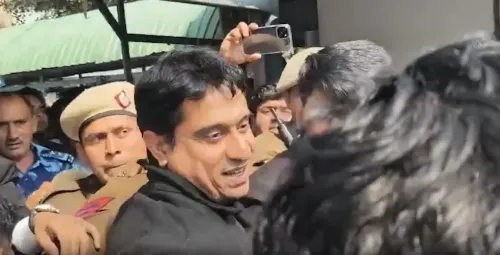
New Delhi, Feb 21 (NationPress) A Delhi court on Saturday ordered the remand of four Youth Congress members to five days of police custody after their arrest during a shirtless protest at the India AI Impact Summit on Friday.
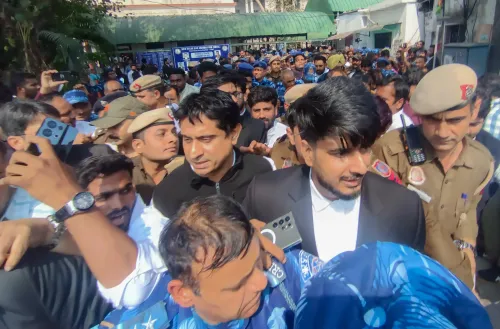
The detained individuals -- Krishna Hari, Kundan Yadav, Ajay Kumar, and Narasimha Yadav -- were brought before the Patiala House Court following their arrest linked to the demonstration that interrupted the summit proceedings.
In pursuing police custody, the investigating agency argued that custodial interrogation was essential to uncover the broader conspiracy behind the protest, identify other participants, and investigate the circumstances that led to the event.
The defense team opposed the custody request, advocating for bail on the grounds that the accused were engaged in a peaceful demonstration, asserting that continued detention was unjustified.
After considering arguments from both sides, Patiala House Court granted police custody of the four individuals for five days while denying their bail requests. The arrests occurred after Youth Congress members staged a protest during the India AI Impact Summit, drawing significant political backlash.
The event gained attention as some demonstrators reportedly exhibited disruptive behavior at the high-profile gathering attended by political leaders, industry figures, and technology experts.
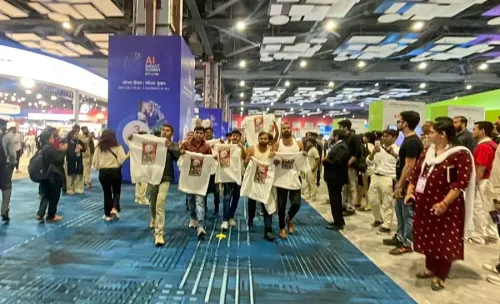
Officials reported that several Youth Congress members removed their shirts and chanted slogans until security personnel intervened. Some protesters, without shirts, posed in front of an India AI Summit sign, taking photos and attempting to create chaos.
Security forces swiftly responded, removing the protesters from the venue. An investigation into the incident is currently in progress.
In reaction, BJP leaders condemned the protest, calling it inappropriate and accusing the Congress party of trying to undermine a national event that showcases India's advancements in technology.
In a statement, the youth wing of the opposition Indian National Congress asserted that the protest aimed to bring attention to concerns that corporate interests were overshadowing national priorities, further claiming that the government’s foreign policy had weakened.
Additionally, the group linked the protest to economic issues such as rising prices and unemployment, arguing that youth frustration was on the rise.
Point of View
The incident reflects ongoing tensions between political ideologies and public sentiment regarding corporate governance in India. While protests are a vital part of democratic expression, the manner and timing raise questions about their effectiveness and the appropriateness of such methods in impactful national events.
NationPress
19 Sept 2026
Frequently Asked Questions
What prompted the Youth Congress protest?
The protest aimed to highlight concerns over corporate interests being prioritized over national interests, as well as issues like rising prices and unemployment affecting the youth.
What was the outcome of the court hearing?
The Delhi court remanded the four Youth Congress members to five days of police custody while denying their bail applications.
How did the police respond to the protest?
Security personnel quickly intervened to remove the protesters after they engaged in disruptive behavior at the summit.
What are the political reactions to the protest?
BJP leaders criticized the protest as inappropriate, accusing the Congress party of attempting to derail a significant national event.
Is there an ongoing investigation regarding this incident?
Yes, authorities are currently investigating the circumstances surrounding the protest and its organization.