Delhi Court Places Youth Congress Leader Uday Bhanu Chib in Police Custody Over AI Summit Protest
Synopsis
A Delhi court has ordered a four-day police custody for Uday Bhanu Chib, the Indian Youth Congress leader, following his arrest related to a controversial shirtless protest during the India AI Impact Summit, raising significant political tensions.
Key Takeaways
Uday Bhanu Chib arrested in connection with protests.
Court grants four days of police custody.
Allegations include organizing an unlawful assembly .
Protest raised political tensions between parties.
Investigation focuses on uncovering a larger conspiracy.
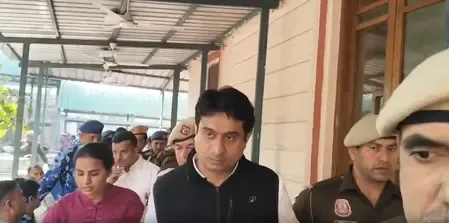
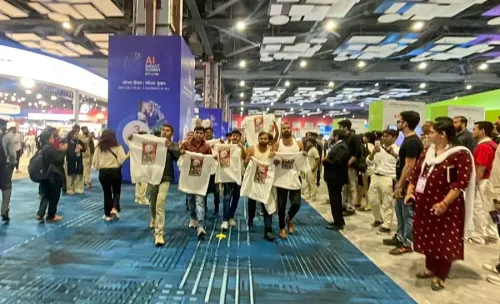
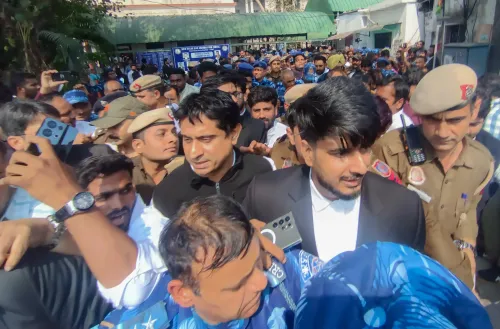
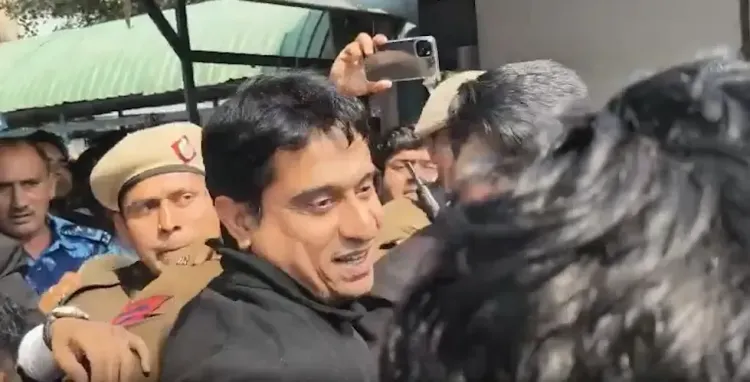
New Delhi, Feb 24 (NationPress) A Delhi court has placed Uday Bhanu Chib, the National President of the Indian Youth Congress (IYC), in police custody for four days after his arrest linked to a shirtless demonstration that took place during the India AI Impact Summit at Bharat Mandapam.
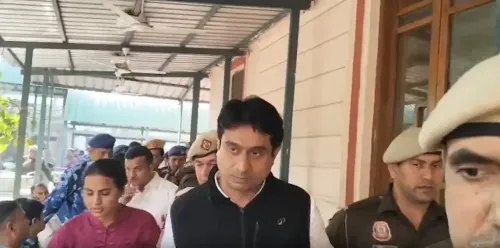
Following his arrest earlier that day by Delhi Police, Chib was presented in front of the Patiala House Court.
The authorities requested seven days for custodial interrogation, asserting that Chib was the "key conspirator and mastermind" behind the protest incident.
The defense opposed the extended custody, while the prosecution argued that a thorough interrogation was vital to reveal a broader conspiracy.
After considering arguments from both parties, the Patiala House Court granted four days of police custody for ongoing inquiry.
According to the arrest details, Chib has been accused of orchestrating an unlawful assembly on February 20 at Bharat Mandapam during the AI Summit and Expo 2026, where purported anti-national slogans were shouted, and attempts were made to provoke riot-like conditions.
Moreover, police alleged that Chib, in collaboration with co-accused individuals Krishna Hari, Kundan Yadav, Narasimha Yadav, Ajay Kumar Yadav, and others, obstructed and assaulted law enforcement officials while they were executing their duties.
The arrest memo further indicated that Chib allegedly did not cooperate during the interrogation and failed to reveal information about the absconding co-accused and the source of the T-shirts used in the protest.
Chib was detained after approximately 15 hours of questioning at the Tilak Marg police station regarding the shirtless demonstration that occurred on the final day of the India AI Impact Summit.
This protest has sparked a political controversy, with the Bharatiya Janata Party condemning the demonstration as an effort to damage India’s international reputation, while the Congress party defended it as a peaceful expression of youth concerns.
Point of View
The arrest of Uday Bhanu Chib highlights the ongoing tensions within Indian politics. While the authorities assert the need for investigation into alleged unlawful activities, the opposition views the protest as a legitimate expression of youth discontent, showcasing the deep divide in perspectives regarding political dissent in India.
NationPress
24 Sept 2026
Frequently Asked Questions
What were the reasons for Uday Bhanu Chib's arrest?
Uday Bhanu Chib was arrested for allegedly orchestrating an unlawful assembly during the India AI Impact Summit, where anti-national slogans were reportedly raised.
How long will Uday Bhanu Chib be in police custody?
The Delhi court has remanded him to four days of police custody for further investigation.
What was the nature of the protest?
The protest involved participants going shirtless and has been characterized by political parties as either a peaceful demonstration or an attempt to tarnish India's image.
What are the charges against Chib?
Chib faces accusations of being the main conspirator behind the unlawful assembly and obstructing police duties, among other allegations.
What has been the political reaction to this incident?
The Bharatiya Janata Party criticized the protest, while the Congress party has defended it as a legitimate expression of youth concerns.