Khalistan threat on Aug 15: SFJ strike plan, propaganda drive trigger Punjab high alert
Synopsis
With Independence Day days away, intelligence agencies have flagged a credible dual threat from Khalistan groups: physical strikes in Punjab timed for symbolic impact on 15 August, and a coordinated online propaganda blitz led by SFJ chief Gurpatwant Singh. The desperation signals a movement under pressure — but a cornered one, officials warn, is the most unpredictable.
Key Takeaways
Intelligence agencies issued a high alert in Punjab on 8 August ahead of Independence Day on 15 August .
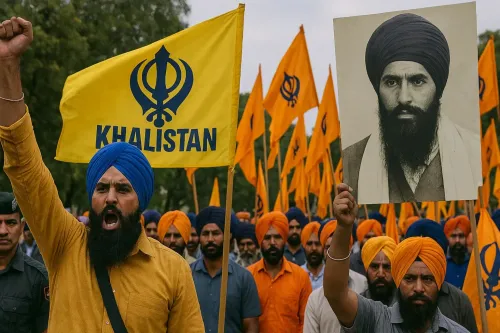
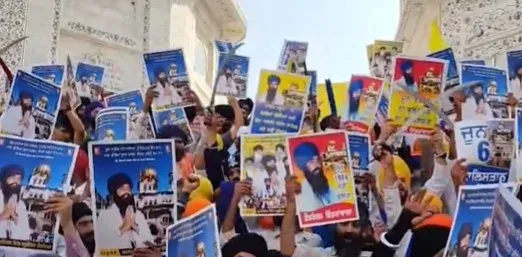
Pro-Khalistan groups, including the banned Sikhs for Justice (SFJ) , are planning symbolic strikes and protests timed to 15 August .
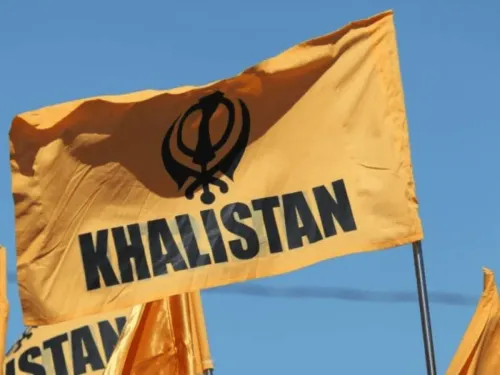
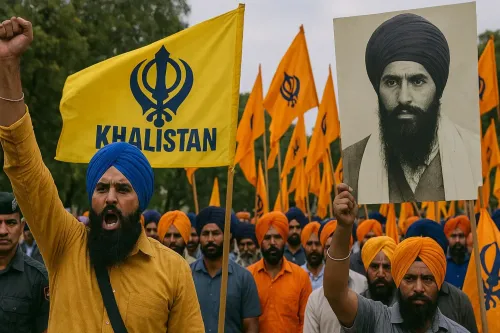
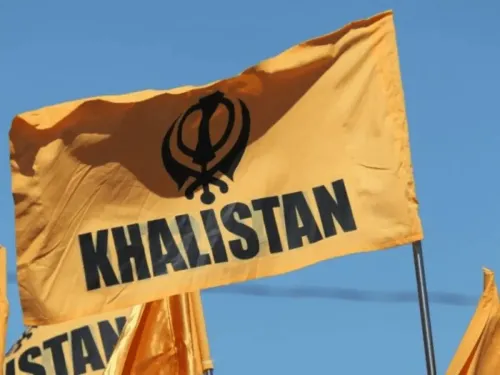
SFJ chief Gurpatwant Singh is running an active social media campaign urging Punjab youth to hoist Khalistan flags and protest against the Indian state.
Pro-Khalistan slogans were found on a government school in Kotla Heran village , Punjab; police erased them promptly.
Malaysia deported Khalistan Zindabad Force (KZF) members to India in June , after the movement attempted to shift operations there from Canada and the UK.
Officials attribute the escalation to growing desperation, with ISI backing under pressure from crackdowns on gangster-terror networks in India and Canada.
Intelligence agencies have issued a high alert across Punjab ahead of Independence Day on 15 August, warning that pro-Khalistan elements are actively planning strikes and a coordinated propaganda offensive timed to coincide with India's national celebrations. The alert, flagged by officials on 8 August, identifies the banned outfit Sikhs for Justice (SFJ) and affiliated terror networks as the primary threat vectors.
Strike Plans and the August 15 Symbolism
According to an Intelligence Bureau official, Khalistani groups have been planning attacks in several parts of Punjab for some time, but are specifically seeking to time any strike on 15 August to maximise symbolic impact. 'They would not mind even if the attack is smaller in nature, but they want to send out a message when India celebrates Independence Day,' the official said.
Officials note that the intent is not necessarily to cause mass casualties but to generate a propaganda moment — a calculated bet on optics over operational scale. This marks a tactical shift that security analysts have observed in similar movements globally, where symbolism increasingly drives operational timing.
SFJ Chief's Online Campaign
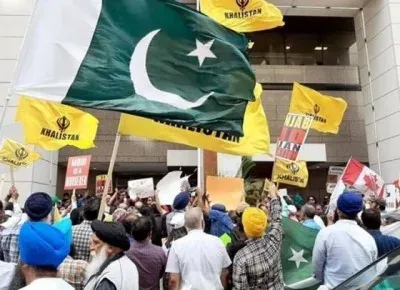
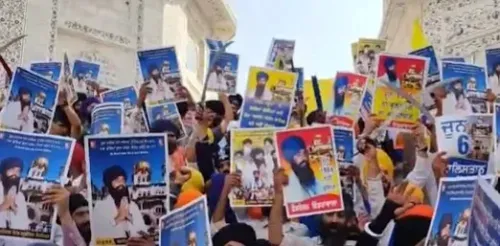
Gurpatwant Singh, chief of the proscribed Sikhs for Justice, has stepped up activity on social media in recent weeks. According to officials, Singh has been urging Punjab's youth to hoist Khalistan flags on schools and other public buildings, and to characterise 15 August as a 'dark day.' He has also called for large-scale protests against the Indian state and is reportedly running hate campaigns that, in the past, have included calls for attacks inside India and smear campaigns targeting senior government figures.
Intelligence agencies are closely monitoring SFJ's online output, which officials say is focused on pushing pro-Khalistan content, recruitment messaging, and calls for a separate Khalistan nation carved out of India's Punjab.
Ground-Level Incidents and Cross-Border Dimensions
The alert follows a concrete incident earlier this week, when pro-Khalistan slogans — reading 'Khalistan Zindabad' — were found painted on the walls of a government middle school in Kotla Heran village in Punjab. Police responded swiftly and erased the slogans. Officials say similar acts are being planned in Canada and the United Kingdom on 15 August, aimed at drowning out India's Independence Day narrative abroad.
The push comes amid a broader ISI-backed effort to revive the Khalistan movement at a time when gangster-terror networks have faced sustained crackdowns in both India and Canada. With their operational space shrinking, these groups have reportedly attempted to relocate activities to Malaysia and Azerbaijan. Malaysia, however, has taken a firm stance — in June this year, it deported members of the Khalistan Zindabad Force (KZF) to India.
Security Assessment and What Comes Next
Officials describe the current moment as critical in the long-running battle against the Khalistan movement. 'They have become desperate; their backers, the ISI, are getting edgy, and hence the chances of them indulging in a massive misadventure cannot be ruled out,' an official said. Security forces have been placed on heightened alert, and a close watch is being maintained on SFJ's digital operations as well as any mobilisation on the ground in Punjab ahead of 15 August.
Point of View
Planning attacks it openly admits may be 'smaller in nature' just to claim a propaganda win on 15 August. That is a sign of structural weakness, not strength. Yet security planners are right to treat desperation as a threat multiplier — cornered networks with ISI backing and nothing to lose are precisely the ones that take the riskiest bets. The deportation of KZF members from Malaysia is a diplomatic win, but it also narrows the movement's geography and could push activity back toward the Punjab heartland. The real contest on 15 August may be less kinetic and more informational: SFJ's online campaign, if unchecked, can reach millions of young Punjabis faster than any physical strike. India's counter-narrative infrastructure will be tested as much as its security apparatus.
NationPress
8 Aug 2026
Frequently Asked Questions
Why have intelligence agencies issued a high alert in Punjab ahead of Independence Day?
Agencies have warned that pro-Khalistan groups, including the banned Sikhs for Justice (SFJ), are planning symbolic strikes and protests timed to 15 August to generate a propaganda moment during India's Independence Day celebrations. The alert was flagged on 8 August by Intelligence Bureau officials.
What is Sikhs for Justice (SFJ) and why is it banned in India?
Sikhs for Justice is a US-based outfit that advocates for a separate Khalistan nation carved out of India's Punjab. India proscribed the organisation as a terrorist group due to its role in inciting violence, funding militancy, and running campaigns against the Indian state. Its chief, Gurpatwant Singh, operates from abroad.
What online activities is SFJ chief Gurpatwant Singh carrying out?
According to officials, Singh has been urging Punjab youth on social media to hoist Khalistan flags on schools and public buildings, call 15 August a 'dark day,' and gather in large numbers to protest against India. He is also reportedly running hate campaigns and has historically called for attacks inside India.
What happened at the school in Kotla Heran village?
Pro-Khalistan slogans reading 'Khalistan Zindabad' were found painted on the walls of a government middle school in Kotla Heran village in Punjab earlier this week. Police responded quickly and erased the slogans.
Why were Khalistan Zindabad Force members deported from Malaysia?
Malaysia deported Khalistan Zindabad Force (KZF) members to India in June this year after taking a firm stance against the group. The deportation came after Khalistan networks attempted to shift their base of operations to Malaysia and Azerbaijan following crackdowns in Canada and the United Kingdom.