Sukhbir Badal promises 'Made in Punjab' quota, ₹5/unit power if SAD returns to power
Synopsis
Sukhbir Badal's pre-election pitch to Punjab's business community goes beyond usual promises — a dedicated 'Made in Punjab' government-purchase quota, state GST retention for new SMEs, ₹5/unit industrial power, and a 1,000-acre industrial hub in Sirhind add up to the most detailed industry-facing manifesto SAD has floated in years. Whether the numbers hold up to scrutiny is another matter.
Key Takeaways
Sukhbir Badal announced a special government-purchase quota for 'Made in Punjab' products on 2 November in Fatehgarh Sahib and Nabha.
A future SAD government would allow new SMEs to retain state GST as an incentive for fresh investment.
Industrial power would be supplied at a flat rate of ₹5 per unit across the entire sector.
The Rahat scheme would be revived, enabling traders to settle tax dues via a lump-sum payment.
A Focal Point industrial cluster covering 1,000 acres is proposed for Sirhind .
Badal pledged to end 'Inspector Raj' , banning government officials from visiting business premises for harassment.
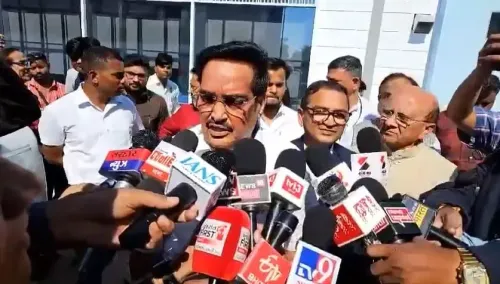
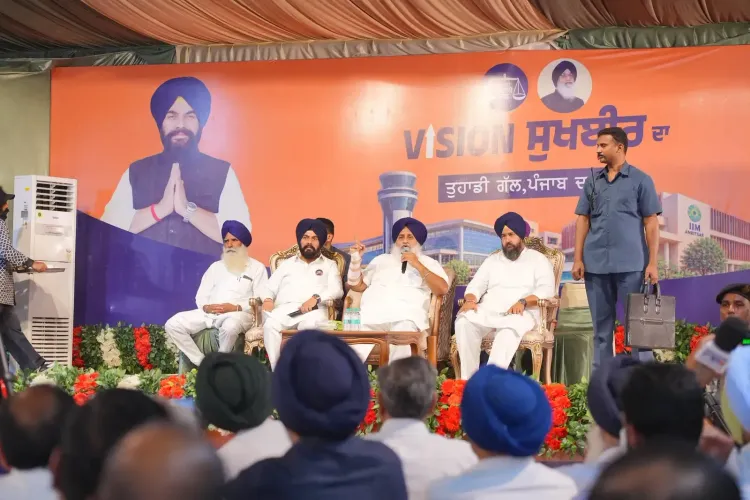
Shiromani Akali Dal (SAD) President Sukhbir Badal on Monday, 2 November unveiled a series of pre-election pledges for Punjab's trade and industry, promising a dedicated government-purchase quota for 'Made in Punjab' products and flat-rate industrial power at ₹5 per unit if his party forms the next state government. Badal made the announcements during outreach meetings with business communities in Fatehgarh Sahib and Nabha.
Key Announcements for Industry
Badal pledged that a future SAD government would reserve a special procurement quota exclusively for locally manufactured goods, aiming to boost Punjab's industrial base. He also promised that all new small-scale and medium enterprises (SMEs) would be permitted to retain the state Goods and Services Tax (GST) component — a direct financial incentive to encourage fresh investment and unit formation.
On power, he committed to supplying electricity to the entire industrial sector at ₹5 per unit, positioning it as a relief measure against the high energy costs that industry representatives have long complained about.
Rahat Scheme and End of 'Inspector Raj'
The SAD President announced the re-introduction of the Rahat scheme, under which traders would be able to settle their tax liabilities through a lump-sum payment, eliminating the need to maintain detailed accounts. “This scheme will end the need for traders to keep accounts and they will be able to complete their tax liabilities by paying lump-sum tax,” he said.
Responding to a question from a member of the Fatehgarh Sahib Silai Machine Association, Badal also declared an end to what he termed 'Inspector Raj' — the practice of government officials visiting business premises for compliance checks. “We will end Inspector Raj once and for all. No government official will come to your premises and harass you,” he said.
Focal Point in Sirhind Proposed
Badal announced plans to establish a Focal Point industrial hub in Sirhind across 1,000 acres, citing the town's geographic advantages. The proposed cluster is intended to attract investment by leveraging Sirhind's location along key trade and transport corridors in the state.
A Direct Appeal to Voters
Framing the pledges as election promises contingent on voter choice, Badal urged the business community to evaluate the SAD government's past record against the Congress and the current Aam Aadmi Party (AAP) administration. “If SAD has made Punjab power surplus, created a world-class road network, built airports and brought in investment into the state, then you should bring in a SAD government in the next elections,” he said.
He warned that “one wrong decision could result in wasting five more years,” in a pointed message about the upcoming state assembly elections. The pledges signal SAD's attempt to reclaim its traditional support base among Punjab's traders and small industrialists, a constituency that has drifted toward rival parties in recent election cycles.
Point of View
Many of whom backed AAP in 2022 on an anti-corruption, anti-Inspector-Raj plank. The irony is that SAD itself governed Punjab for a decade and left behind its own legacy of regulatory complaints. Promising GST retention, lump-sum taxation, and flat-rate power are credible headline numbers, but SAD has not yet said how the state's already-strained fiscal position would absorb the revenue cost. The Rahat scheme, in particular, was discontinued partly over evasion concerns — reviving it without addressing that flaw could invite the same criticism.
NationPress
2 Nov 2026
Frequently Asked Questions
What is the 'Made in Punjab' quota promised by Sukhbir Badal?
It is a proposed policy under which a future SAD government would reserve a dedicated share of all government purchases exclusively for products manufactured in Punjab. Badal announced the pledge on 2 November during meetings with traders and industrialists in Fatehgarh Sahib and Nabha.
What is the Rahat scheme that Badal has promised to revive?
The Rahat scheme is a simplified tax-settlement mechanism under which traders can discharge their tax liabilities by paying a single lump-sum amount, removing the need to maintain detailed accounts. Badal said the scheme would be re-introduced if SAD forms the next Punjab government.
What did Badal promise on industrial power tariffs?
Badal pledged to supply electricity to the entire industrial sector in Punjab at a flat rate of ₹5 per unit under an SAD government, positioning it as relief against high energy costs cited by businesses.
What is the proposed Focal Point in Sirhind?
Badal announced plans to develop a Focal Point industrial hub spread across 1,000 acres in Sirhind, leveraging the town's location advantages to attract new investment and manufacturing activity to the region.
Why is SAD making these promises ahead of Punjab elections?
SAD is seeking to rebuild support among Punjab's traders and small industrialists, a base that largely shifted to the Aam Aadmi Party in the 2022 assembly elections. The pledges are aimed at drawing a policy contrast with the current AAP government and the preceding Congress administration.