Gandhi Jayanti 2026: CM Yogi says Bapu's ideals guide Viksit Bharat vision
Synopsis
On Gandhi Jayanti 2026, UP Chief Minister Yogi Adityanath, Union Minister Nitin Gadkari, and Bihar CM Samrat Choudhary paid tribute to Mahatma Gandhi — each framing his legacy of truth, non-violence, and Swadeshi as directly relevant to modern India's Viksit Bharat goals. The tributes reflect a deliberate political effort to root contemporary development ambitions in Gandhi's founding philosophy.
Key Takeaways
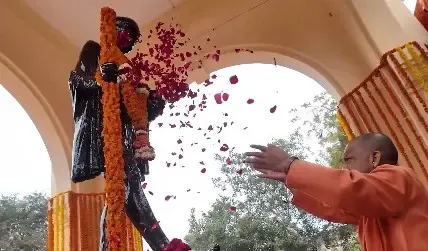
CM Yogi Adityanath paid tribute to Mahatma Gandhi on Gandhi Jayanti, 2 October 2026 , linking Bapu's ideals to the Viksit Bharat vision.
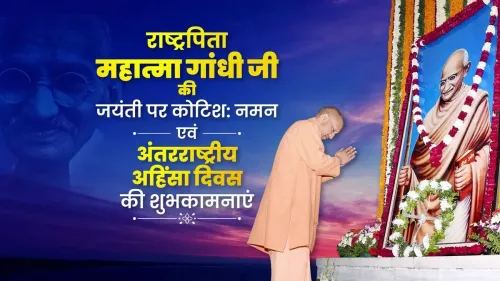
In an X post , Yogi described Gandhi as one who 'walked the path of truth and non-violence' and extended greetings on the International Day of Non-Violence .
Union Minister Nitin Gadkari called Gandhi's life 'itself an ideal' and said concepts of Swadeshi and Swaraj would inspire generations.
Bihar CM Samrat Choudhary said Gandhi's thoughts on truth, non-violence, and Satyagraha continue to convey a message of peace to humanity.
Gandhi Jayanti is observed globally as the International Day of Non-Violence , as designated by the United Nations .
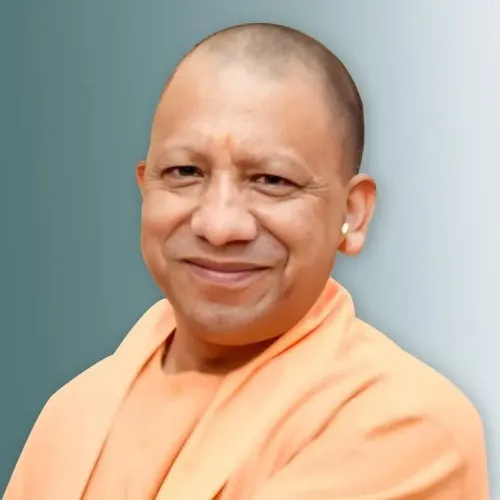
Uttar Pradesh Chief Minister Yogi Adityanath on 2 October 2026 paid tribute to Mahatma Gandhi on Gandhi Jayanti, asserting that the Father of the Nation's ideals of truth, simplicity, and non-violence continue to provide direction in building a self-reliant and Viksit Bharat. The occasion is also observed globally as the International Day of Non-Violence.
CM Yogi's Tribute on Gandhi Jayanti
In a post on X, Chief Minister Yogi Adityanath offered 'millions of salutations' to Gandhi, describing him as someone 'who walked the path of truth and non-violence to convey the message of freedom to the entire world through indigenous means.' He extended best wishes to the people of Uttar Pradesh on the International Day of Non-Violence.
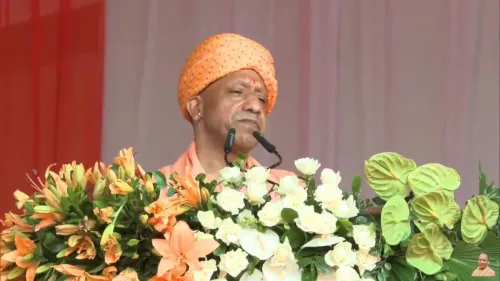
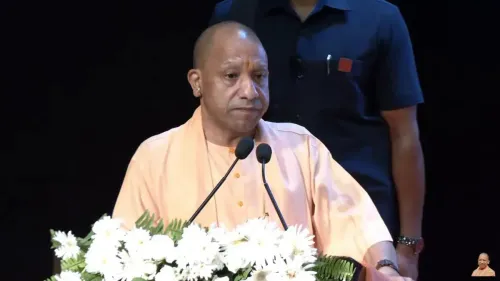
In an accompanying video message, Yogi underscored the global significance of India's freedom movement. 'For the whole world, it remains a matter of curiosity that India achieved independence by following the path of truth and non-violence,' he said, calling Gandhi's leadership a demonstration of the enduring strength of Satyagraha.
Union Minister and Bihar CM Join the Remembrance
Union Minister Nitin Gadkari also paid homage on the occasion, stating in his own X post that Gandhi's life 'was itself an ideal.' Gadkari emphasised that Gandhi's concepts of Swadeshi and Swaraj would continue to inspire generations to come, offering 'countless salutations to Bapu' on Gandhi Jayanti.
Bihar Chief Minister Samrat Choudhary similarly remembered Gandhi and extended greetings to citizens. In his X post, Choudhary said Gandhi's 'thoughts on truth, non-violence, and Satyagraha continue to this day to convey a message of peace, harmony, and love to all humanity.'
The Significance of Gandhi Jayanti
Gandhi Jayanti, observed every year on 2 October, marks the birth anniversary of Mahatma Gandhi, one of the foremost leaders of India's independence movement. The United Nations designated the date as the International Day of Non-Violence, recognising Gandhi's philosophy as a universal message of peace.
Across the country, citizens, institutions, and public figures commemorate his contributions by reflecting on his core principles — truth, non-violence, simplicity, Swadeshi, and peaceful resistance. This year, tributes from national and state leaders echoed a common thread: linking Gandhi's legacy to contemporary goals of national development and self-reliance.
Gandhi's Legacy in Modern India
The invocation of Gandhi's ideals in the context of Viksit Bharat — the government's vision for a developed India by 2047 — reflects a broader political effort to anchor modern development ambitions in the country's founding philosophical traditions. Notably, the emphasis on Swadeshi aligns with ongoing policy pushes around domestic manufacturing and economic self-sufficiency. This annual occasion serves as a moment for India's leadership to publicly reaffirm those values before a national and global audience.
Point of View
But this year's messaging carries a deliberate policy subtext — each leader explicitly connecting Gandhi's Swadeshi philosophy to the Viksit Bharat framework, effectively casting modern self-reliance drives as a continuation of Bapu's vision. That framing is convenient, but it papers over a tension: Gandhi's Swadeshi was rooted in decentralised, small-scale production, while India's current manufacturing push is largely industrialised and corporatised. The more substantive question mainstream coverage skips is whether Gandhi's ideas are being genuinely integrated into policy design or selectively invoked for rhetorical legitimacy on a politically significant date.
NationPress
2 Oct 2026
Frequently Asked Questions
What is Gandhi Jayanti and why is it observed on 2 October?
Gandhi Jayanti is observed on 2 October every year to mark the birth anniversary of Mahatma Gandhi, the Father of the Nation and a central leader of India's independence movement. The United Nations also recognises the date as the International Day of Non-Violence.
What did CM Yogi Adityanath say on Gandhi Jayanti 2026?
CM Yogi Adityanath said in an X post that Mahatma Gandhi's ideals, simplicity, and thoughts continue to provide guidance in building a self-reliant and Viksit Bharat. In a video message, he highlighted Gandhi's leadership in demonstrating the power of truth and non-violence during India's freedom struggle.
How does Gandhi's Swadeshi concept relate to Viksit Bharat?
Leaders including CM Yogi and Union Minister Gadkari drew a direct link between Gandhi's Swadeshi and Swaraj principles and the current government's Viksit Bharat vision, framing self-reliance as an extension of Bapu's philosophy. However, analysts note the tension between Gandhi's decentralised economic model and the large-scale industrial approach underpinning current policy.
Who else paid tribute to Mahatma Gandhi on Gandhi Jayanti 2026?
Union Minister Nitin Gadkari and Bihar Chief Minister Samrat Choudhary also paid tribute. Gadkari called Gandhi's life 'itself an ideal' and stressed the enduring relevance of Swadeshi and Swaraj, while Choudhary offered 'countless salutations' and emphasised Gandhi's message of peace and harmony.
What is the International Day of Non-Violence?
The International Day of Non-Violence is observed on 2 October — Gandhi's birth anniversary — as declared by the United Nations General Assembly in 2007. It aims to promote the message of non-violence, peace, tolerance, and understanding worldwide.