Barda sanctuary can host Asiatic lions long-term, 17 now resident: PLOS One study
Synopsis
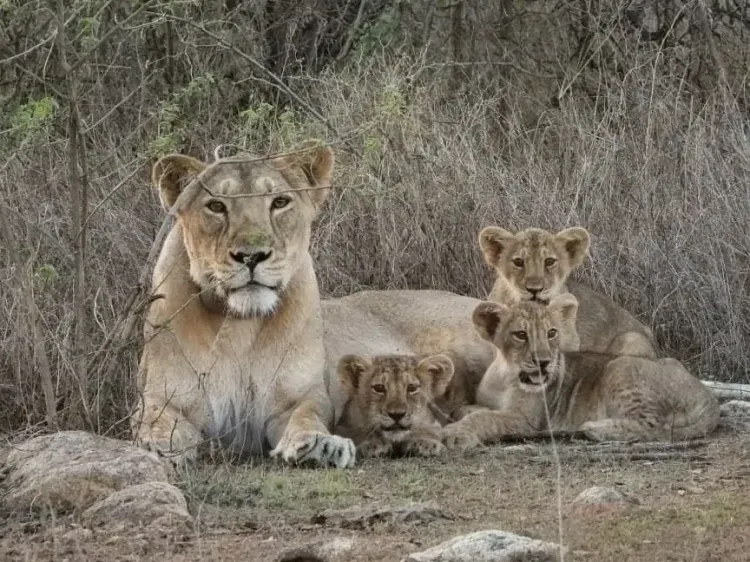
For the first time in 144 years, Asiatic lions are not just passing through Barda — they are settling in. A peer-reviewed PLOS One study backed by over 1,69,000 GPS data points confirms the 192-sq-km Gujarat sanctuary can sustain a long-term lion population, offering India's last wild Asiatic lions a second stronghold beyond the increasingly crowded Gir ecosystem.
Key Takeaways
Barda Wildlife Sanctuary in Gujarat's Saurashtra region can support a long-term Asiatic lion population, according to a study in PLOS One .
17 Asiatic lions now reside in Barda after their natural return following an absence of nearly 144 years .
Six radio-collared lions generated over 1,69,000 GPS locations between January 2023 and July 2025 .
441 spotted deer were translocated from Gir to Barda in 2025-26 to strengthen the prey base.
Ecotourism at Barda grew by approximately 48% , from 2,271 visitors in 2024 to 3,359 in 2025-26.
Around 3,200 hectares of habitat improvement work was completed this year across the sanctuary.
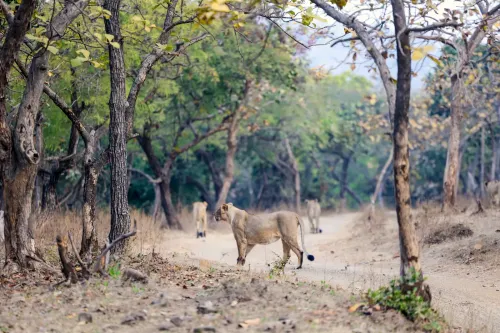
Barda Wildlife Sanctuary in Gujarat's Saurashtra region is capable of sustaining a long-term population of Asiatic lions, according to a new study published in the peer-reviewed journal PLOS One. The sanctuary now hosts 17 of the endangered big cats, who returned naturally after an absence of nearly 144 years — a milestone that researchers say marks a pivotal moment in the species' conservation beyond its sole traditional stronghold at Gir.
What the Study Found
The research, titled 'Beyond Gir: Barda Wildlife Sanctuary as a Potential Stronghold for Asiatic Lions', assessed the sanctuary's suitability by examining lions' space use, habitat preferences, social interactions, and diet. Spread across 192.31 sq. km and principally covering Porbandar and Devbhumi Dwarka districts, Barda was found to provide suitable habitat, adequate prey resources, and favourable ecological conditions to sustain the species over the long term.
The study was conducted by Mohan Ram (IFS), Aradhana Sahu (IFS), Nityanand Srivastava (IFS), Rohit Chaudhary, Lahar Jhala, and Yashpal Zala, associated with the Gujarat Forest Department and Banda University of Agriculture and Technology.
How Researchers Tracked the Lions
Six lions — one male and five females — were radio-collared for the study, generating more than 1,69,000 GPS locations between January 2023 and July 2025. The data showed the animals actively using the sanctuary's forests and grasslands, establishing home ranges, and forming social associations. The lions began recolonising Barda naturally following the dispersal of a single male, after which the Gujarat Forest Department introduced five females to augment the population.
What Government Officials Said
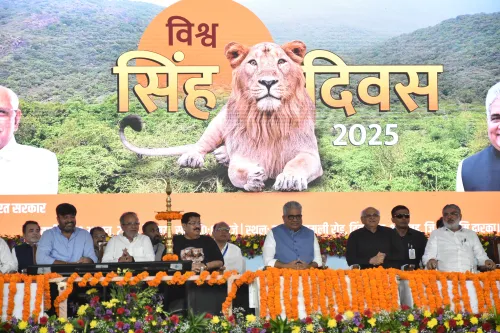
Forests and Environment Minister Arjun Modhwadia called the research 'very significant from the Asiatic lion's conservation perspective,' adding that Barda can serve as a population buffer for lions dispersing from the southwestern side of Gir. 'Protecting such satellite habitats and maintaining connectivity between them will be essential for the species' long-term survival,' he said. He noted that the state government, under Chief Minister Bhupendra Patel, remains committed to the lion's long-term survival.
Minister of State for Forests and Environment Pravin Mali said vacant frontline staff positions had been filled on priority, eight full-time lion trackers had been deployed to monitor the animals daily, and rapid-response mechanisms for human-wildlife conflict had been strengthened.
Principal Chief Conservator of Forests (Wildlife) Jaipal Singh said that during 2025-26, 441 chitals (spotted deer) were translocated from Gir Wildlife Sanctuary to Barda to bolster the prey base. Since 2007, hundreds of spotted deer have also been released through captive-breeding efforts, while sambar deer have been bred and released in the sanctuary.
Ecotourism and Community Involvement
Ecotourism activities in Barda began in 2024, creating work opportunities for local residents as nature guides and safari operators, according to Ram Ratan Nala (IFS), Conservator of Forests, Junagadh (Wildlife) Circle. The sanctuary received 2,271 visitors in its first year, rising to 3,359 in 2025-26 — an increase of approximately 48%. Local communities are also participating in invasive-species removal, restoration of degraded areas, and construction of firebreaks. Around 3,200 hectares were covered by habitat-improvement work this year.
Why This Matters for Lion Conservation
The Asiatic lion is currently found in the wild only in India, making every viable habitat expansion critical to the species' survival. The PLOS One findings underscore that the Gir ecosystem — long the sole refuge — need not remain the only lifeline. Barda's floral diversity, including a range of medicinal plants, adds further ecological value. With connectivity between Gir and Barda increasingly recognised as vital, conservationists and forest officials are expected to push for formal wildlife corridor protections in the months ahead.
Point of View
But the conservation story has a structural vulnerability that deserves scrutiny: Barda's lion population was partly jumpstarted by human intervention — five females introduced by the Forest Department — raising questions about what 'natural return' truly means in managed landscapes. The real test will be whether Barda can develop a self-sustaining breeding population without ongoing translocation support. More critically, the absence of a formally protected wildlife corridor between Gir and Barda means dispersing lions must navigate agricultural and human-settled land, where conflict risk remains high. Ecotourism growth is encouraging, but 3,359 annual visitors is a thin economic base for the community buy-in that long-term coexistence demands.
NationPress
11 Oct 2026
Frequently Asked Questions
What did the PLOS One study find about Barda Wildlife Sanctuary?
The study found that Barda Wildlife Sanctuary in Gujarat's Saurashtra region can support a long-term Asiatic lion population, with adequate habitat, prey resources, and ecological conditions. It tracked six radio-collared lions generating over 1,69,000 GPS locations between January 2023 and July 2025.
How many Asiatic lions are currently in Barda?
As of the study's reporting period, 17 Asiatic lions are resident in Barda Wildlife Sanctuary. Their presence follows a natural return after an absence of nearly 144 years, supplemented by the Gujarat Forest Department's introduction of five females.
Why is Barda important beyond Gir for Asiatic lion conservation?
Barda can serve as a population buffer for lions dispersing from the southwestern side of Gir, reducing the risk of a single-site extinction event. Asiatic lions are found in the wild only in India, making every viable secondary habitat critically important for the species' survival.
What steps has the Gujarat government taken to support lions in Barda?
The Gujarat Forest Department has deployed eight full-time lion trackers, filled vacant frontline staff positions, translocated 441 spotted deer from Gir to Barda in 2025-26 to boost prey availability, and launched captive-breeding programmes for spotted and sambar deer since 2007.
Has ecotourism started at Barda Wildlife Sanctuary?
Yes, ecotourism began at Barda in 2024. The sanctuary recorded 2,271 visitors in its first year, rising by about 48% to 3,359 in 2025-26. Local residents are being employed as nature guides and safari operators.