Bengal 2026 polls: Three officials who ensured peaceful voting
Synopsis
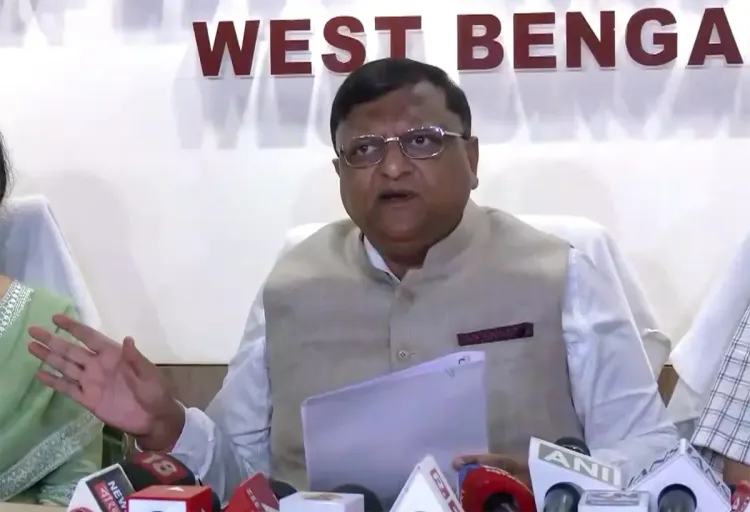
Precisely, that is why every suggestion of Agarwal regarding SIR and polling was accepted by the ECI's top brass in New Delhi without almost any question asked.
Key Takeaways
It was Agarwal's initiative that the elections were conducted in just two phases — a significant logistical and security simplification for a state of West Bengal's size and political complexity.
Subrata Gupta: Technology and AI as Electoral Tools Subrata Gupta , the ECI-appointed special poll observer, is a retired IAS officer of the West Bengal cadre and also of the 1990 batch .
An alumnus of the Indian Institute of Technology (IIT) Kharagpur , Gupta brought a technocrat's precision to the exercise.
During the SIR stage , extensive use of technology and artificial intelligence (AI) applications helped the ECI identify doubtful voters and weed out fake entries from the electoral rolls.
During polling phases, the same technological framework was deployed to eliminate irregularities and misappropriations in real time.
Gupta's approach effectively made the polling process transparent and auditable in ways not previously seen in West Bengal elections.
Mishra: Force Deployment and Ground Control N.K.
Mishra , the ECI-appointed special police observer, is a retired Indian Police Service (IPS) officer of the Sikkim cadre, 1988 batch .
His appointment was strategic — during his active service as a central intelligence officer, he spent approximately eight years in West Bengal, giving him an unusually detailed knowledge of the state's ground realities.
Officers in the CEO's office credit Mishra with the effective advance deployment of central forces, their strategic mobilisation across constituencies, and their utilisation on both polling and counting days.
This ground-level force management is widely seen as the single most critical factor in ensuring that polling remained peaceful across the state.
What Made 2026 Different The 2026 West Bengal Assembly elections stand out not just for their peaceful conduct but for the institutional coordination they demonstrated.
The ECI's decision to appoint experienced, domain-specific observers — a technocrat and a seasoned intelligence officer — alongside a steady CEO, proved decisive.
As results are declared, the election is already being discussed as a potential template for future high-stakes state polls.
Whether the administrative framework built around these three officials can be institutionalised beyond a single election cycle remains the key question going forward.
The West Bengal Assembly elections of 2026 have emerged as a landmark exercise in Indian electoral history — marked by peaceful polling, record voter turnout, and a striking absence of the violence that has historically shadowed the state's elections. Behind this outcome, three officials in the office of the Chief Electoral Officer (CEO) quietly steered every stage of the process, from the Special Intensive Revision (SIR) exercise in November 2025 to the final counting of votes.
The Three Musketeers of Bengal's CEO Office
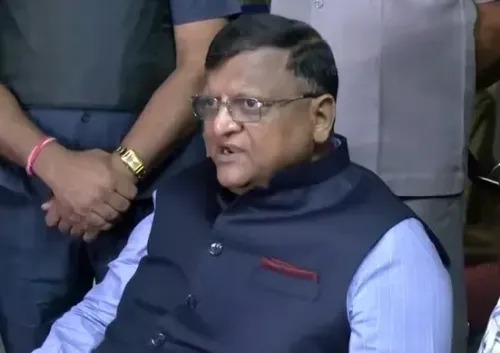
Informally dubbed 'The Three Musketeers' by colleagues, the trio comprises CEO of West Bengal Manoj Kumar Agarwal, Election Commission of India (ECI)-appointed special poll observer Subrata Gupta, and ECI-appointed special police observer N.K. Mishra. Together, they coordinated one of the most complex electoral operations in recent state-level history, navigating persistent opposition from the ruling All India Trinamool Congress (TMC) government led by Chief Minister Mamata Banerjee.
The challenges were multifaceted — ranging from verbal attacks and public maligning on personal issues to administrative non-cooperation and legal obstacles at every stage. Despite these hurdles, the trio ensured that the 2026 West Bengal polls recorded the highest voting percentage nationally since Independence, conducted in just two phases, compared to the six to seven phases seen in previous elections.
Manoj Kumar Agarwal: The Architect of Two-Phase Polling
Manoj Kumar Agarwal, a 1990-batch Indian Administrative Service (IAS) officer of the West Bengal cadre, was the ECI's first choice among a panel of three bureaucrats forwarded by the state government for the CEO's post. Colleagues in the CEO's office describe him as uniquely suited for the role.
Point of View
However, also exposes a structural problem: India's electoral machinery still depends heavily on the calibre of individual officers rather than robust institutional systems. That Agarwal's two-phase proposal was accepted 'without question' is a compliment to the man, but it also raises the question of why such common-sense administrative decisions require individual champions rather than standard protocol. The TMC's multi-front resistance — legal, administrative, personal — is a reminder that electoral management in politically charged states remains a test of nerve as much as process.
NationPress
19 Sept 2026
Frequently Asked Questions
Who are the 'Three Musketeers' of Bengal's CEO office in the 2026 elections?
They are CEO of West Bengal Manoj Kumar Agarwal, ECI-appointed special poll observer Subrata Gupta, and ECI-appointed special police observer N.K. Mishra. The three coordinated all aspects of the 2026 West Bengal Assembly elections from the SIR exercise through to counting and results.
What made the 2026 West Bengal Assembly elections historically significant?
The 2026 West Bengal polls recorded the highest voting percentage nationally since Independence and were conducted peacefully in just two phases, compared to six to seven phases in previous elections. This was a sharp contrast to the state's long history of electoral violence.
How did technology and AI help in the 2026 Bengal elections?
Special poll observer Subrata Gupta, an IIT Kharagpur alumnus, deployed AI and technology tools during the SIR stage to identify and remove fake voters from electoral rolls. The same framework was used during polling to detect and eliminate irregularities in real time.
What role did N.K. Mishra play in ensuring peaceful polling in West Bengal?
As ECI-appointed special police observer, N.K. Mishra managed the advance deployment and strategic mobilisation of central forces across constituencies. His eight years of prior experience working in West Bengal as a central intelligence officer gave him critical ground-level knowledge of the state.
What challenges did the three officials face during the 2026 Bengal elections?
The trio faced opposition from the ruling Trinamool Congress government at every stage, including verbal attacks, administrative non-cooperation, public maligning on personal matters, and legal obstacles. Despite these challenges, they successfully conducted a peaceful election with record turnout.