ECI data: Voter turnout surges post-SIR, West Bengal hits record 93.70%
Synopsis
India's Election Commission has quietly produced a global benchmark: West Bengal's 93.70% turnout in 2026 outpaced more than two dozen countries, including several that make voting compulsory. The data drop wasn't coincidental — it came the day after Donald Trump cited India's own Chief Election Commissioner to push a US voter-ID bill, prompting the ECI to publicly defend its electoral architecture on the world stage.
Key Takeaways
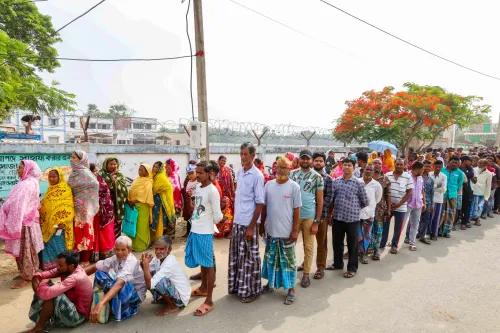
West Bengal recorded a historic 93.70% voter turnout in the 2026 Assembly election — the highest ever by any Indian state, surpassing 25 nations including six with mandatory voting.
Puducherry clocked 91.19% , Assam 86.33% , Tamil Nadu 86.03% , and Kerala 79.53% — all post-SIR highs.
In Bihar , nearly 70 lakh names were removed during the SIR exercise; the state's November 2025 turnout of 67.25% was its highest since 1951 .
The ECI released the data on 18 August in direct response to US President Donald Trump's Truth Social post endorsing the SAVE Act .
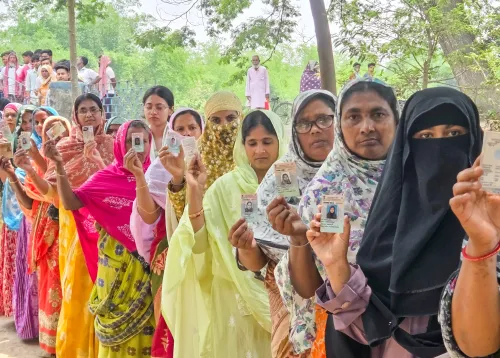
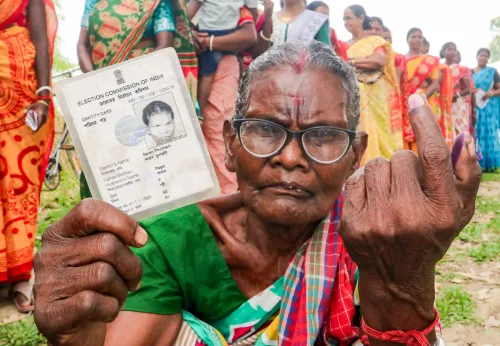
India has issued Electoral Photo Identity Cards (EPIC) to close to one billion electors; rolls are prepared across 1.2 million polling booths .
The Election Commission of India (ECI) on Tuesday, 18 August released figures showing a sharp rise in voter participation across states that held Assembly elections following the Special Intensive Revision (SIR) of electoral rolls — with several states surpassing turnout levels recorded even in countries that mandate voting by law.
Record Turnout Figures Across States
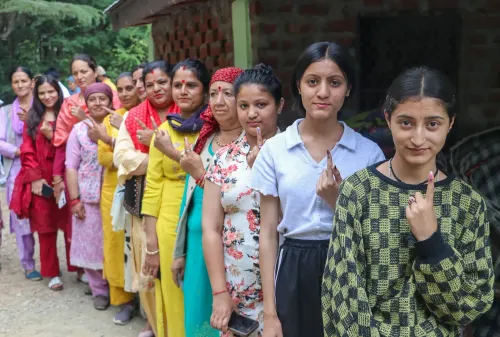
West Bengal led all states with a historic 93.70 per cent turnout in its 2026 Assembly election — the highest ever recorded by any Indian state and higher than the turnout in more than 25 nations, including the United States, United Kingdom, France, Spain, and Japan. Notably, at least six of those 25 countries enforce compulsory voting. In absolute terms, voter participation in West Bengal grew from 76,35,066 in India's first general election in 1951 to 6,40,53,576 in the 2026 state poll.
Puducherry followed at 91.19 per cent — up significantly from roughly 80 per cent recorded in 1964 — and bettered approximately 23 major democracies, at least four of which have mandatory voting. Assam and Tamil Nadu recorded 86.33 per cent and 86.03 per cent, respectively, each marking a substantial improvement over their earlier elections. Kerala, historically a high-participation state, clocked 79.53 per cent — just under the 80 per cent mark — yet still outperformed several democracies, including at least three with compulsory voting laws.
How the SIR Shaped the Rolls
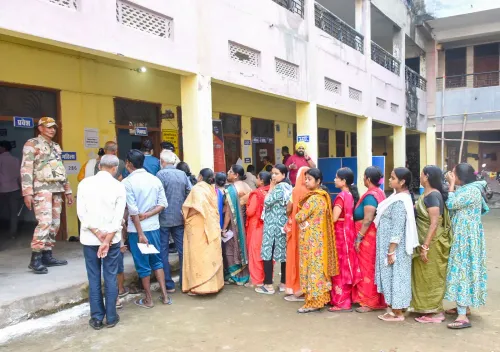
The ECI attributed the sharper participation rates in part to the cleanup of electoral rolls under the SIR exercise. Across the states, several thousand names were removed — primarily of deceased individuals, those who had relocated, or those unable to furnish documents establishing their right to adult franchise. In Bihar, where the SIR ran for three months, nearly 70 lakh names were struck off the rolls ahead of the November 2025 Assembly election. Bihar's turnout that year stood at 67.25 per cent — the highest since the state first went to polls in 1951.
The Trump Remark That Prompted the ECI's Response
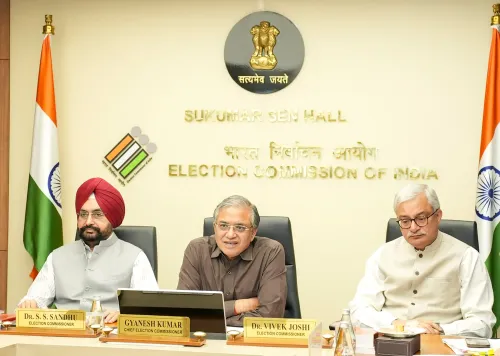
The ECI's release of the fact sheet and graphics on Tuesday followed remarks by US President Donald Trump on Monday. Trump posted on Truth Social that he would renew his push for the proposed Safeguard American Voter Eligibility (SAVE) Act, recalling a question posed by Chief Election Commissioner Gyanesh Kumar about the absence of voter identification requirements in US federal elections. The SAVE Act proposes requiring documentary proof of US citizenship to register to vote in federal elections.
India's Electoral Safeguards: What the ECI Outlined
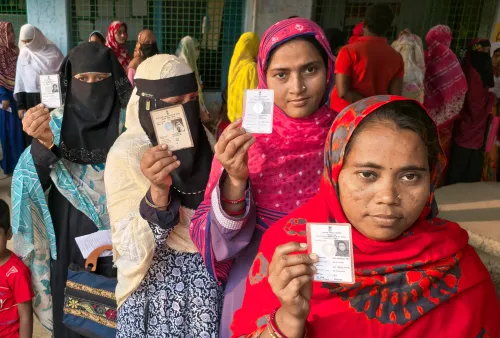
In its fact sheet, the ECI described the institutional framework underpinning Indian elections. The Commission — an independent constitutional authority — conducts elections for the President, Vice President, the Lok Sabha, and all State Legislative Assemblies and Councils. Polling is based on a photo identity card, and the ECI has issued its Electoral Photo Identity Card (EPIC) to close to one billion electors. An electronic version, the e-EPIC, can be downloaded online through the ECI's voter portal.
Electoral rolls are prepared for each of India's 1.2 million polling booths by Booth Level Officers (BLOs) — state government employees — and are concurrently audited by Booth Level Agents (BLAs) appointed by political parties. Polling itself is overseen by agents appointed by candidates, and vote counting is similarly audited by counting agents, the ECI noted.
What This Signals
The ECI's data release marks an unusual step — a constitutional body publicly benchmarking India's democratic processes against global peers in direct response to a foreign head of state's remarks. With roll-cleaning exercises continuing in other states, the figures are likely to inform future debates on electoral integrity, both domestically and internationally.
Point of View
But the framing deserves scrutiny: turnout alone is not a measure of electoral health. Roll-cleaning exercises that removed 70 lakh names in Bihar and thousands more elsewhere can arithmetically inflate participation percentages even without a single additional voter showing up. The more meaningful question — whether the SIR disproportionately struck off names of marginalised or minority voters — goes unaddressed in the ECI's fact sheet, and mainstream coverage has largely let that pass.
NationPress
3 Oct 2026
Frequently Asked Questions
What is the Special Intensive Revision (SIR) of electoral rolls?
The Special Intensive Revision (SIR) is a periodic exercise conducted by the Election Commission of India to update and clean electoral rolls — removing names of deceased voters, those who have relocated, or those unable to establish their eligibility. In Bihar, the SIR ran for three months and led to the removal of nearly 70 lakh names before the November 2025 Assembly election.
How does West Bengal's 2026 voter turnout compare globally?
West Bengal's 93.70% turnout in the 2026 Assembly election surpassed more than 25 countries, including the United States, United Kingdom, France, Spain, and Japan. At least six of those countries enforce compulsory voting, making West Bengal's figure particularly significant.
Why did the ECI release this data on 18 August?
The ECI released the turnout data and a fact sheet on 18 August in direct response to remarks made by US President Donald Trump on Monday. Trump posted on Truth Social that he would push for the SAVE Act, citing a question by Chief Election Commissioner Gyanesh Kumar about the absence of voter ID requirements in US federal elections.
What is the SAVE Act that Trump referenced?
The Safeguard American Voter Eligibility (SAVE) Act is a proposed US law that would require documentary proof of US citizenship to register to vote in federal elections. Trump renewed his call for its passage after referencing Chief Election Commissioner Gyanesh Kumar's remarks about US voter identification practices.
Which other Indian states recorded high turnout after the SIR exercise?
After the SIR exercise, Puducherry recorded 91.19%, Assam 86.33%, Tamil Nadu 86.03%, and Kerala 79.53% in their respective 2026 Assembly elections. Bihar's November 2025 poll saw 67.25% turnout — its highest since 1951 — despite nearly 70 lakh names being removed from its rolls during the SIR.