Bengal anti-corruption bill to be tabled on June 25, says CM Adhikari
Synopsis
West Bengal CM Suvendu Adhikari has announced a sweeping anti-corruption bill for 25 June that goes beyond jail time — it will confiscate and auction the properties of corruption convicts. In pointed but indirect remarks, he referenced properties linked to former CM Mamata Banerjee's family, signalling this is as much a political reckoning as a legislative reform.
Key Takeaways
West Bengal CM Suvendu Adhikari announced a new anti-corruption bill to be tabled on 25 June , the last day of the ongoing budget session.
The bill proposes confiscation and auction of assets and properties of corruption convicts, beyond standard jail terms.
Adhikari made indirect references to properties in Kalighat and Amtala, South 24 Parganas , reportedly linked to former CM Mamata Banerjee 's family.
The CM pledged that all state government recruitments will follow a UPSC-style transparent model , with no political interference.
The announcement came during debate on the budget tabled by Finance Minister Swapan Dasgupta on Monday.
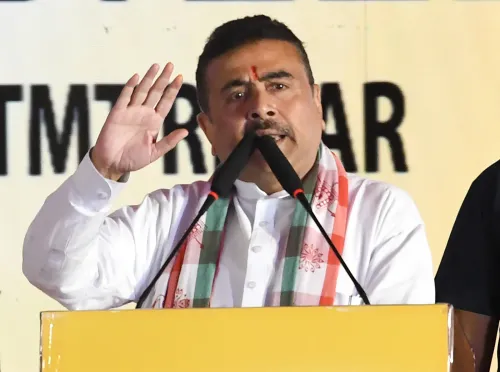
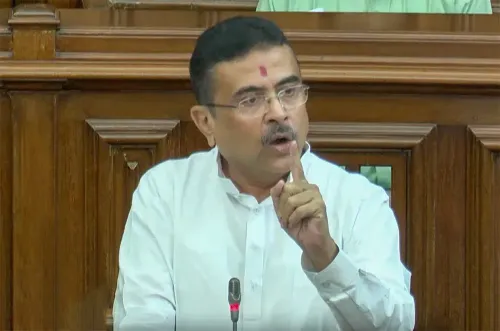
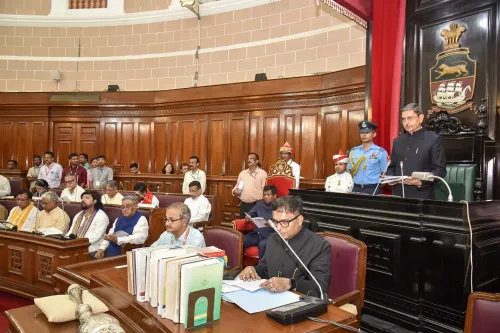
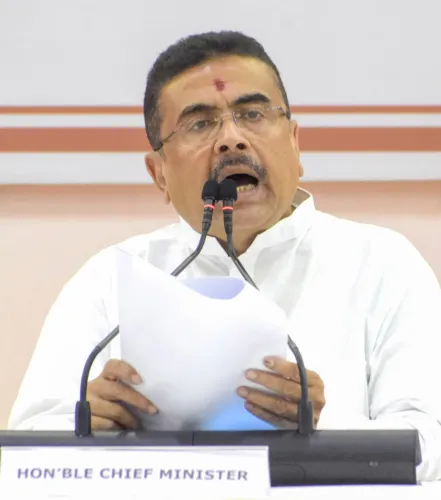
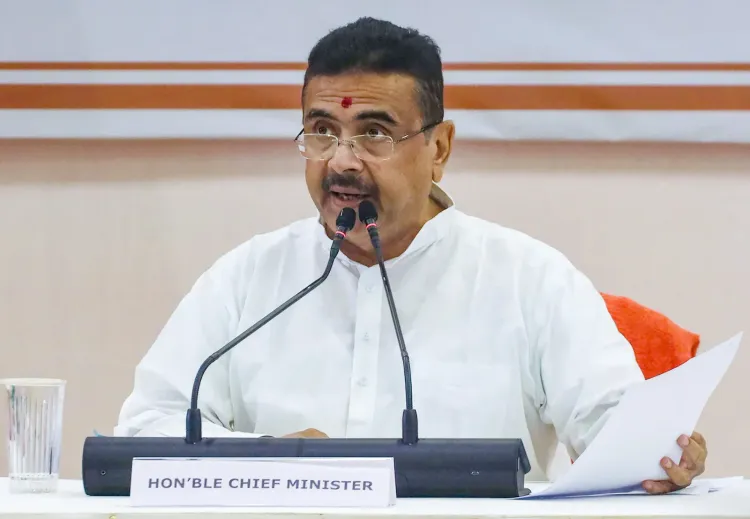
West Bengal Chief Minister Suvendu Adhikari announced on Tuesday, 23 June that a Bill carrying new and significantly stricter anti-corruption provisions will be introduced on the floor of the West Bengal Assembly on 25 June, the final day of the ongoing budget session. The announcement came as Adhikari participated in a legislative debate over the state budget proposals tabled by Finance Minister Swapan Dasgupta on Monday.
What the Proposed Law Will Do
Chief Minister Adhikari outlined the core teeth of the forthcoming legislation: beyond imprisonment, the law would empower the state to confiscate and auction the assets and properties of those convicted of corruption. The provision marks a departure from conventional anti-graft penalties, which have largely been limited to jail terms and fines.
'Many people might think that they would spend two months in jail and then get freed after a legal fight! They should remember that this time we will confiscate their property. We will auction the property,' Adhikari said from the floor of the House.
The Chief Minister reiterated the state government's stated commitment to a zero-tolerance approach towards corruption, framing the bill as a structural deterrent rather than a symbolic gesture.
Indirect Targeting of Former Leadership
Without naming individuals directly, Adhikari made pointed references that appeared aimed at former Chief Minister Mamata Banerjee and All India Trinamool Congress (TMC) General Secretary Abhishek Banerjee, her nephew. He cited controversial properties reportedly linked to members of Banerjee's family in the Kalighat area of Kolkata and in Amtala, South 24 Parganas district.
'We will make arrangements to accommodate people living under the flyover in Kolkata in the palaces of Harish Chatterjee Street and Harish Mukherjee Road in South Kolkata and Amtala in South 24 Parganas,' the Chief Minister said, in a remark widely read as a direct challenge to the TMC's former ruling establishment.
Recruitment Reform Pledge
Adhikari also used the occasion to announce a sweeping overhaul of government job recruitment in West Bengal. He stated that all state-level recruitments will henceforth follow a model aligned with the Union Public Service Commission (UPSC) framework used for central government appointments, with no political involvement in the process.
'No politician will be involved in the recruitment process. All state recruitments will be done in the model followed by the Union Public Service Commission in case of Central government recruitments,' he said. The pledge comes against the backdrop of prolonged controversy in West Bengal over alleged irregularities in state recruitment processes under the previous TMC administration.
Context and What Comes Next
The budget session of the West Bengal Assembly has been marked by sharp political exchanges between the ruling Bharatiya Janata Party (BJP) and the opposition TMC. The introduction of the anti-corruption bill on 25 June is expected to sharpen that confrontation. If passed, the asset-confiscation provisions would represent one of the most aggressive state-level anti-graft frameworks in recent Indian legislative history. The TMC is yet to formally respond to the bill's announced provisions.
Point of View
But its credibility will depend entirely on implementation and independent oversight. The BJP has long accused the TMC of institutionalised corruption; converting that accusation into enforceable law is a different and harder task. Whether this bill survives legal challenge — and whether its enforcement remains non-partisan — will be the real measure of its worth.
NationPress
22 Sept 2026
Frequently Asked Questions
What is the anti-corruption bill announced by West Bengal CM Suvendu Adhikari?
It is a proposed state law to be introduced in the West Bengal Assembly on 25 June 2025, the last day of the budget session. Beyond imprisonment, the bill would allow the state to confiscate and auction the properties of those convicted of corruption.
When will the West Bengal anti-corruption bill be tabled?
Chief Minister Adhikari stated the bill will be moved on 25 June, the final day of the ongoing budget session of the West Bengal Assembly.
Who did CM Adhikari target with his remarks on corruption?
Without naming anyone directly, Adhikari referenced properties in the Kalighat area of Kolkata and in Amtala, South 24 Parganas, reportedly linked to members of former Chief Minister Mamata Banerjee's family. He also alluded to TMC General Secretary Abhishek Banerjee.
What recruitment reforms did CM Adhikari announce?
Adhikari announced that all West Bengal state government recruitments will follow a UPSC-style model used for central government appointments, with no political involvement in the process. This comes amid prolonged controversy over alleged irregularities in state recruitment under the previous TMC government.
What is the significance of the property-confiscation clause?
The clause would make asset seizure and public auction a mandatory consequence of a corruption conviction, going beyond conventional penalties. It is one of the more aggressive anti-graft provisions proposed at the state level in recent years and is intended to act as a structural deterrent.