Bengal BJP govt tightens MGNREGS oversight, orders 100% e-KYC for 2.56 crore job cards
Synopsis
West Bengal's new BJP government isn't just relaunching MGNREGS — it's rebuilding it from scratch. With mandatory e-KYC for all 2.56 crore job card holders, full digitisation of work site operations, and a parallel audit of the TMC-era Banglar Bari housing scheme, Chief Secretary Manoj Agarwal's directives represent the most sweeping accountability overhaul of Bengal's rural welfare machinery in years.
Key Takeaways
Chief Secretary Manoj Agarwal has issued strict directives to all district magistrates on overhauling MGNREGS implementation in West Bengal .
The database of 2 crore 56 lakh job card holders will be fully revised, with 100% e-KYC verification mandatory for all active workers.
All operational tasks — including geo-tagging, master roll generation, and fund transfers — must now be executed through a designated digital platform .
Wage payments will be made exclusively via the Aadhaar-Based Payment System (ABPS) .
The Banglar Bari housing scheme, implemented under the previous TMC government, is under re-verification to identify ineligible beneficiaries, with legal action ordered against those found to have received benefits fraudulently.
Officers and workers found responsible for irregularities face legal action based on audit reports and digital evidence.
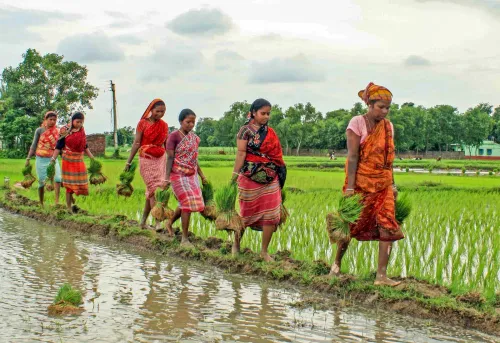
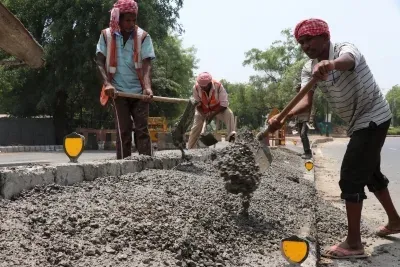
West Bengal's new Bharatiya Janata Party (BJP) government has moved swiftly to overhaul the implementation of the Mahatma Gandhi National Rural Employment Guarantee Scheme (MGNREGS) in the state, signalling zero tolerance for corruption and opacity in the 100-day work programme relaunched in June 2025. Chief Secretary Manoj Agarwal has issued a comprehensive set of directives to all district magistrates, mandating end-to-end digital oversight and strict financial discipline across the scheme's operations in West Bengal.
Key Directives Issued to District Officials
Chief Secretary Agarwal has directed that the existing database of approximately 2 crore 56 lakh job card holders in the state be fully revised. 100 per cent e-KYC verification has been made mandatory for every active worker to eliminate the long-standing problem of ghost beneficiaries embedded in the rolls. According to officials at the state secretariat Nabanna, the instruction is unambiguous: no active worker will remain on the rolls without verified identity.
To prevent fraudulent master rolls and financial irregularities, all critical operational tasks must now be executed exclusively through a designated digital platform. These include geo-tagging of work sites, accurate cost estimation, master roll generation, maintenance of an electronic measurement book (e-MB), and issuance of fund transfer orders (FTO). Wage payments to workers will be routed solely through the Aadhaar-Based Payment System (ABPS), eliminating cash-based disbursements that were reportedly prone to leakage.
Why the Overhaul Was Necessary
Administrative officials acknowledged that the scheme's quality was severely compromised in the past due to inadequate planning, insufficient field supervision, approval of excessive work orders, and fraudulent measurements. The new digital surveillance framework is specifically designed to close those loopholes. District Magistrates and Block Development Officers (BDOs) have been designated as district programme coordinators, with mandatory and regular inspection systems covering the physical condition of work sites, asset quality, measurement records, material procurement, and wage disbursement.
The Chief Secretary's guidelines warn, in explicit terms, that any lapse in transparency, financial discipline, digital data integrity, or the utilisation of government funds will be treated with the highest seriousness. Where irregularities are established through audit reports, inspection data, or digital evidence, legal action will be initiated against the concerned officers and workers.
Banglar Bari Scheme Under Scrutiny
The administration's accountability drive extends beyond MGNREGS to the rural housing programme. Chief Secretary Agarwal has sought a detailed report from the Secretary of the Panchayat and Rural Development Department to re-verify the beneficiary list of the 'Banglar Bari' scheme, which was implemented under the previous All India Trinamool Congress (TMC) government.
It has been alleged that funds were disbursed to a large number of ineligible individuals for house construction under the scheme, resulting in what officials describe as a significant loss to the government exchequer. Instructions have been issued to identify all such ineligible beneficiaries swiftly and initiate legal proceedings against them.
The guidelines specify that beneficiaries from both phases of the Banglar Bari scheme must be fully re-verified. In particular, all beneficiaries whose names have been flagged as absent, transferred, deceased, or duplicate — categorised under the 'ASDD' classification in the 2026 SIR process — and those found to have received benefits illegally are to be excluded from the list, with a detailed report to be submitted to the government.
Broader Significance
This comes amid a broader pattern of incoming state governments in India ordering audits of welfare schemes administered by their predecessors, with MGNREGS and housing programmes frequently at the centre of such reviews. For West Bengal, where MGNREGS implementation has historically drawn scrutiny from the Centre, the move signals a deliberate effort by the BJP administration to establish administrative credibility early in its tenure. How swiftly the e-KYC verification and Banglar Bari re-verification are completed — and whether the process remains free of political targeting — will be closely watched.
Point of View
It will mark a genuine shift. If not, it risks becoming another round of headline accountability that stops short of structural reform.
NationPress
24 Oct 2026
Frequently Asked Questions
What changes has the West Bengal government made to MGNREGS implementation?
The West Bengal government has ordered a full revision of the 2.56 crore job card database, made 100% e-KYC verification mandatory for all active workers, and directed that all operational tasks be completed through a digital platform. Wage payments will now be routed exclusively through the Aadhaar-Based Payment System (ABPS) to prevent leakage.
What is the Banglar Bari scheme and why is it under scrutiny?
Banglar Bari is a rural housing scheme implemented under the previous Trinamool Congress government in West Bengal. It is under scrutiny because it has been alleged that funds were disbursed to a large number of ineligible beneficiaries, causing significant losses to the government exchequer. The new BJP government has ordered re-verification of all beneficiaries and legal action against those found to have received benefits fraudulently.
Who is responsible for overseeing the new monitoring framework?
District Magistrates and Block Development Officers (BDOs) have been designated as district programme coordinators under the new framework. Chief Secretary Manoj Agarwal issued the directives, and mandatory inspection systems covering work site conditions, asset quality, measurement records, and wage payments have been put in place.
What action will be taken against officials found guilty of irregularities?
According to the Chief Secretary's guidelines, any irregularities established through audit reports, inspection data, or digital evidence will result in legal action against the concerned officers and workers. The directives explicitly state that lapses in transparency, financial discipline, or misuse of government funds will be treated with the utmost seriousness.
Why was the 100-day work scheme relaunched in West Bengal?
The MGNREGS 100-day work programme was relaunched in West Bengal at the beginning of June 2025 to provide employment opportunities to rural job seekers. The new BJP government simultaneously introduced the stricter monitoring framework to address past problems including ghost beneficiaries, fraudulent master rolls, and inadequate supervision.