Bengal directs DMs to identify migrant workers for rural job cards
Synopsis
West Bengal has put its district machinery on alert to identify over 22 lakh migrant workers' families — with Murshidabad alone accounting for 4 lakh — for enrolment in a scheme guaranteeing 125 days of paid rural work a year. The drive, under the VB-G RAM G Act, 2025, is the state's most concrete attempt yet to convert migrant vulnerability into a structured employment safety net.
Key Takeaways
The West Bengal government on 26 August directed all district magistrates to identify migrant workers' families for Gramin Rozgar Guarantee Card (GRGC) allotment.
The cards guarantee 125 days of wage employment per financial year for rural households under the VB-G RAM G Act, 2025 , effective from 1 July 2025 .
More than 22 lakh migrant workers have been identified statewide; Murshidabad leads with around 4 lakh , followed by Malda ( 3 lakh ) and West Medinipur (over 1.5 lakh ).
District magistrates have been told to treat the identification exercise as a priority, not a routine task.
Approximately ₹1.265 crore has been allocated by the State Ministry of Rural Development under the scheme.
The West Bengal government on Wednesday, 26 August directed all district magistrates across the state to identify families of migrant workers in their respective districts for allotment of Gramin Rozgar Guarantee Cards (GRGCs) — instruments that provide a statutory guarantee of 125 days of wage employment per financial year to rural households willing to undertake unskilled manual work.
The Scheme Behind the Drive
The directive flows from the 'Viksit Bharat–Guarantee for Rozgar and Ajeevika Mission (Gramin) (VB-G RAM G) Act, 2025', which came into effect in West Bengal from 1 July 2025. Under the Act, adult members of rural families are entitled to a maximum of 125 days of guaranteed work annually, focused on unskilled manual labour.
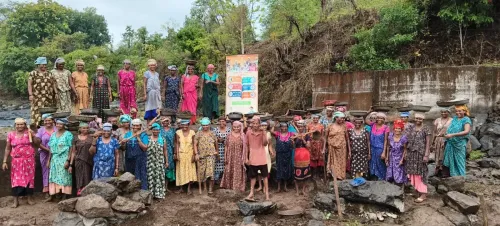
A senior official of the state's Panchayat Affairs and Rural Development Department said the administration aims to use this guarantee to create regular income opportunities for village residents, boost local economies, and provide an incentive for migrant workers to return to their home state. 'The issue of migrant workers has been given special priority in the guidelines of the Panchayat Department,' the official noted.
Scale of the Migrant Worker Challenge
According to estimates from the state labour department, more than 22 lakh migrant workers have been identified in West Bengal. That list has already been handed over to the respective district administrations, which will now begin verifying the on-ground situation of these workers' families.
Murshidabad has the highest concentration at around 4 lakh identified migrant workers, followed by Malda at approximately 3 lakh and West Medinipur at more than 1.5 lakh.
How DMs Have Been Instructed to Proceed
The circular issued by the Panchayat Affairs and Rural Development Department explicitly cautions district magistrates against treating this identification exercise as a routine administrative task. Instead, they have been asked to treat it as a priority and complete the process at the earliest possible date.
The state government has already secured assurance of central assistance for the scheme, and approximately ₹1.265 crore has been allocated by the State Ministry of Rural Development under the VB-G RAM G Act framework.
What This Means for Rural Households
For families of migrant workers — many of whom face income insecurity when remittances slow or stop — the GRGC offers a legally backed employment floor. The scheme's design, linking disbursements to unskilled manual work rather than passive transfers, is intended to generate productive rural assets while sustaining household incomes. This comes amid a broader national push to formalise labour protections for India's vast internal migrant population, estimated at over 10 crore across the country.
How quickly district administrations can verify and enrol eligible families will determine whether the scheme's intent translates into measurable relief on the ground.
Point of View
Since eligibility is typically tied to the home village. By front-loading identification through district machinery and treating it as a priority rather than routine, the state is trying to close the last-mile gap between policy design and actual enrolment. The real test, however, is verification speed: with over 22 lakh names already on a labour department list, the bottleneck will be ground-level data accuracy, not political will. And with ₹1.265 crore allocated — a modest sum relative to the scale — questions about whether central funding will scale up proportionately remain open.
NationPress
11 Oct 2026
Frequently Asked Questions
What is the Gramin Rozgar Guarantee Card (GRGC) in West Bengal?
The GRGC is a statutory employment card issued under the VB-G RAM G Act, 2025, guaranteeing adult members of rural households in West Bengal up to 125 days of wage employment per financial year in unskilled manual work. It is designed to provide a reliable income floor for rural families, including those of migrant workers.
Why has West Bengal given special priority to migrant workers under this scheme?
The state government recognises that migrant workers face acute income insecurity when work in destination states dries up. By identifying their families for GRGC allotment, the scheme aims to create a local employment safety net that could also incentivise workers to return to their home districts.
Which districts in West Bengal have the highest number of identified migrant workers?
Murshidabad has the highest count at around 4 lakh, followed by Malda at approximately 3 lakh and West Medinipur at more than 1.5 lakh, out of a statewide total of over 22 lakh identified migrant workers.
When did the VB-G RAM G Act, 2025 come into effect in West Bengal?
The Viksit Bharat–Guarantee for Rozgar and Ajeevika Mission (Gramin) Act, 2025 came into effect in West Bengal from 1 July 2025.
How much funding has been allocated for the scheme in West Bengal?
Approximately ₹1.265 crore has been allocated by the State Ministry of Rural Development under the VB-G RAM G Act framework, with the state government having secured assurance of central assistance for the initiative.