Bengal BJP warns leaders on indiscipline, echoes history of political decay
Synopsis
Bengal BJP's internal warning to its own legislators and local functionaries is not just about meeting attendance — it is a rare, candid reckoning with a pattern that destroyed the Left Front and dented the TMC. The party appears acutely aware that electoral success without organisational discipline has historically been the beginning of the end in Bengal politics.
Key Takeaways
BJP leaders in West Bengal have reportedly issued a stern internal warning to legislators and district-level office bearers over indiscipline, absenteeism, and deviations from the party line.
Recurring incidents of political violence and vandalism — continuing more than six months after the BJP assumed state power — are being flagged as a reputational risk.
The Left Front's internal decay, acknowledged publicly by former CM Buddhadeb Bhattacharjee , is widely cited as a key factor in its 2011 defeat.
Mamata Banerjee was similarly forced to publicly rebuke TMC functionaries over 'cut money' allegations and syndicate-linked corruption after the party came to power.
Analysts read the BJP's warning as an attempt to break a recurring Bengal pattern — opportunistic entrants corroding ruling parties from within after electoral victory.
Bharatiya Janata Party (BJP) leaders in West Bengal have reportedly issued a stern warning to legislators and district-level office bearers over indiscipline, absenteeism from organisational meetings, and deviations from the party line. According to reports, the warning reflects a deeper anxiety — that rapid electoral expansion could import the same political ailments that corroded earlier ruling parties in the state's turbulent political history.
The Warning and What Prompted It
The internal alert, reportedly directed at both elected representatives and grassroots functionaries, goes beyond matters of attendance. Party insiders suggest the concern is about preserving political character at a moment when the organisation is absorbing large numbers of new entrants. Critics and analysts note that recurring incidents of political violence and vandalism — continuing well over six months after the BJP assumed power in the state — may carry explanations beyond surface-level anger at the crimes of the previous dispensation.
Some observers argue that while isolated acts of retribution are understandable, the regularity and spread of such incidents suggest a more organised undercurrent. Repeated attacks on All India Trinamool Congress (TMC) leaders, continued assaults on book stalls set up by Left parties, and provocative statements are being seen as eroding the goodwill generated by the government's early policy work.
Bengal's Recurring Pattern of Political Decay
The concern is rooted in a pattern that has played out at least twice in recent Bengal history. The Congress government of the 1970s was marked by reports of excesses during anti-Naxal operations and the period of Emergency. When the Left Front subsequently swept to power, it attracted large numbers of opportunistic defectors — individuals drawn less by ideological conviction than by access to influence and patronage, critics alleged later.
The expansion of the principal constituent, the Communist Party of India (Marxist) (CPI(M)), introduced a layer of leaders and workers whose primary loyalty was to self-interest and local power structures rather than to party principles. Former Chief Minister Buddhadeb Bhattacharjee himself once publicly expressed discomfort over the conduct of sections within his own party, and his remarks about attracting 'the wrong people' into the organisation were widely read as an acknowledgement that ideological dilution had set in. Many political analysts argue that this internal decay contributed significantly to the Left Front's historic defeat in 2011.
The Trinamool Parallel
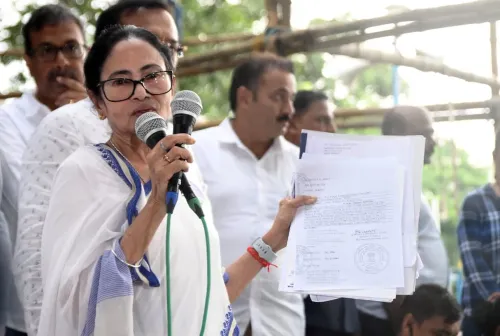
The Trinamool Congress (TMC) encountered a strikingly similar predicament after coming to power in 2011. The party drew heavily from Congress and Left defectors, and over time faced mounting allegations of a so-called 'syndicate raj', 'cut money' culture, and the pursuit of narrow self-interest by influential local leaders. Mamata Banerjee herself was compelled to publicly rebuke party functionaries over these allegations — a public admonition that underscored how far on-ground resentment had grown against the ruling establishment. The carefully cultivated image she had built through decades of opposition to Left rule began to erode under the weight of these contradictions.
What BJP Leaders Are Signalling
The recent internal warning from Bengal BJP leadership is widely interpreted as an attempt to arrest this recurring slide before it gathers momentum. The concern, reportedly shared across senior state leadership, is that opportunistic entrants — drawn to the party by its electoral success rather than its ideology — could replicate the same corrosive dynamics that damaged their predecessors. The message, analysts note, is less about meeting attendance and more about an institutional commitment to guarding political character during a phase of rapid organisational expansion.
How effectively the party enforces this internal discipline, and whether structural safeguards follow the verbal warning, will determine whether Bengal's latest ruling force can break a pattern that has undone every major party that came before it.
Point of View
However stern, translates into structural enforcement — attendance circulars are easier to issue than accountability mechanisms. If the violence incidents are indeed an organised internal dynamic rather than spontaneous anger, the BJP will need far more than a reprimand to change the trajectory.
NationPress
21 Nov 2026
Frequently Asked Questions
Why have BJP leaders in West Bengal issued an internal warning?
BJP leaders in West Bengal have reportedly warned legislators and district-level office bearers over indiscipline, absenteeism from party meetings, and deviations from the party line. The warning is seen as a pre-emptive attempt to prevent the organisational decay that eroded earlier ruling parties such as the Left Front and the TMC.
What incidents of violence are being cited as a concern for West Bengal BJP?
Reports point to recurring incidents of political violence and vandalism that have continued well over six months after the BJP assumed power in West Bengal. Attacks on TMC leaders, assaults on Left-party book stalls, and provocative statements are being flagged as damaging the party's image and undoing the goodwill generated by its governance.
How did internal decay affect the CPI(M)-led Left Front in West Bengal?
The Left Front's expansion attracted large numbers of opportunistic entrants driven by access to patronage rather than ideology. Former Chief Minister Buddhadeb Bhattacharjee himself publicly expressed discomfort about the kind of people the party was drawing in. Many analysts argue this internal decay was a key factor in the Left Front's historic defeat in 2011 after over three decades in power.
Did the Trinamool Congress face a similar problem after coming to power?
Yes. After the TMC came to power in 2011, it faced mounting allegations of a 'syndicate raj', 'cut money' collections, and corruption by local leaders. Mamata Banerjee was compelled to publicly rebuke party functionaries over these issues, and the resulting public discontent damaged the party's image significantly over time.
What is the broader political pattern the BJP warning is trying to address?
Bengal's political history shows a recurring cycle where parties that win power after long struggles are subsequently weakened by opportunistic entrants who prioritise personal gain over party principles. The BJP's internal warning is interpreted as an effort to recognise and arrest this pattern early, before factional rivalries and local power centres can take hold within the organisation.