Bengal cabinet allocates land to BSF for Bangladesh border fencing within 45 days
Synopsis
West Bengal's new BJP cabinet fulfilled a pre-poll promise in its very first meeting — handing over land to the BSF for long-pending India-Bangladesh border fencing within 45 days. MLA Humayun Kabir's cross-party endorsement adds political weight to what is shaping up as an early credibility test for Chief Minister Suvendu Adhikari.
Key Takeaways
West Bengal 's new cabinet resolved in its first meeting to hand over land to the BSF within 45 days for barbed wire fencing along the unfenced India-Bangladesh border.
The decision fulfils a pre-poll pledge in the BJP 's Sankalp Patra, personally promised by Union Home Minister Amit Shah .
Aam Janata Unnayan Party MLA Humayun Kabir welcomed the move, calling border security a long-pending national priority.
Kabir won from both Naoda and Rejinagar in Murshidabad district, only the second MLA after CM Adhikari to win two seats simultaneously in this cycle.
CM Adhikari defeated former CM Mamata Banerjee at Bhabanipur by over 15,000 votes .
Aam Janata Unnayan Party legislator Humayun Kabir on Monday welcomed the decision taken in the inaugural meeting of the new West Bengal cabinet, led by Chief Minister Suvendu Adhikari, to allocate land to the Border Security Force (BSF) for the installation of barbed wire fencing along currently unfenced stretches of the international border with Bangladesh within 45 days. The move fulfils a pre-election commitment enshrined in the Bharatiya Janata Party (BJP)'s Sankalp Patra and personally pledged by Union Home Minister Amit Shah.
What the Cabinet Decided
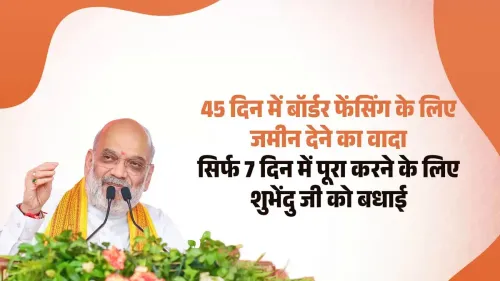
The new West Bengal cabinet, in its very first sitting under Chief Minister Suvendu Adhikari, resolved to hand over land to the BSF within 45 days for erecting barbed wire fencing along unfenced segments of the India-Bangladesh border. This directly mirrors a pledge Amit Shah had made before the recently concluded West Bengal Assembly elections, where he specifically stated that the land handover would be addressed in the new cabinet's inaugural meeting — a commitment that was fulfilled on Monday.
What Humayun Kabir Said
Welcoming the decision, Kabir underlined its national security dimension. "The security of the state and the country is associated with this decision. Now there is a double-engine government in West Bengal. So, the long-pending work for ensuring border security should be completed immediately. The land issue related to the matter will be resolved soon," he said.
He also expressed cautious optimism about the new Chief Minister's broader governance agenda. "The new Chief Minister had made a promise on this count. Let us have faith in his promises. Now it is to be seen how far the promises are delivered," Kabir added.
Who Is Humayun Kabir
Kabir, a former All India Trinamool Congress (TMC) legislator, was suspended from the party ahead of the West Bengal Assembly elections after he announced plans to construct a Babri Mosque at Beldanga in his native, minority-dominated Murshidabad district — modelled on the original structure at Ayodhya in Uttar Pradesh that was demolished on 6 December 1992. Following his suspension, he floated the Aam Janata Unnayan Party.
Kabir contested simultaneously from two Assembly constituencies — Naoda and Rejinagar, both in Murshidabad district — and won from both, making him only the second legislator after Chief Minister Adhikari to achieve this feat in the current election cycle.
Adhikari's Double-Constituency Win
Chief Minister Suvendu Adhikari was elected from both his native Nandigram constituency in East Midnapore district and from Bhabanipur in south Kolkata. At Bhabanipur, he defeated former Chief Minister Mamata Banerjee by a margin of over 15,000 votes — a result that underscored the scale of the BJP's electoral sweep in the state.
Broader Significance
Large stretches of the India-Bangladesh border in West Bengal have remained unfenced for years, a persistent concern for security agencies over infiltration and cross-border smuggling. This is the first concrete administrative step by the new government to address that gap. Its execution within the promised 45-day window will serve as an early credibility test for the Adhikari administration. Notably, land acquisition disputes in border districts have historically stalled similar initiatives, making the timeline ambitious but politically significant.
Point of View
And delivering it on Day One is designed to demonstrate that the Adhikari government means business. Yet the real test lies in execution: land acquisition disputes in border districts have historically stalled similar initiatives, and a 45-day deadline is ambitious. Kabir's endorsement, coming from a former TMC legislator now leading a minority-community party in Murshidabad — one of the most politically sensitive border districts — also signals a deliberate outreach to Muslim voters. Whether the deadline is met will determine whether this is a genuine policy shift or another headline number.
NationPress
24 Sept 2026
Frequently Asked Questions
What did the West Bengal cabinet decide about BSF land in its first meeting?
The new West Bengal cabinet, in its inaugural meeting under Chief Minister Suvendu Adhikari, resolved to hand over land to the BSF within 45 days for installing barbed wire fencing along currently unfenced stretches of the India-Bangladesh international border. The decision fulfils a pre-election pledge made in the BJP's Sankalp Patra.
Why has India-Bangladesh border fencing in West Bengal been pending for so long?
Large stretches of the India-Bangladesh border in West Bengal have remained unfenced for years due to unresolved land acquisition disputes and administrative delays. Security agencies have flagged the gaps as vulnerabilities for infiltration and cross-border smuggling.
Who is Humayun Kabir and why does his support matter?
Humayun Kabir is an Aam Janata Unnayan Party legislator and former TMC MLA who was suspended from the Trinamool Congress before the West Bengal elections. His support for the BSF land handover is notable because he represents the minority-dominated Murshidabad district along the Bangladesh border, lending cross-community credibility to the decision.
How did Suvendu Adhikari win two seats in the West Bengal election?
Chief Minister Suvendu Adhikari contested simultaneously from Nandigram in East Midnapore district and Bhabanipur in south Kolkata, winning both. At Bhabanipur, he defeated former Chief Minister Mamata Banerjee by over 15,000 votes.
What was Amit Shah's role in the BSF land handover promise?
Union Home Minister Amit Shah specifically promised before the West Bengal elections that the land handover to the BSF would be taken up in the very first meeting of the new cabinet. That commitment was fulfilled on Monday when the Adhikari cabinet passed the resolution.