West Bengal cabinet clears Poschim Banga name change
Synopsis
West Bengal’s BJP cabinet has cleared a bid to rename the state Poschim Banga, close to the Left Front’s old Paschim Banga proposal. The Assembly is expected to vote in the first half of December. The file must still clear the Centre, the President and Parliament — the hurdle that stopped earlier attempts.
Key Takeaways
The West Bengal cabinet this week cleared a proposal to rename the state Poschim Banga .
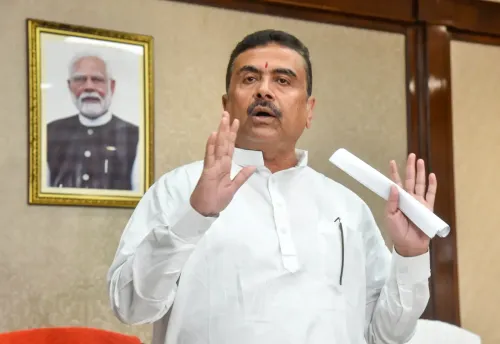
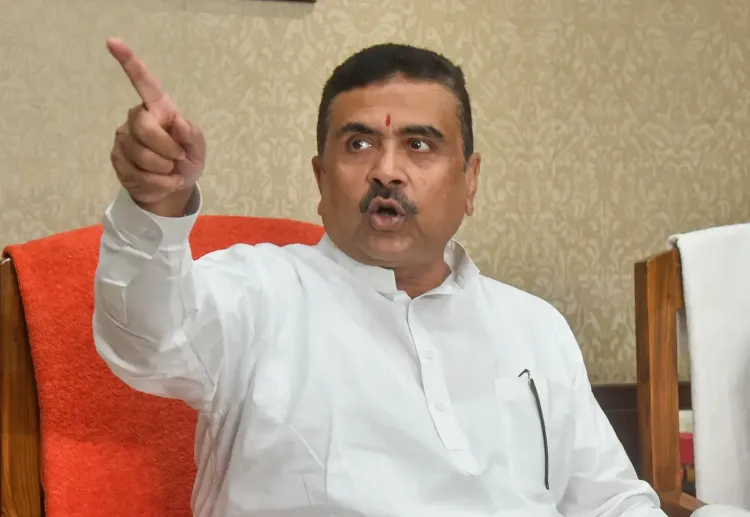
Chief Minister Suvendu Adhikari ’s BJP government plans an Assembly vote in the first half of December , after which the file goes to the Centre.
The name West Bengal dates to Partition in 1947 ; the West prefix has been questioned since Bangladesh emerged in 1971 .
Earlier bids — Left Front’s Paschim Banga , TMC’s 2016 three-name formula, and a later Bangla resolution — did not get Union approval.
Under Article 3 , Parliament and the President have the final say; Kerala’s shift to Keralam followed the same route via a 2026 law.
The capital’s change from Calcutta to Kolkata in 2001 succeeded because city renaming is administratively simpler.
The West Bengal cabinet this week cleared a proposal to rename the state Poschim Banga, with Chief Minister Suvendu Adhikari’s Bharatiya Janata Party (BJP) government set to place it before the Assembly in the first half of December before forwarding it to the Centre. The latest attempt revives a demand that has hung fire for decades, spanning history, language, federal politics and even the order in which states speak at national meetings.
Shakespeare once asked what is in a name, more than 430 years ago, and wondered over a rose that could not speak for itself. The West Bengal debate today is not nomenclature alone. It cites Partition, identity, federal protocol, language and bureaucratic practice — and it has repeatedly stalled despite resolutions, all-party talks and lobbying across political lines.
Why the name West Bengal has been contested
The name West Bengal is itself a product of Partition. In 1947, the historic province was split between India and what became East Pakistan, later Bangladesh. West Bengal described the Indian remnant relative to the eastern half of the old province. After East Pakistan became Bangladesh in 1971, many in the state began asking whether the West prefix still made sense.
State leaders have also long complained that representatives are often called last at national meetings because the name sits towards the end of an alphabetical list. All India Trinamool Congress (TMC) leader Mamata Banerjee frequently cited this, saying the state’s turn often came after many leaders had left or attention in the room had faded.
Earlier bids that never cleared New Delhi
This comes amid a long trail of failed attempts. During the Left Front era, a late-1990s proposal sought to rename the state Paschim Banga — the Bengali equivalent of West Bengal. It did not secure Union government approval.
After coming to power in 2011, Banerjee revived the effort; that bid too failed to get New Delhi’s nod. Momentum returned in 2016, when her TMC government proposed three versions: Bangla in Bengali, Bengal in English and Bangal in Hindi. Objections followed, chiefly that a state could not officially carry different names in different languages. The Centre asked for a single name. Two years later, the Assembly passed a resolution seeking Bangla in all languages, framed as recognition of Bengali linguistic and cultural identity.
Critics warned of confusion with Bangladesh in international forums. Joy Bangla is widely used in Bangladesh as a patriotic salute. Opposing that move, then state BJP president Dilip Ghosh accused the TMC government of trying to erase the history of Bengal, arguing that the existing name reflects the legacy of Partition and the state’s creation.
An earlier exercise at the city level did succeed. In 2001, the capital officially changed from Calcutta to Kolkata — the Bengali pronunciation residents already used. It fitted a wider Indian shift from anglicised colonial names, as in Bengaluru and Chennai. The Centre approved it, and usage followed on maps, documents and in international practice. Changing a state’s name, however, is constitutionally heavier than renaming a city.
How a state is renamed under Article 3
Under Article 3 of the Constitution, a state legislature can recommend a name change, but the final authority rests with Parliament. Any proposal needs action by the Union government and subsequent parliamentary approval. A bill is introduced in Parliament on the recommendation of the President, who refers it to the state legislature for its views. Each House must pass the bill by a simple majority. Once the President assents, the new name is recorded in the First and Fourth Schedules of the Constitution.
A recent parallel is Keralam. In June 2024, the Kerala Legislative Assembly unanimously passed a resolution to change the state’s name, citing the official Malayalam form, cultural heritage and a long-standing demand. Parliament later passed the Kerala (Alteration of Name) Bill, 2026, altering the legal name in the First Schedule to Keralam. Notably, shifting political priorities have often drained urgency from such files, and they get caught in broader Centre-state dynamics.
What happens after the December Assembly vote
Once the West Bengal Assembly passes the proposal, it will go to the Centre for clearance. The Article 3 sequence — presidential reference, a parliamentary bill, simple majorities in both Houses, and presidential assent — must still be completed before Poschim Banga can replace West Bengal in the Constitution. This is at least the fourth major institutional push in a quarter-century, after the Left Front’s Paschim Banga bid, Banerjee’s early-2010s revival, the 2016 three-name formula and the later Bangla resolution.
Whether this attempt fares better will depend less on the wording than on whether New Delhi and the state government move in step. The Assembly vote in the first half of December is the next test of a demand that has defined Bengal’s identity politics for a generation.
Point of View
Only with a different transliteration. The BJP once accused the Trinamool Congress of erasing Partition’s legacy by pushing Bangla; this proposal keeps the West in Bengali and sidesteps the Bangladesh-confusion argument that killed that bid. Article 3 still puts the last word with Parliament and the President. Kerala’s shift to Keralam showed what happens when the Centre and a state legislature move together; Bengal’s file has repeatedly died in that gap.
NationPress
25 Nov 2026
Frequently Asked Questions
What is Poschim Banga?
Poschim Banga is the name the West Bengal cabinet has cleared as a proposed replacement for West Bengal. The BJP government led by Chief Minister Suvendu Adhikari plans to send it to the Centre after an Assembly vote in the first half of December.
Why does West Bengal want to change its name?
Successive governments have argued that West Bengal is a Partition-era label that no longer fits after East Pakistan became Bangladesh in 1971, and that the name sits late in alphabetical lists at national meetings. The debate also covers Bengali linguistic identity, federal protocol and how the state is read in India and abroad.
When will the West Bengal Assembly vote on Poschim Banga?
The proposal is expected to come before the Assembly sometime in the first half of December. After it is passed, it must still be cleared by the Centre and then by Parliament under Article 3.
How is a state’s name changed in India?
Under Article 3 of the Constitution, a state legislature can recommend a name change, but Parliament has the final authority. A bill is introduced on the President’s recommendation, referred to the state for its views, passed by a simple majority in each House, and given presidential assent before the First and Fourth Schedules are amended.
Why did earlier West Bengal renaming proposals fail?
The Left Front’s late-1990s Paschim Banga bid and later TMC proposals, including Bangla in all languages, did not get Union approval. The Centre objected to multiple-language names, critics flagged confusion with Bangladesh, and such files have often lost urgency in Centre-state politics.