Has the Bengal DA Crisis Led to Contempt Notices for Top Officials?

Synopsis
West Bengal's Chief Secretary and Finance Secretary now face contempt of court for failing to comply with a Supreme Court order on Dearness Allowance payments. As the financial stakes rise, questions about government accountability and transparency come to the forefront. Will the state act before further legal repercussions ensue?
Key Takeaways
Contempt notices served to top officials for non-compliance.
Supreme Court ruling mandates immediate payment of DA arrears.
Financial burden for state could exceed Rs 42,000 crore .
Government silence raises questions about accountability .
Legal rights of employees affirmed under statutory pay rules.
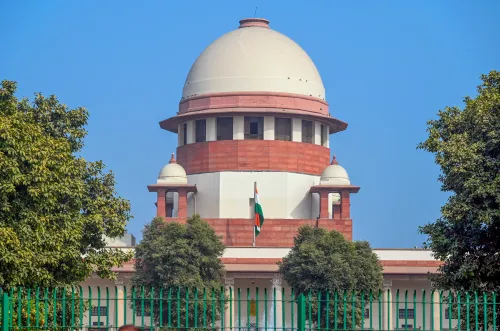
Kolkata, Feb 14 (NationPress) A collective of state government employees in West Bengal has issued contempt of court notices to Chief Secretary Nandini Goswami and Finance Secretary Prabhat Kumar Mishra for their failure to act in accordance with a recent Supreme Court ruling. This ruling mandated the government to disburse 25 percent of the Dearness Allowance (DA) arrears from 2008 to 2019 without delay and to ensure full payment by the conclusion of the financial year 2025-26.
On February 25, a division bench of the apex court, comprising Justice Sanjay Karol and Justice Prashant Kumar Mishra, affirmed that employees of the West Bengal government possess an enforceable right to DA under statutory pay regulations and directed the settlement of arrears for the stipulated period.
According to Firdous Shamim, legal representative for the Confederation of State Government Employees, the state has yet to take any steps to fulfill the Supreme Court's order regarding the immediate payment of 25 percent of the DA arrears by March 31, 2026.
“Consequently, a contempt of court notice has been issued to both the Chief Secretary and the Finance Secretary,” Shamim remarked.
In addition to ordering the West Bengal government to pay the specified DA arrears, the apex court also mandated the formation of a high-level committee to establish a definitive payment schedule for the remaining dues.
Since the ruling, the state's top officials have remained notably silent on the issue, with Chief Minister Mamata Banerjee declining to respond to media inquiries, asserting she would refrain from commenting on a matter currently under judicial consideration.
The Leader of the Opposition in the West Bengal Assembly has criticized the Chief Minister's stance, questioning how the case can be considered sub judice when the highest court has rendered a clear judgment.
Initial estimates indicate that complying with the Supreme Court's directive may impose an immediate financial burden of over Rs 10,000 crore on the state, potentially escalating to Rs 42,000 crore in the long term.
Point of View
This situation highlights the pressing issue of governmental accountability. The Supreme Court's ruling underscores the legal rights of employees and the necessity for state compliance. It's crucial for the government to act decisively to mitigate financial repercussions and restore trust among its workforce.
NationPress
30 Sept 2026
Frequently Asked Questions
What is the Supreme Court's ruling regarding DA arrears?
The Supreme Court directed the West Bengal government to pay 25 percent of the Dearness Allowance arrears from 2008 to 2019 immediately and ensure full payment by the end of the financial year 2025-26.
Who issued the contempt of court notices?
The contempt of court notices were issued by a collective of state government employees to Chief Secretary Nandini Goswami and Finance Secretary Prabhat Kumar Mishra.
What are the potential financial implications of this ruling?
Initial estimates suggest that complying with the Supreme Court's order could cost the West Bengal government over Rs 10,000 crore immediately and potentially Rs 42,000 crore in the long run.
What has been the government's response to the court ruling?
The state's top officials have remained silent on the issue, with Chief Minister Mamata Banerjee avoiding media questions related to the matter.
What does this situation indicate about employee rights?
This situation reaffirms that government employees have a legally enforceable right to their Dearness Allowance under statutory pay rules.