What is Causing the Bengal DA Crisis? Government Staff Prepare for Protests and Legal Action
Synopsis
West Bengal's government employees are gearing up for unprecedented action against the state government over dearness allowance disputes. With protests and legal actions on the table, tensions are rising as the Assembly elections approach. Will the government's inaction fuel further unrest among workers?
Key Takeaways
Government employees are uniting against the state for DA parity.
Legal actions are being pursued alongside public protests.
The Supreme Court has issued a clear directive on DA payments.
Financial implications of compliance could be significant.
Political tensions are rising ahead of the elections.
Kolkata, Feb 21 (NationPress) Various associations representing West Bengal government employees, excluding the one linked to the ruling Trinamool Congress, are poised to initiate a two-fold strategy against the state government as the Assembly elections approach later this year. This action revolves around demands for the payment of dearness allowance (DA) equivalent to that of Central government staff and the settlement of arrears that have been outstanding since 2008.
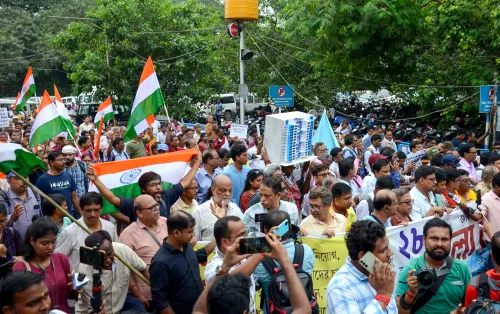
One component of this dual strategy will entail pursuing legal recourse, while the other will focus on public demonstrations, including protests planned in proximity to Chief Minister Mamata Banerjee's residence.
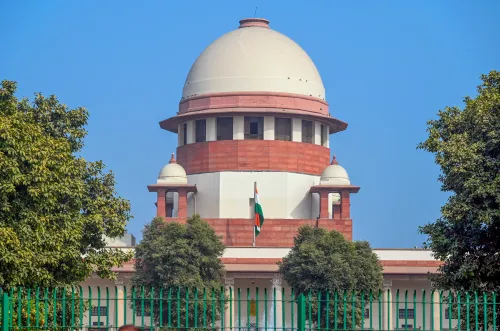
On the legal front, the Sangrami Joutho Mancha (Revolutionary United Front), a coalition representing various state government employee associations, has already filed a contempt petition with the Supreme Court against the West Bengal government. This petition claims that the state has not taken necessary actions to enforce the Supreme Court's directive issued earlier this month, which mandated the immediate payment of 25 percent of the DA arrears from 2008 to 2019, to be completed before the end of the financial year 2025–26.
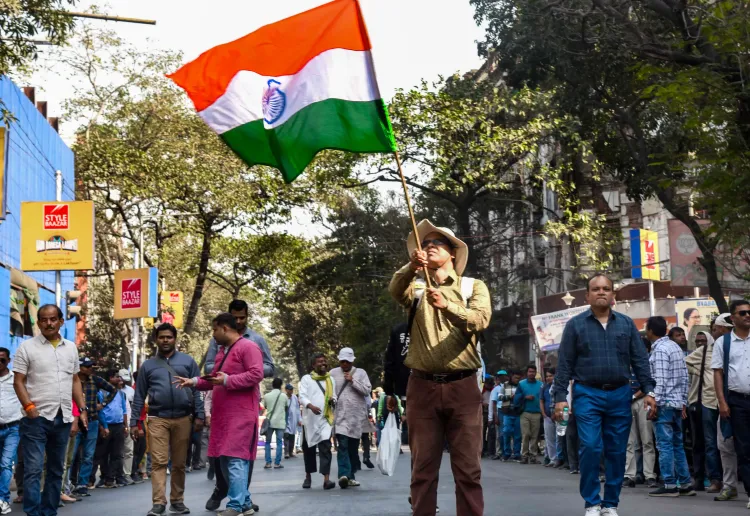
Simultaneously, different organizations within this coalition have unveiled a series of protest activities scheduled for the coming days, leading up to the Assembly elections, to advocate for their demands.
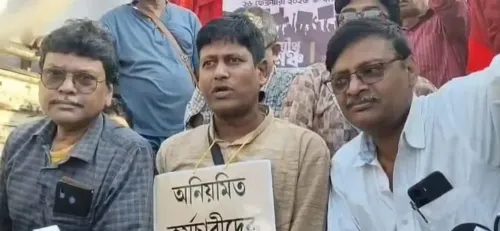
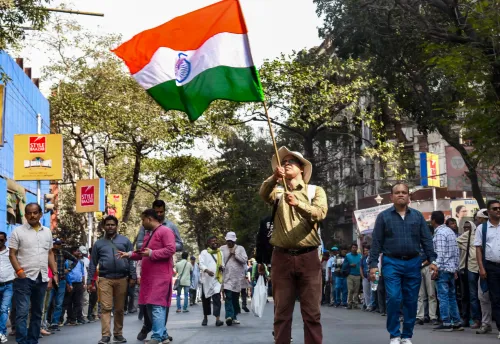
The West Bengal Coordination Committee, backed by the CPI(M), has declared its intention to conduct a protest march on February 26 from Esplanade in central Kolkata to a location near the Chief Minister’s residence in Kalighat concerning this matter.
“Despite the Supreme Court’s unequivocal order and detailed instructions regarding DA payments, the state government appears to be stalling the implementation under various pretexts. Therefore, we have made the decision to engage in street protests alongside our ongoing legal efforts,” stated Biswajit Gupta Chowdhury, general secretary of the Coordination Committee.
Since the Supreme Court issued its ruling earlier this month, the Chief Minister has refrained from providing detailed public comments, citing the matter as sub judice.
However, the Leader of the Opposition in the West Bengal Assembly, Suvendu Adhikari, has criticized the Chief Minister’s stance, questioning how the issue can remain sub judice when the apex court has already rendered its judgment.
In the meantime, initial estimates indicate that complying with the Supreme Court’s ruling could impose an immediate cost of over Rs 10,000 crore on the state treasury and approximately Rs 42,000 crore in the long run.
Point of View
It is imperative to acknowledge the escalating tensions between West Bengal's government employees and the state. The demand for parity in dearness allowances and the resolution of long-standing arrears is a critical issue that could influence public sentiment ahead of the elections. Both legal and protest actions reflect a growing discontent that must be addressed by the state government.
NationPress
29 Sept 2026
Frequently Asked Questions
What is the primary issue at the center of the Bengal DA crisis?
The main issue revolves around demands for the payment of dearness allowance (DA) equivalent to that of Central government employees and the clearance of arrears pending since 2008.
What actions are government employees planning?
Government employees plan to take legal action and organize street protests, including demonstrations near Chief Minister Mamata Banerjee's residence.
What did the Supreme Court order regarding DA payments?
The Supreme Court ordered the West Bengal government to pay 25 percent of the DA arrears between 2008 and 2019 immediately and before the end of the financial year 2025–26.
How has the Chief Minister responded to the situation?
The Chief Minister has avoided making detailed public comments on the issue, citing it as sub judice.
What are the potential financial implications of complying with the Supreme Court's order?
Initial estimates suggest that complying with the Supreme Court’s order could cost the state over Rs 10,000 crore immediately and around Rs 42,000 crore in the long term.