Ganga floods disrupt Sahibganj Loop trains; 18 services cancelled
Synopsis
The Ganga came within 15 metres of active tracks on the historic Sahibganj Loop — a corridor built in the 1860s — eroding an embankment and triggering mass train cancellations across West Bengal, Jharkhand, and Bihar. With 18 trains cancelled and the Down line suspended, Eastern Railway's round-the-clock restoration race now hinges entirely on whether the river stays in check.
Key Takeaways
Eastern Railway has cancelled nearly 18 trains and suspended all services on the Down line of the Sahibganj-Barharwa section.
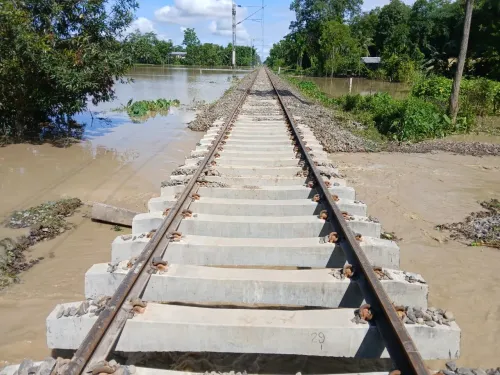
The Ganga eroded an embankment between Sakrigali and Maharajpur stations, coming within 15 metres of the tracks at peak water levels.
Services on the Up line continue under speed restrictions; multiple long-distance trains have been diverted via alternate routes.
The Sahibganj Loop , built in the 1860s , is a 410-km historic corridor linking West Bengal , Jharkhand , and Bihar .
Restoration timeline is weather-dependent; officials say normal services will resume only after necessary safety clearances are obtained.
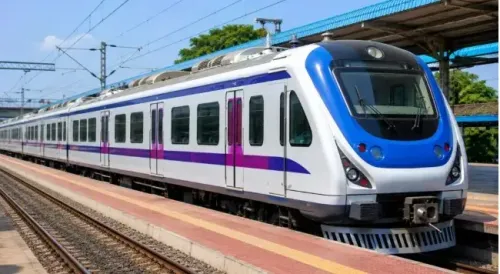
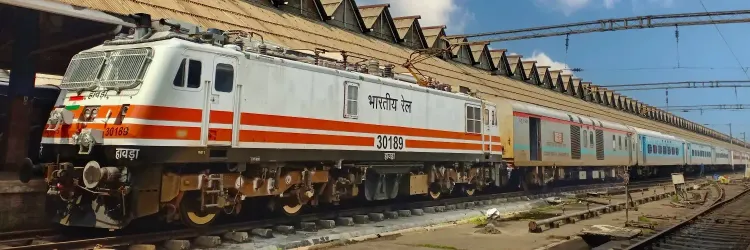
Train services on the Sahibganj Loop, a historic 410-km rail corridor connecting West Bengal, Jharkhand, and Bihar, have been severely disrupted after the Ganga eroded an embankment between Sakrigali and Maharajpur stations. The breach, reported over the past several days, has led Eastern Railway (ER) to cancel nearly 18 trains, divert several others, and impose speed restrictions on the Up line.
Scale of Disruption
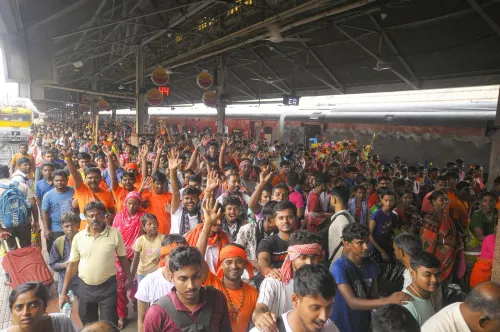
All services on the Down line of the affected Sahibganj-Barharwa section have been suspended. Train movement on the Up line continues under speed restrictions. Several trains are being short-terminated and short-originated as ER manages the cascading impact on schedules across the region.
Among the cancelled trains is the Howrah-Sahibganj Intercity Express. Long-distance services including the Ballia-Sealdah Express and the Kathgodam-Howrah Bagh Express have been diverted via Munger, Bhagalpur, Banka, Deoghar, and the Jasidih Bypass. The Delhi-Kamakhya Brahmaputra Mail and the 15734 Bhatinda-Balurghat Farakka Express are being rerouted via Jamalpur, Munger, and Katihar. The Gaya-Howrah Express is now running through Kiul, Jhajha, and Asansol, while the Bhagalpur-Ranchi Vananchal Express and the 13072 Jamalpur-Howrah Express are being diverted via Bhagalpur, Dumka, and Rampurhat.
How the Crisis Unfolded
A senior Eastern Railway official confirmed that the situation arose after the Ganga's water level began rising sharply. At its most critical point, the river was barely 15 metres from the tracks, with a section of the embankment already eroded. Restoration work commenced only after water levels receded to a safe distance, with workforce and materials already positioned at the site.
A large number of personnel are working round the clock, reinforcing the embankment with boulders and other materials. 'If the weather remains favourable, restoration work will be completed soon, and services will return to normal after the necessary clearances,' the official said.
Why the Sahibganj Loop Matters
Constructed in the 1860s, the Sahibganj Loop was originally part of India's main rail route between Howrah and Delhi. The 410-km stretch runs from Khana Junction in West Bengal to Kiul Junction in Bihar via Sahibganj. When Railways later built a shorter chord line capable of handling higher traffic volumes, the older alignment became a secondary loop — but retained its significance as a multi-state connector and a scenic corridor hugging the Ganga. Barharwa, a major junction on this line, links routes towards Sahibganj, Bhagalpur, Rampurhat, and Howrah.
Notably, the loop's proximity to the Ganga — the very feature that makes it picturesque — has repeatedly exposed it to flood-season disruptions. This year's breach is among the more severe, with the river encroaching to within 15 metres of active tracks.
Restoration Timeline and What Comes Next
Eastern Railway has not provided a fixed restoration date, tying the timeline to weather conditions and technical clearances. With embankment reinforcement work already under way, the pace of recovery will depend on whether the Ganga's water levels stabilise. Passengers on affected routes are advised to check for updated train diversions before travel, as schedules remain fluid. A return to full normal services on both lines is expected only after safety inspections confirm embankment integrity.
Point of View
Hugging a major river for its entire length, demands year-round embankment monitoring and pre-emptive reinforcement, not reactive boulder-dropping when the river is already 15 metres from the tracks. Eastern Railway's response this time appears swift, but the absence of a stated timeline signals the limits of contingency planning on a route that serves three states. With climate patterns making monsoon flooding less predictable, the question is whether the Railways will invest in permanent structural solutions or keep managing the same crisis every flood season.
NationPress
2 Oct 2026
Frequently Asked Questions
Which trains have been cancelled due to the Sahibganj Loop floods?
Nearly 18 trains have been cancelled, including the Howrah-Sahibganj Intercity Express. Several others, including the Ballia-Sealdah Express, the Delhi-Kamakhya Brahmaputra Mail, and the Gaya-Howrah Express, have been diverted via alternate routes such as Munger, Bhagalpur, and Katihar.
What caused the disruption on the Sahibganj Loop?
The disruption was caused by the Ganga eroding an embankment between Sakrigali and Maharajpur stations as the river's water level rose sharply. At its worst, the river was barely 15 metres from the tracks, making train operations on the Down line unsafe.
When will train services on the Sahibganj Loop return to normal?
Eastern Railway has not specified a fixed date, saying restoration depends on favourable weather and necessary safety clearances. Embankment reinforcement work is ongoing round the clock, and services will normalise once the work is certified as complete.
What is the Sahibganj Loop and why is it important?
The Sahibganj Loop is a 410-km historic rail corridor built in the 1860s, originally part of the main Howrah-Delhi route. It connects Khana Junction in West Bengal to Kiul Junction in Bihar via Sahibganj, serving as a key multi-state link through West Bengal, Jharkhand, and Bihar.
Are any trains still running on the Sahibganj Loop?
Yes, train movement continues on the Up line under speed restrictions, though the Down line remains fully suspended. Passengers are advised to check Eastern Railway's updated schedule before travel, as diversions and short-terminations are ongoing.