Bengal liquor excise: Advance duty payments mandatory from June 25
Synopsis
West Bengal is reverting to a pre-2017 rule that requires liquor manufacturers and bottlers to pay excise duties in full before any stock leaves their facilities. The shift, effective 25 June, is aimed at plugging corruption in excise collection — and it revives a system that was standard practice for over three decades under both Left Front and early TMC governments.
Key Takeaways
The West Bengal Finance Department has made advance excise duty payments mandatory for all liquor manufacturers , breweries , and bottling plants , effective 25 June .
No liquor stock can be dispatched from a facility until state excise duties are paid in full.
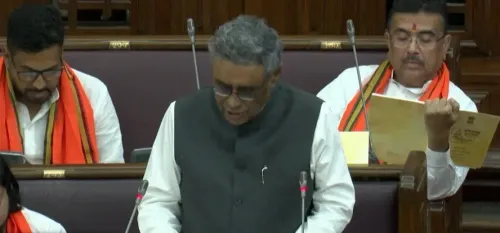
The notification was issued on 20 June , days before Finance Minister Swapan Dasgupta presented the state budget on 22 June .
The advance-payment system was in place under the Left Front from 1977 to 2011 and continued under Mamata Banerjee's government until 2017 .
The system was scrapped in 2017 when West Bengal Beverage Corporation Limited became the sole wholesale distributor; the current government has now reversed that decision.
Economists say the move will affect revenue collection and the financial management of distributors across the state.
The West Bengal Finance Department has issued a formal notification making advance payment of all state excise-related duties mandatory for liquor manufacturers, breweries, and bottling plants across the state, effective 25 June. Under the new directive, all such units must settle their excise dues in full before any product leaves the manufacturing facility, brewery, or bottling plant.
What the Notification Mandates
The rule is straightforward in its mechanics: no liquor stock can be moved out of a production or bottling facility until the applicable state excise duties have been paid in full. The notification was issued on 20 June, just days before new state Finance Minister Swapan Dasgupta — a journalist-turned-politician — was scheduled to present the full state budget on the floor of the assembly on 22 June.
The Stated Aim: Curbing Corruption, Boosting Revenue
According to an insider from the state excise department, speaking on condition of anonymity, the primary objective behind the policy shift is to seal avenues of corruption in excise duty collection and to ensure more reliable revenue flows to the state. Economic observers in Kolkata have described the notification as a significant structural turning point for West Bengal's liquor supply and distribution ecosystem. 'Its impact will be clearly seen in all aspects, from revenue collection to the financial management of distributors,' said a city-based economist.
A Return to an Older System
The advance payment mechanism is not entirely new to West Bengal. The same system was in practice for the entire 34-year Left Front regime from 1977 to 2011, first under Chief Minister Jyoti Basu and subsequently under Buddhadeb Bhattacharjee. The Trinamool Congress (TMC) government under Chief Minister Mamata Banerjee also maintained the practice for its first six years, from 2011 to 2017.
The system was discontinued in 2017 when the newly constituted West Bengal Beverage Corporation Limited was granted exclusive wholesale distribution rights for liquor across the state. The current government has now decided to reverse that change and restore the advance-payment requirement.
Impact on the Industry and What Comes Next
The reversion to advance excise payments is expected to alter cash-flow dynamics for manufacturers and distributors alike, requiring them to front-load duty payments rather than settling dues after dispatch. Analysts note that while the transparency benefits are clear, smaller bottling units and distributors may face short-term liquidity pressure as they adjust to the revised payment cycle. The notification takes effect from 25 June, and its revenue impact is likely to become visible in the state's excise collection figures in the months ahead.
Point of View
And the timing — right before a new Finance Minister's maiden budget — signals a deliberate attempt to project fiscal discipline. What is less clear is why the 2017 shift to the Beverage Corporation model failed to deliver the transparency it promised, and whether that model's structural weaknesses are being addressed or merely patched. Liquor excise is one of West Bengal's larger own-revenue streams; if advance payments do tighten collections, the numbers will show up quickly. The harder question is enforcement — the same department that allowed the old system to lapse will now be tasked with upholding the new one.
NationPress
19 Sept 2026
Frequently Asked Questions
What has West Bengal mandated for liquor manufacturers from June 25?
The West Bengal Finance Department has made it mandatory for all liquor manufacturers, breweries, and bottling plants to pay state excise duties in full before any product is removed from their premises. The rule takes effect from 25 June.
Why has West Bengal introduced this advance excise payment rule?
According to sources within the state excise department, the primary aim is to seal avenues of corruption in excise duty collection and ensure more consistent revenue flows to the state government.
Was this system used in West Bengal before?
Yes. The advance payment system was standard practice during the Left Front government from 1977 to 2011 and was also followed for the first six years of the Mamata Banerjee-led TMC government, from 2011 to 2017. It was discontinued in 2017 when West Bengal Beverage Corporation Limited was made the sole wholesale liquor distributor.
Who is the new Finance Minister who presented the West Bengal budget?
Swapan Dasgupta, a journalist-turned-politician, was appointed as West Bengal's Finance Minister and presented the full state budget on 22 June, days after the excise notification was issued.
How will this affect liquor distributors and manufacturers?
Manufacturers and bottlers will now need to front-load excise payments before dispatch, which could create short-term liquidity pressure, particularly for smaller units. Economists expect the change to have a visible impact on both state excise revenue and the financial management practices of distributors.