West Bengal Madrasa review: Adhikari govt seeks district reports by July 5
Synopsis
The Adhikari government's state-wide Madrasa review — demanding registration details, student data, and curriculum specifics from every district by 5 July — comes weeks after making Vande Mataram mandatory in all Madrasas. Together, the two orders mark a sharp policy shift in how West Bengal governs its Madrasa network, one of India's largest.
Key Takeaways
West Bengal government has ordered a review of all Madrasas in the state, with district magistrate reports due at Nabanna by 5 July .
District magistrates must report on each Madrasa's founding date, registration status, student strength, staff details, residential status, and curriculum.
The Minority Affairs and Madrasah Education Department says the exercise is administrative and will not disrupt ongoing studies or lead to student dismissals.
Action will be taken if irregularities are found, according to a departmental official.
Last month, the West Bengal Directorate of Madrasah Education made full rendition of 'Vande Mataram' mandatory in all government-aided and recognised Madrasas with immediate effect.
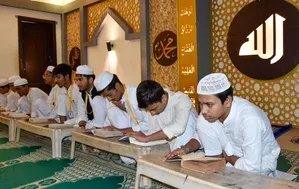
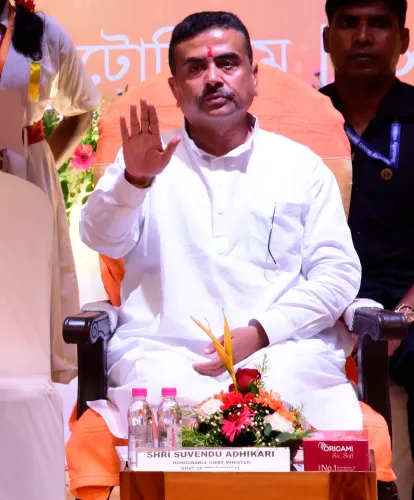
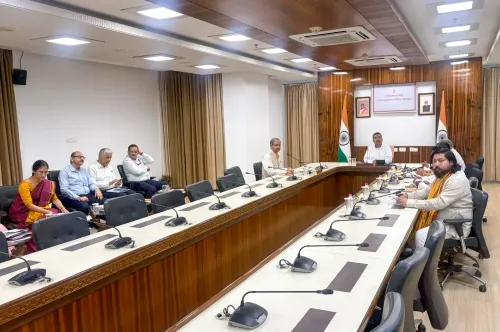
The Suvendu Adhikari-led West Bengal government has launched a state-wide review of all Madrasas, directing every district magistrate to submit comprehensive reports to the state secretariat at Nabanna by 5 July. The West Bengal Minority Affairs and Madrasah Education Department has formally notified the exercise, describing it as a routine administrative measure.
What the Review Covers
District magistrates have been asked to furnish detailed information on each Madrasa in their jurisdiction — including the date of establishment, registration status with the Minority Affairs and Madrasah Education Department, student enrolment figures, and details of teaching and non-teaching staff. Reports must also specify whether the institution is residential or privately aided, and the curriculum it follows.
What the Government Said
The notification states that the data collection is necessary to plan the future direction of Madrasa education and to identify steps that benefit students. It also explicitly states the exercise will help determine whether any irregularities or illegal activities are occurring within these institutions.
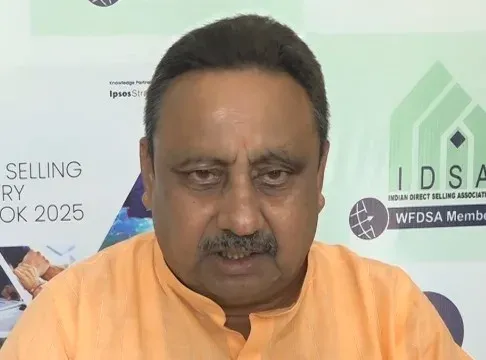
An unnamed official from the department sought to reassure stakeholders: 'Appropriate action will be taken if irregularities are found. However, based on this information, no action will be taken to stop the studies in the Madrasas or lay off the students. The studies will continue as they are going on in the Madrasas,' the official said.
The Vande Mataram Order — Recent Context
This review follows a separate directive issued last month by the West Bengal Directorate of Madrasah Education, making the full rendition of 'Vande Mataram' mandatory during assembly prayers before classes in all government-aided and recognised Madrasas across the state, with immediate effect. The order, issued with the approval of the competent authority, applied to all categories of institutions under the department — including Government Model Madrasas, Recognised Government Aided Madrasas, Approved MSKs, Approved SSKs, and Recognised Unaided Madrasas.
The order read: 'Singing of Vande Mataram during assembly prayers prior to the commencement of classes is hereby made mandatory in all Madrasahs... under the Minority Affairs and Madrasah Education Department across the state of West Bengal with immediate effect.'
Broader Significance
Taken together, the two directives — the Vande Mataram mandate and the current comprehensive review — signal a notable shift in the Adhikari government's approach to Madrasa governance in West Bengal. The state has one of the largest concentrations of Madrasa institutions in India. Critics and minority community representatives are likely to scrutinise the review's scope and how the collected data is ultimately used, even as the government maintains the exercise is purely administrative.
The deadline of 5 July gives district administrations roughly a month to compile and submit their reports, after which the state government is expected to outline its next steps for Madrasa education policy.
Point of View
But the sequencing matters: a Vande Mataram mandate last month, a comprehensive data-collection order this month. Whether this is genuine regulatory housekeeping or the groundwork for structural reform will depend entirely on what the government does with the data after 5 July. Minority community leaders and opposition voices will be watching that next step far more closely than the review itself.
NationPress
22 Oct 2026
Frequently Asked Questions
What is the West Bengal Madrasa review ordered by the Adhikari government?
It is a state-wide administrative exercise in which district magistrates have been directed to submit detailed reports on all Madrasas in their districts to the state secretariat at Nabanna by 5 July. The reports must cover registration status, student enrolment, staff details, curriculum, and whether the institution is residential or privately aided.
Will the Madrasa review lead to closures or disruption of studies?
The government has said no. A departmental official stated that no action will be taken to stop studies or dismiss students based on the review data, though action will be taken if specific irregularities are found.
What was the Vande Mataram order issued last month?
The West Bengal Directorate of Madrasah Education issued a notification making the full singing of 'Vande Mataram' mandatory during assembly prayers before classes in all government-aided and recognised Madrasas across the state, with immediate effect. The order covered all categories of Madrasa institutions under the department.
Why is the West Bengal government conducting this Madrasa review?
According to the official notification, the data will help the state government plan future education policy for Madrasas and identify any irregularities or illegal activities. The government has described it as a standard administrative exercise.
When must district magistrates submit their Madrasa reports?
All district magistrates have been asked to send their comprehensive Madrasa reports to the state secretariat at Nabanna by 5 July.