Vande Mataram mandatory in Bengal madrasas: BJP's Khandelwal hails move, Barelvi opposes
Synopsis
West Bengal's new BJP government has extended its 'Vande Mataram' mandate from state schools to all recognised madrasas — a move welcomed by BJP MP Praveen Khandelwal but challenged by All India Muslim Jamaat's Maulana Barelvi, who insists recital cannot be compelled. The order, coming just a week after the school directive, signals an assertive cultural agenda in a politically sensitive state.
Key Takeaways
The West Bengal Directorate of Madrasah Education has made singing 'Vande Mataram' mandatory in all government, aided, and recognised madrasas with immediate effect.
The order was confirmed by Minister Khudiram Tudu under Chief Minister Suvendu Adhikari's government.
The madrasa directive follows a similar mandate for state-run schools issued just one week earlier .
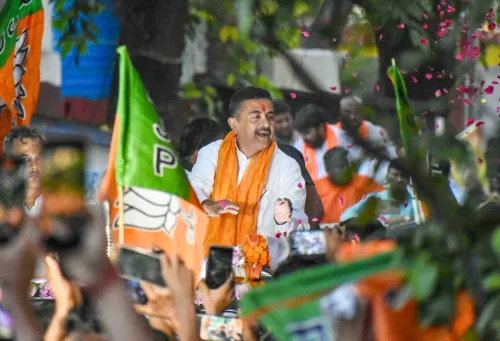
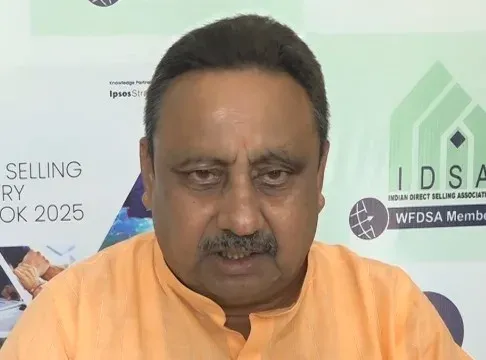
BJP MP Praveen Khandelwal called 'Vande Mataram' the 'lifeline and soul of India' and welcomed the decision.
Maulana Shahabuddin Razvi Barelvi , National President of All India Muslim Jamaat , said recital should not be forced and must be left to individual conscience.
The West Bengal government has made singing of 'Vande Mataram' mandatory in all government, aided, and recognised madrasas across the state, with the directive taking immediate effect. Bharatiya Janata Party (BJP) MP Praveen Khandelwal welcomed the decision, while Islamic scholar Maulana Shahabuddin Razvi Barelvi cautioned against coercion, saying the choice should rest with individual conscience.
The Government's Decision
The West Bengal Directorate of Madrasah Education issued the order making 'Vande Mataram' compulsory during Assembly prayers before classes in all recognised madrasas. Khudiram Tudu, Minister In-charge of Minority Affairs and Madrasah Education in the state government led by Chief Minister Suvendu Adhikari, confirmed the directive.
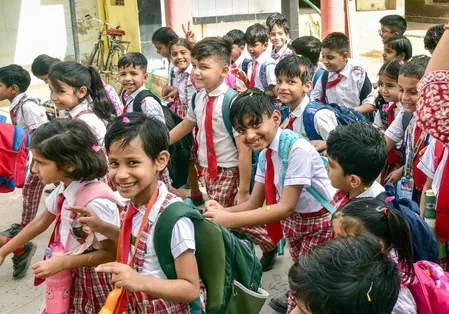
The madrasa order follows a similar mandate issued just one week earlier, when the Bengal government made 'Vande Mataram' recital compulsory in all state-run schools. Tudu drew a direct parallel: 'Like all other state-run schools in the state, singing 'Vande Mataram' will henceforth be mandatory in all recognised madrasahs as well. There are many state-run schools in West Bengal where the medium of instruction is the Santali language. If singing 'Vande Mataram' is compulsory in those schools, why should the same not be mandatory in recognised madrasahs?'
What BJP Said
BJP MP Khandelwal called the national song the pride and soul of India. 'Vande Mataram is the pride and honour of India. The song is the lifeline of India and its soul. Therefore, it should be sung in every possible place, and there is no doubt about it,' he said. He added that the song is intrinsically tied to India's independence struggle and that its recital should be compulsory in every institution.
The Opposition Voice
Maulana Shahabuddin Razvi Barelvi, National President of All India Muslim Jamaat, argued that the debate must be viewed through a political lens rather than a religious one. He alleged that since Suvendu Adhikari assumed charge as Chief Minister, a series of controversies have been deliberately engineered in the state, with madrasas being targeted on the lines of Assam.
'I am not stopping anyone who wants to recite it, but those who do not want to recite it should not be pressured. It should be left to people's conscience,' Razvi Barelvi said. He stopped short of calling for a reversal of the order, framing his objection around the principle of voluntary participation rather than outright opposition to the national song.
Context and Significance
The directive is among the first major policy moves by the new BJP-led Bengal government on the question of cultural and civic obligations in minority educational institutions. It comes amid a broader national conversation about the role of state-run and state-aided religious schools in reflecting constitutional values. Notably, West Bengal has one of the largest networks of government-recognised madrasas in India, making the order's reach significant. How the mandate is implemented and whether it draws legal challenges will be closely watched in the weeks ahead.
Point of View
Madrasa-second sequencing is deliberate: it pre-empts the charge of singling out one community by establishing a universal rule first. Yet the speed of implementation, within days of the school order, and the framing by Maulana Barelvi as part of a pattern of madrasa targeting since Adhikari took charge, suggest the political signal is not lost on either side. The real accountability question is enforcement: will non-compliance attract penalties, and if so, what kind? That detail, absent from the current order, will determine whether this is symbolic assertion or structural change.
NationPress
20 Sept 2026
Frequently Asked Questions
What has the West Bengal government ordered regarding Vande Mataram in madrasas?
The West Bengal Directorate of Madrasah Education has made singing 'Vande Mataram' compulsory during Assembly prayers before classes in all government, aided, and recognised madrasas across the state, with immediate effect. The order was confirmed by Minority Affairs and Madrasah Education Minister Khudiram Tudu.
When did West Bengal make Vande Mataram mandatory in schools?
The Bengal government made 'Vande Mataram' recital mandatory in all state-run schools approximately one week before extending the same directive to madrasas. Both orders were issued under Chief Minister Suvendu Adhikari's government.
Why has Maulana Barelvi opposed the madrasa directive?
Maulana Shahabuddin Razvi Barelvi, National President of All India Muslim Jamaat, opposed the compulsory nature of the order, saying no one should be pressured to sing the national song and that recital must be left to individual conscience. He also alleged that the move is politically motivated and part of a broader pattern of targeting madrasas since Suvendu Adhikari became Chief Minister.
What did BJP MP Praveen Khandelwal say about the decision?
BJP MP Praveen Khandelwal hailed the directive, calling 'Vande Mataram' the pride, honour, and soul of India. He said the national song is tied to India's independence and should be sung in every institution without exception.
How significant is West Bengal's madrasa network?
West Bengal has one of the largest networks of government-recognised madrasas in India, making the reach of this directive considerable. The order covers all government, aided, and recognised madrasas in the state.