Vande Mataram in West Bengal madrasas draws sharp opposition pushback

Synopsis
West Bengal's order making Vande Mataram mandatory in madrasas has ignited a multi-party backlash, with opposition leaders citing constitutional religious freedoms and warning of communal fallout. Coming just a week after the same mandate was extended to all schools, the directive signals an accelerating culture-politics collision in a state where community sensitivities run deep.
Key Takeaways
The West Bengal government has made Vande Mataram recital mandatory in all aided and unaided madrasas under the Minority Affairs and Madrasa Education Department .
The madrasa directive follows a similar order for all schools issued just one week earlier .
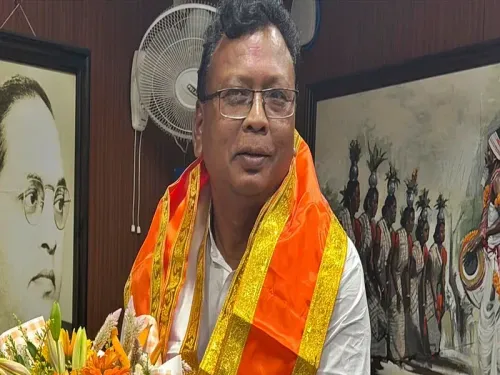
AJUP Chairman Humayun Kabir vowed to 'oppose this by uniting all Muslims,' citing constitutional religious freedoms.
Congress leader Husain Dalwai argued only the first two stanzas of Vande Mataram are appropriate in a pluralistic society.
BJP leader Mukhtar Abbas Naqvi appealed against communalising the issue, warning against attempts to 'weaken the country's harmony.' The decision was taken under the government led by Suvendu Adhikari .
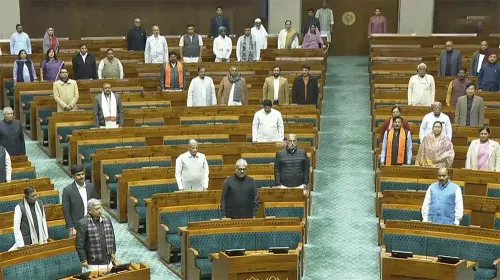
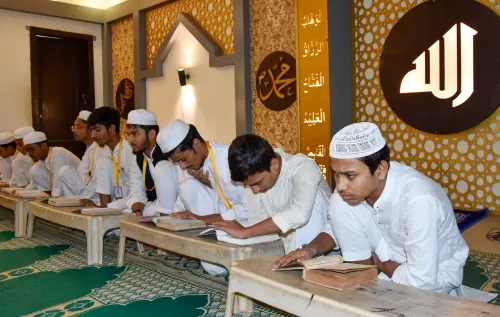
The West Bengal government's directive making Vande Mataram recital mandatory in all recognised madrasas across the state has drawn sharp criticism from opposition leaders, who argue the move infringes on religious freedoms and risks stoking communal tensions. The order, issued by the Directorate of Madrasa Education, requires the national song to be sung before classes begin in all aided and unaided madrasas functioning under the Minority Affairs and Madrasa Education Department.
Key Developments
The madrasa directive comes just a week after the state government made Vande Mataram mandatory in all schools. AJUP Chairman Humayun Kabir was among the first to condemn the order, invoking constitutional protections. 'This should not happen. The Indian Constitution gives everyone the right to practise their religion. Everyone should follow the teachings of their faith. Madrasas are not against anyone,' he said, adding that he would 'oppose this by uniting all Muslims.'
Kabir also reminded the government of its representative duty. 'The population of Bengal is over 11 crore, and he is the Chief Minister for everyone — Hindus, Muslims, Christians, Sikhs, Jains and all other communities alike. He must remember that he is the Chief Minister for all people,' he stressed.
What Opposition Leaders Said
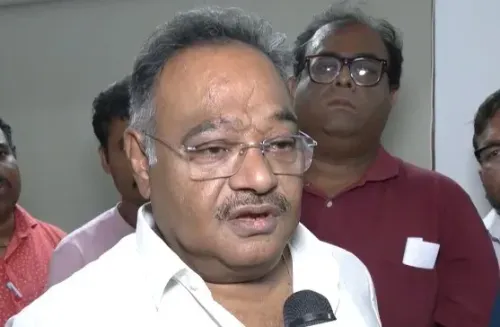
Congress leader Husain Dalwai drew a distinction between the national anthem and the national song. 'If people are talking about Vande Mataram, then why don't they also talk about Jana Gana Mana? The national anthem is Jana Gana Mana. I think people can sing Vande Mataram, but only the first two stanzas are necessary in a pluralistic society. If someone is asked to worship a goddess, they may object because India is a secular country,' he said. He further added, 'This country belongs to Mahatma Gandhi's ideology, not Savarkar's.'
Congress MLA Nizam Uddin Bhat acknowledged nationalist obligations but drew the line at coercion. 'Every citizen has responsibilities towards the nation, but this is also a democratic country with constitutional protections and rights. Issuing directions from one department and forcing students to comply is not right. Such actions can create outrage and lead to unnecessary tensions. We will request the local administration to intervene,' he said.
Samajwadi Party MP Virendra Singh framed the controversy as part of a calculated political strategy. 'Look, this is the main agenda of the Bharatiya Janata Party, and they are working according to that agenda. Nothing more than this,' he claimed.
BJP's Appeal for Calm
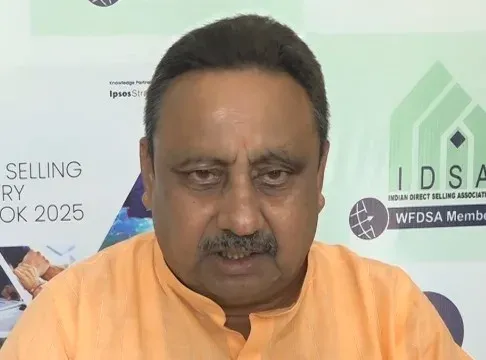
BJP leader Mukhtar Abbas Naqvi took a different line, urging all sides to step back from communal framing. 'No communal atmosphere should be created around Vande Mataram. Those trying to spread communal insecurity and tension over the issue are attempting to weaken the country's harmony and social unity,' he said.
Background and Context
The madrasa order represents a significant escalation of the state's cultural directives in the education sector. Notably, the move marks another major education-related decision by the government led by Suvendu Adhikari. Critics argue that while the national song carries patriotic significance, its mandatory recital in religious institutions raises distinct constitutional questions about the limits of state authority over minority educational bodies. The controversy is likely to intensify as political parties position themselves ahead of upcoming electoral cycles in the state.
Point of View
Not administrative routine. Opposition leaders are right to flag the constitutional tension, but their responses — ranging from theological objections to partisan blame — risk fragmenting a principled legal argument into electoral noise. The harder question, which no party has answered, is whether a madrasa funded by the state can claim the same exemptions as a fully private religious institution.
NationPress
20 Sept 2026
Frequently Asked Questions
What is the West Bengal madrasa Vande Mataram order?
The West Bengal government, through the Directorate of Madrasa Education, has issued an order requiring Vande Mataram to be sung before classes begin in all recognised, aided, and unaided madrasas under the Minority Affairs and Madrasa Education Department. The directive came one week after a similar mandate was extended to all schools across the state.
Why are opposition leaders objecting to the order?
Opposition leaders argue the directive infringes on constitutional religious freedoms guaranteed to all citizens. AJUP Chairman Humayun Kabir and Congress MLA Nizam Uddin Bhat both cited the risk of unnecessary tension and coercion, while Congress leader Husain Dalwai raised concerns about asking individuals to sing verses they may associate with religious worship.
What did BJP leader Mukhtar Abbas Naqvi say about the controversy?
BJP leader Mukhtar Abbas Naqvi appealed against communalising the issue, stating that no communal atmosphere should be created around Vande Mataram and that those stoking tension over it were attempting to weaken national harmony and social unity.
Who governs West Bengal and issued this directive?
The directive was issued under the West Bengal government led by Suvendu Adhikari, through the Directorate of Madrasa Education.
What is the legal status of Vande Mataram in India?
Vande Mataram is India's national song, distinct from the national anthem Jana Gana Mana. The Supreme Court has previously held that singing Vande Mataram cannot be made compulsory if it violates an individual's sincere religious beliefs, making the constitutional dimensions of such state directives a matter of ongoing legal debate.