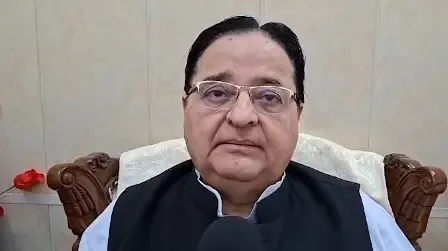
Vande Mataram cannot be forced on citizens, says Jamaat-e-Islami Hind leader
Synopsis
Jamaat-e-Islami Hind VP Malik Mohtasim Khan has challenged West Bengal's reported move to make Vande Mataram compulsory in madrasas, invoking Supreme Court precedent. His remarks — combining a constitutional argument on compulsion with an economic critique of cattle-trade restrictions — reflect the layered tensions around religious identity, state authority, and civic obligation ahead of Eid al-Adha.
Key Takeaways
Malik Mohtasim Khan , Vice President of Jamaat-e-Islami Hind , spoke out on 21 May against reports of Vande Mataram being made compulsory in West Bengal madrasas.
Khan argued that no government can legally compel citizens to sing any song, citing a Supreme Court ruling on the matter.
He described the West Bengal directive as an advisory, warning that making it mandatory would violate judicial directions.
On Eid al-Adha , Khan urged Muslims in Bengal to voluntarily forgo cow sacrifice, noting halal alternatives such as goats, buffaloes, sheep, and rams.
He also argued that cattle-trade restrictions harm the rural economy and called on the BJP to first address beef exports by non-Muslim-owned slaughterhouses.
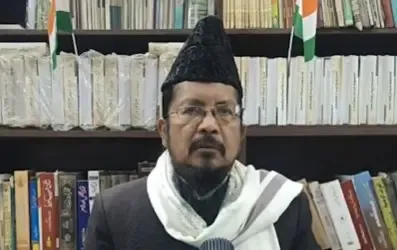
Jamaat-e-Islami Hind Vice President Malik Mohtasim Khan on Thursday, 21 May pushed back sharply against reports that 'Vande Mataram' has been made compulsory in madrasas across West Bengal, asserting that no government holds the authority to compel citizens to sing any particular song. His remarks come amid growing debate over the directive and its constitutional validity.
Khan's Core Argument
Khan drew a clear distinction between patriotism and coercion, arguing that genuine love for the country cannot be legislated. 'Vande Mataram', he said, must remain a matter of personal and institutional choice.
'Look, even our national anthem, Jana Gana Mana, being made compulsory and people being forced to sing it was not appreciated by many. Loving the country and respecting the country are different things. No government can force its citizens about which song they should sing and which they should not. The Supreme Court has given a clear ruling on this,' Khan said.
What the Supreme Court Has Said
Khan invoked the Supreme Court's existing jurisprudence on the matter, noting that compelling citizens to sing national songs has previously been held to conflict with individual freedoms. He characterised the West Bengal madrasa directive as an advisory — and argued that converting it into a binding order would run contrary to those judicial directions.
'Whoever wishes to sing it may do so, and whoever does not want to sing it should not be forced. Madrasas also have every right to either follow this directive or not follow it if they do not wish to. If the government imposes it forcefully, then it goes against the directions given by the Supreme Court. This is an advisory, and turning it into a compulsory order would be wrong,' he stated.
Remarks on Eid al-Adha and Cattle Trade
Khan also addressed restrictions related to cow slaughter ahead of Eid al-Adha, urging Muslims in Bengal not to insist on cow sacrifice given the availability of other halal alternatives. He pointed to buffaloes, goats, sheep, and rams as permissible options under Islamic law.
However, he argued that broader restrictions on cattle trade carry economic consequences that extend beyond religious communities. 'A major part of our rural economy depends on the trade of animals and livestock. So, this is something that harms the country's economy,' he said, adding that large slaughterhouses — including those owned by non-Muslims — continue to export beef abroad, and that the Bharatiya Janata Party (BJP) should address that dimension first.
Appeal for Communal Harmony
Closing his remarks, Khan appealed for restraint and communal harmony during the festival season, urging members of his community in Bengal to voluntarily avoid cow sacrifice in the interest of social peace. Notably, the appeal was framed as a request rather than a concession to state pressure — a distinction Khan appeared deliberate in drawing.
The debate over compulsory singing of 'Vande Mataram' in educational institutions is not new; it has periodically resurfaced across states, with courts consistently emphasising that such directives must not override individual conscience or religious freedom.
Point of View
Ahead of a charged festival season, tests the limits of state authority over minority educational institutions. The cattle-trade argument is the sharper provocation — by pointing to non-Muslim-owned export slaughterhouses, Khan redirects the framing from religious practice to economic policy, a move that complicates the BJP's selective-enforcement narrative. Whether the West Bengal government treats the Vande Mataram directive as advisory or binding will be the real test of its constitutional intent.
NationPress
20 Sept 2026
Frequently Asked Questions
Why did Malik Mohtasim Khan object to Vande Mataram being made compulsory in madrasas?
Khan argued that compelling citizens to sing any particular song — including Vande Mataram — violates individual freedom and contradicts Supreme Court rulings on the subject. He said the West Bengal directive is an advisory, and converting it into a mandatory order would be unconstitutional.
What has the Supreme Court said about making Vande Mataram compulsory?
According to Khan, the Supreme Court has issued clear directions indicating that citizens cannot be forced to sing national songs. He cited this precedent to argue that any government order mandating Vande Mataram in madrasas would go against those judicial guidelines.
What did Khan say about cow sacrifice during Eid al-Adha?
Khan urged Muslims in West Bengal not to insist on cow sacrifice, noting that several halal alternatives — including goats, buffaloes, sheep, and rams — are available. He framed this as a voluntary appeal for communal harmony, not a concession to state pressure.
How did Khan connect cattle-trade restrictions to the economy?
Khan argued that restrictions on cattle trade harm the rural economy, which depends significantly on livestock commerce. He also noted that large slaughterhouses owned by non-Muslims continue to export beef abroad, and called on the BJP to address that before imposing restrictions on Muslim communities.
Who is Malik Mohtasim Khan?
Malik Mohtasim Khan is the Vice President of Jamaat-e-Islami Hind, an Islamic organisation based in India. He made these remarks on 21 May in response to reports about the West Bengal government's directive on Vande Mataram in madrasas.