West Bengal regularises 66 OBC communities, cuts reservation to 7%
Synopsis
West Bengal has collapsed its two-tier OBC reservation structure into a single 7 per cent pool, regularising 66 communities from its pre-2010 list — a direct response to a Calcutta High Court ruling that struck down the earlier Category A and Category B split. The consolidation is set to sharpen competition among OBC applicants for government posts.
Key Takeaways
The West Bengal government issued a notification on 19 May regularising 66 OBC communities from the state's pre- 2010 list.
Total OBC reservation in the state has been reduced to 7 per cent , replacing the earlier 10% (Category A) + 7% (Category B) structure.
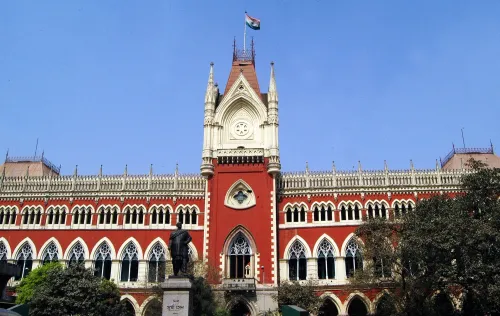
The move complies with a Calcutta High Court Division Bench order dated 22 May 2024 that struck down the previous allocation.
Communities covered include Kapali , Kurmi , Tanti , Hajjam (Muslim) , Paharia Muslim , and 61 others.
Persons who converted to Christianity from Scheduled Castes and their descendants are also included in the list.
Experts warn the unified pool will increase competition among OBC applicants for government posts.
The West Bengal government on Tuesday, 19 May issued a formal notification regularising 66 communities that were part of the state's Other Backward Classes (OBC) reservation list prior to 2010, reducing the total OBC reservation in the state to 7 per cent. The move follows the new government's decision to scrap the existing OBC list entirely, and comes in direct compliance with a Calcutta High Court Division Bench order dated 22 May 2024.
Background: What the Court Ordered
The Calcutta High Court Division Bench had struck down the earlier OBC reservation structure, which allocated 10 per cent for Category A and 7 per cent for Category B. In response, the Department of Backward Class Welfare issued this notification to bring the state's reservation framework in line with the court's directive. The total OBC reservation has now been consolidated at 7 per cent across government services and posts.
Which Communities Are Covered
The 66 categories retained in the revised list represent a wide cross-section of traditional and social communities. These include Kapali, Kurmi, Nai (Napit), Tanti, Dhanuk, Kasai, Khandait, Turha, Paharia Muslim, Devanga, and Hajjam (Muslim), among others. Notably, the notification also extends OBC status to persons who converted to Christianity from Scheduled Castes and their descendants.
Impact on Reservation Policy
According to experts, the consolidation of previously separate OBC categories into a single 7 per cent pool is expected to intensify competition for reserved posts among the listed communities. The earlier two-tier structure — Category A and Category B — had distributed the reservation burden differently; its removal fundamentally alters the competitive dynamics within OBC applicants in the state.
This comes amid a broader national debate over OBC sub-categorisation, following the Supreme Court's landmark ruling in 2024 permitting states to sub-classify OBC groups based on their degree of backwardness. West Bengal's move, however, moves in the opposite direction — collapsing categories rather than sub-dividing them.
Government's Position
A Governor's order accompanying the notification clarified that all 66 communities will be eligible for the 7 per cent reservation in state government services. The state government stated that the decision is aimed at ensuring social justice and transparency in accordance with the court's directives. The Department of Backward Class Welfare is the nodal body overseeing the implementation of the revised framework.
How the state manages competing claims within the unified 7 per cent pool — and whether further litigation follows — will determine the practical impact of this notification in the months ahead.
Frequently Asked Questions
Why did West Bengal issue the OBC regularisation notification?
The notification was issued in compliance with a Calcutta High Court Division Bench order dated 22 May 2024, which struck down the earlier OBC reservation structure of 10 per cent for Category A and 7 per cent for Category B. The state was required to revise its OBC list accordingly.
Which communities are included in the revised West Bengal OBC list?
The revised list retains 66 communities that were part of the state's OBC list before 2010, including Kapali, Kurmi, Nai (Napit), Tanti, Dhanuk, Kasai, Khandait, Turha, Paharia Muslim, Devanga, and Hajjam (Muslim), among others. Persons who converted to Christianity from Scheduled Castes and their descendants are also included.
What is the new OBC reservation percentage in West Bengal?
The total OBC reservation in West Bengal has been set at 7 per cent following the notification. This replaces the previous two-tier structure that separately allocated 10 per cent for Category A and 7 per cent for Category B.
How does this change affect OBC applicants in West Bengal?
According to experts, consolidating all 66 communities into a single 7 per cent reservation pool is expected to increase competition among OBC applicants for government services and posts, as the earlier category-based distribution no longer applies.
What was the Calcutta High Court's role in this decision?
The Calcutta High Court's Division Bench struck down the earlier OBC reservation structure in its order of 22 May 2024. The West Bengal Department of Backward Class Welfare issued this notification directly in response to that ruling to bring the state's policy into compliance.