Bengal restores CBI general consent for corruption probes after 7-year freeze
Synopsis
West Bengal's new government has reversed a seven-year-old TMC decision that had effectively blocked the CBI from independently probing corruption in the state. The restoration of general consent under the Delhi Special Police Establishment Act is one of the new administration's most significant early moves — though a rider shielding state employees from automatic CBI scrutiny signals the limits of that openness.
Key Takeaways
West Bengal restored CBI general consent on 8 June , allowing the agency to probe corruption cases without prior state approval.
The consent was originally withdrawn in 2018 by the Trinamool Congress cabinet under Mamata Banerjee .
A key rider requires the CBI to still seek state permission if the accused is a state government employee .
Restoration is under Section 6 of the Delhi Special Police Establishment Act, 1946 .
The previous TMC government had challenged CBI probes even in cases ordered by the Calcutta High Court .
The move is expected to unlock a backlog of corruption cases stalled since 2018 .
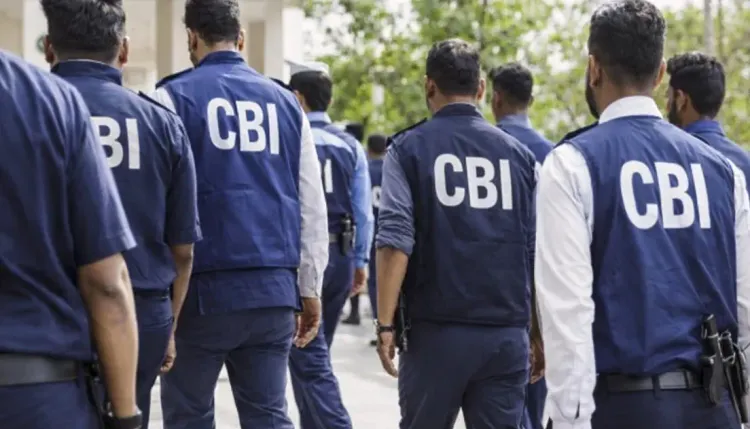
The West Bengal government on Monday, 8 June formally restored 'general consent' — also called 'standing clearance' — to the Central Bureau of Investigation (CBI) to initiate corruption probes in the state without requiring prior approval from the state government. The move reverses a 2018 decision by the then Trinamool Congress (TMC)-led cabinet under Mamata Banerjee that had effectively paralysed the federal agency's independent functioning in Bengal for seven years.
What the Restoration Means
Under Section 6 of the Delhi Special Police Establishment Act, 1946, states must grant consent before the CBI can operate within their jurisdiction. The new West Bengal government has reinstated this blanket clearance, allowing the agency to register and pursue corruption cases in the state without case-by-case permission. The restoration is, however, not unconditional — a key rider has been attached: the CBI must still seek prior state government approval if the accused is a state government employee.
The 2018 Withdrawal and Its Fallout
When the TMC cabinet withdrew general consent in 2018, the CBI was left with only two routes to operate in Bengal: obtain individual case-by-case clearance from the state government, or act on the strength of a court order. Despite the restriction, the agency continued registering FIRs in several corruption matters, triggering a prolonged legal standoff. The then state government challenged the CBI's moves before the Supreme Court, opposing probes even in cases where the Calcutta High Court had specifically directed a CBI investigation. The Union government countered, arguing that no state government's powers were unlimited and that such steps could not be used to shield accused persons or serve political ends.
Political and Legal Significance
The restoration marks a sharp break from the previous administration's posture. Critics had long argued that the 2018 withdrawal was a political move designed to insulate TMC functionaries from federal scrutiny — a charge the party consistently denied. The new government's decision signals a willingness to allow independent federal oversight of corruption cases, though the carve-out for state employees means the CBI's autonomy remains partially circumscribed. Notably, this is among the most consequential early policy reversals by the new state administration, and it is likely to have direct implications for several pending corruption cases that had stalled due to the consent dispute.
What Happens Next
With general consent restored, the CBI can now proactively register cases and conduct inquiries in West Bengal without waiting for judicial intervention. Cases that previously required High Court or Supreme Court orders to proceed may now be fast-tracked. Legal observers expect the agency to revisit a backlog of matters that had been held up since 2018. The rider protecting state employees, however, is expected to face scrutiny — both from the courts and from political opponents who may argue it dilutes the spirit of the restoration.
Point of View
The new government has preserved a lever of control that could, in practice, be used much as the 2018 withdrawal was: selectively. The Supreme Court battles of the last seven years also exposed a structural flaw — that the consent framework under the 1946 Act gives states outsized power to obstruct federal anti-corruption machinery. The Bengal reversal does not fix that flaw; it merely changes who is using it.
NationPress
20 Sept 2026
Frequently Asked Questions
What is CBI general consent and why does it matter?
General consent, also called standing clearance, is a blanket permission granted by a state government under Section 6 of the Delhi Special Police Establishment Act, 1946, allowing the CBI to operate within that state without seeking case-by-case approval. Without it, the CBI must either get individual state permission or rely on court orders to investigate, significantly slowing federal anti-corruption probes.
Why had West Bengal withdrawn CBI general consent in 2018?
The then Trinamool Congress cabinet under Mamata Banerjee withdrew general consent in 2018, a move the Union government later characterised as an attempt to shield accused persons from federal scrutiny. The TMC denied political motivation, but the withdrawal effectively forced the CBI to approach courts for every probe it wished to conduct in the state.
What is the rider attached to the restored consent?
The new West Bengal government has restored general consent with a condition: the CBI must still obtain prior state government approval before probing any accused who is a state government employee. This partial restriction limits the scope of the otherwise blanket clearance.
Which cases could be affected by this restoration?
Several corruption cases that had stalled since 2018 — either awaiting individual state permission or tied up in Supreme Court challenges — are now expected to be revisited by the CBI. Cases where the Calcutta High Court had ordered CBI probes but the state had opposed them at the Supreme Court are particularly likely to be fast-tracked.
How does this compare to other states that have withdrawn CBI consent?
West Bengal is one of several opposition-ruled states that withdrew CBI general consent in recent years, alongside Rajasthan, Maharashtra, and others, citing federalism concerns. The Bengal reversal is notable because it comes from a new administration breaking with its predecessor's stance, rather than a change driven by a court ruling or Centre pressure.