West Bengal CAA drive shifts hearings to subdivisions
Synopsis
West Bengal is reportedly taking CAA hearings to subdivision offices and adding Saturday and public holiday sessions. The move comes ahead of a reported 31 December deadline and follows the deployment of 12 IAS officers to North 24 Parganas and Nadia.
Key Takeaways
West Bengal is reportedly extending CAA application hearings from district headquarters to subdivision-level offices.
State government sources said hearings would also be held on Saturdays and public holidays, with Sundays excluded.
Applicants unable to provide necessary documents initially are expected to be called for a second hearing.
The state previously assigned 12 Indian Administrative Service officers to North 24 Parganas and Nadia for two months .
The Chief Electoral Officer, West Bengal , announced an indefinite postponement of the electoral roll revision scheduled to begin on 23 November .
No official confirmation was reported linking the roll revision postponement to CAA citizenship grants.
West Bengal is moving Citizenship Amendment Act (CAA) application hearings from district headquarters to subdivision-level offices, according to reports, as authorities seek to accelerate citizenship processing ahead of a reported 31 December deadline. Hearings will also be held on Saturdays and public holidays, state government sources said.
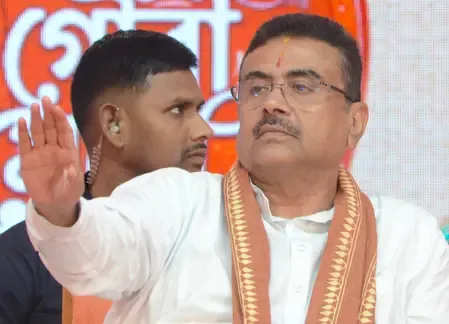
The measures concern applications from non-Muslim refugees who migrated from neighbouring Bangladesh after facing religious persecution. The report attributes the deadline to Suvendu Adhikari, although it does not specify the year.
Subdivision hearings and longer schedules
Until now, CAA application hearings were held at district magistrates’ offices, according to the report. Subdivision-level administrations are being brought into the exercise to speed up verification and decisions on applications.
State government sources said hearings would take place on Saturdays and public holidays as well. A government insider said officers and staff would work on the exercise every day except Sunday until it was completed.
Expanding the number of offices conducting hearings could change where applicants attend verification. The report does not specify which subdivision offices will participate or when each will begin holding hearings.
How applications will be assessed
Applicants are expected to be broadly separated into two groups at their hearings, depending on the documents they can provide. Those whose documents satisfactorily establish their credentials are expected to have their applications cleared at the first hearing.
Cases requiring further examination because necessary documents are not produced initially will be handled differently. Those applicants will be called for a second hearing, after which a decision will be made, according to the report.
The distinction matters for applicants who cannot supply all the required evidence at the first hearing: their cases would continue to further examination rather than being cleared immediately. The report does not list the documents required or give a timetable for second hearings.
Focus on Matua refugee districts
Earlier in the month, the state government decided to deploy 12 Indian Administrative Service officers to accelerate the citizenship process, according to the report. They were assigned to North 24 Parganas and Nadia for two months, with the districts identified as having the largest concentration of Matua refugees in West Bengal.
The Matua community is a socially backward Hindu community with ancestral roots in erstwhile East Pakistan, now Bangladesh. Its members migrated to West Bengal over several decades, settling largely in districts along the India-Bangladesh border.
The Union Home Ministry issued a notification on 19 August empowering district magistrates in eight bordering states and Union Territories, including West Bengal, to issue citizenship certificates under the CAA, the report said. District administrations subsequently began issuing certificates, though the pace was described as slower than expected.
Electoral roll revision postponed
Suvendu Adhikari had previously assured the Matua community that eligible refugees would first receive citizenship under the CAA and then be included in electoral rolls, according to the report. Citizenship processing and electoral roll inclusion are separate steps in that account.
Meanwhile, the office of the Chief Electoral Officer, West Bengal, announced on Friday evening that the state’s special summary revision of electoral rolls, scheduled to start on 23 November, had been postponed indefinitely. The report did not specify the year of the scheduled revision.
Political observers cited in the report suggested the postponement could be connected to the possible inclusion of people newly granted citizenship under the CAA. No official confirmation linking the two developments was reported; the revised timetable for the electoral roll exercise remains to be announced.
Point of View
But speed must not come at the expense of consistent document scrutiny or a fair opportunity to respond. The proposed second hearing makes transparency about evidence requirements especially important for refugees whose records may be incomplete. The electoral roll postponement also deserves a clear official explanation; speculation alone cannot establish a connection to citizenship grants.
NationPress
25 Nov 2026
Frequently Asked Questions
What has changed in West Bengal's CAA citizenship drive?
CAA application hearings are being extended from district headquarters to subdivision-level offices, according to reports. State government sources also said hearings would be held on Saturdays and public holidays.
What happens if a CAA applicant cannot provide documents at the first hearing?
The applicant is expected to be called for a second hearing if the case needs further examination. A decision would be taken after that hearing, according to the report.
Why are North 24 Parganas and Nadia part of the citizenship drive?
The two districts were identified in the report as having West Bengal's largest concentration of Matua refugees. The state previously assigned 12 IAS officers to the districts for two months to speed up processing.
What is the reported deadline for the West Bengal CAA drive?
The report cites a 31 December deadline attributed to Suvendu Adhikari. It does not specify the year.
Is the electoral roll revision postponement linked to CAA citizenship grants?
No official confirmation of a link was reported. Political observers cited in the report suggested a possible connection, but the electoral roll revision was postponed indefinitely without a confirmed link to the citizenship process.