Bengal STF uncovers how JeM aide Arpita Sarkar linked to Shahzad Bhatti Network
Synopsis
West Bengal's STF has cracked open a cross-border espionage operation: a social media influencer was allegedly being groomed by Pakistan's Shahzad Bhatti Network to honey-trap and blackmail senior figures in West Bengal's administration and politics. The handlers used SIM cards from Britain and Mexico to cover their tracks — and bypassed the original recruiter to contact her directly.
Key Takeaways
Arpita Sarkar , a social media influencer, was arrested from Sahibganj, Jharkhand , and is accused of maintaining encrypted contact with the Shahzad Bhatti Network (SBN) , a Pakistan-based terrorist-criminal group.
Hamim Mondal , a suspected Jaish-e-Mohammed (JeM) associate, was arrested from Burdwan town, East Burdwan , and reportedly confessed to introducing Arpita to SBN handlers.
SBN handlers allegedly began contacting Arpita independently , bypassing Hamim, to use her for honey-trapping and blackmailing influential persons in West Bengal's administrative network.
Investigators tracked four Pakistani social media handles — 'Rana', 'Uzair', 'Abid Jat333', and 'Hamad' — linked to the operation.
Handlers reportedly used SIM cards from Britain and Mexico to conceal their identity and location.
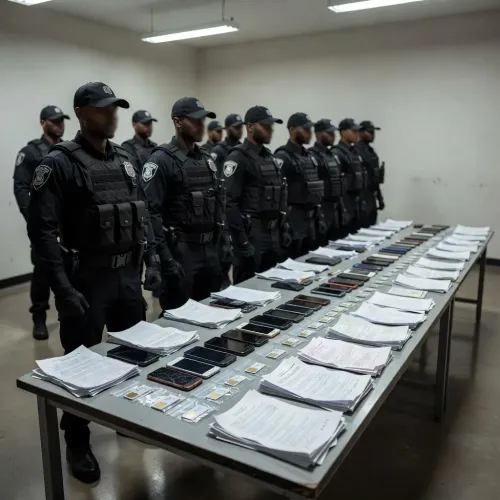
Two mobile phones seized from Arpita are being examined by technical experts to decrypt coded communications.
The Special Task Force (STF) of West Bengal Police has obtained critical intelligence revealing how Arpita Sarkar, the female associate of suspected Jaish-e-Mohammed (JeM) operative Hamim Mondal, maintained regular encrypted communication with the Shahzad Bhatti Network (SBN) — a Pakistan-based terrorist-criminal syndicate — through multiple social media platforms. Both accused were arrested last week following a coordinated STF operation spanning two states.
How the Network Operated
According to state police insiders, Arpita was initially recruited into the network by Hamim. However, at a later stage, SBN handlers began contacting her independently, bypassing Hamim entirely, and issuing instructions directly to her through encrypted and coded messages. Investigators have seized two mobile phones belonging to Arpita and are working with technical experts to decrypt the communications stored on the devices.
The Honey-Trap Angle
Investigating officers suspect that SBN handlers sought to exploit Arpita — also a social media influencer — as a medium for honey-trapping and blackmailing influential individuals, specifically those connected to the administrative network in West Bengal. Initial findings reportedly indicate that Arpita had begun establishing contact with several prominent figures in the state, including politicians, with the stated aim of extracting classified information from them. Her social media reels, circulated across multiple platforms, are believed to have served as a tool to attract targets.
The Arrests
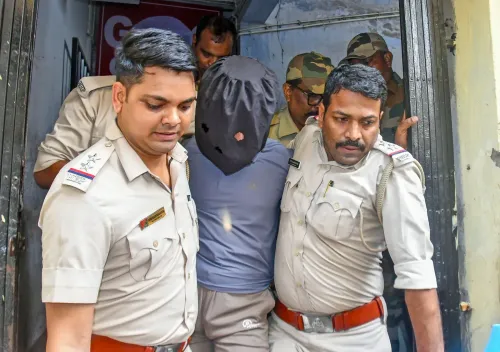
Hamim Mondal was the first to be apprehended, arrested on a Friday morning from Burdwan town in East Burdwan district of West Bengal. Arpita Sarkar was arrested the same night from Sahibganj in neighbouring Jharkhand. During questioning, Hamim reportedly confessed to having introduced Arpita to the SBN handlers, according to sources aware of the investigation.
Pakistani Handlers and Foreign SIM Cards
Following interrogations of both accused, investigators tracked several social media handles — identified as 'Rana', 'Uzair', 'Abid Jat333', and 'Hamad', among others — all of which are believed to belong to Pakistani handlers. Notably, the investigation also revealed that these handlers used SIM cards registered in Britain and Mexico, suggesting a deliberate effort to obscure their digital trail and evade detection.
What Comes Next
With technical experts now working to crack the encrypted exchanges from Arpita's seized phones, investigators are expected to map the full extent of the SBN's reach within West Bengal's administrative and political circles. The case underscores a broader pattern of Pakistan-linked networks deploying social media influencers as covert intelligence assets inside India.
Point of View
Routing instructions through foreign SIM cards, and bypassing the original recruiter to build a direct handler-asset channel: these are hallmarks of a sophisticated intelligence operation, not a fringe criminal network. The honey-trap angle targeting West Bengal's administrative and political circles raises urgent questions about the state's counterintelligence preparedness. That handlers felt confident enough to independently run an asset inside India's political ecosystem — and that this was only uncovered after the primary suspect's arrest — suggests the STF may be looking at a network far wider than two individuals.
NationPress
2 Aug 2026
Frequently Asked Questions
Who are Arpita Sarkar and Hamim Mondal?
Arpita Sarkar is a social media influencer arrested from Sahibganj in Jharkhand, accused of maintaining encrypted contact with the Pakistan-based Shahzad Bhatti Network (SBN). Hamim Mondal is a suspected Jaish-e-Mohammed (JeM) associate arrested from Burdwan town in West Bengal, who reportedly introduced Arpita to SBN handlers.
What is the Shahzad Bhatti Network (SBN)?
The Shahzad Bhatti Network (SBN) is a Pakistan-based terrorist-criminal group that West Bengal STF investigators have linked to the current case. SBN handlers allegedly used encrypted social media communications and foreign SIM cards from Britain and Mexico to direct operatives inside India.
What was Arpita Sarkar's alleged role in the network?
According to investigators, Arpita was allegedly being used by SBN handlers to honey-trap and blackmail influential persons — including politicians and administrative officials — in West Bengal. Her social media reels are believed to have been used as a tool to attract potential targets.
How did investigators identify the Pakistani handlers?
After interrogating both Hamim Mondal and Arpita Sarkar, the STF tracked social media handles identified as 'Rana', 'Uzair', 'Abid Jat333', and 'Hamad', all believed to belong to Pakistani operatives. These handlers reportedly used SIM cards registered in Britain and Mexico to mask their location.
What is the current status of the investigation?
Both Hamim Mondal and Arpita Sarkar are in custody following their arrests last week. Technical experts are working to decrypt coded messages on two mobile phones seized from Arpita. Investigators are expected to use the findings to map the full extent of SBN's network within West Bengal.