Teenage pregnancy tops Bengal's health concerns, says Minister Sharadwat Mukherjee
Synopsis
Bengal's Health Minister has flagged a stark reality: West Bengal leads India in teenage pregnancy, with Murshidabad among the worst-affected districts. As the BJP government marks 100 days in power, the admission is both a public health alert and a political challenge — one that community outreach campaigns alone may not resolve.
Key Takeaways
Dr Sharadwat Mukherjee stated that West Bengal tops India in teenage pregnancy, calling it the state's biggest health concern.
Murshidabad was identified as a district with particularly high prevalence, with the problem concentrated within a specific community, according to the minister.
The state is deploying community doctors in a door-to-door campaign and will leverage the child protection policy to address the issue.
Over 1,100 acres of land have been allocated or approved for the BSF across nine border districts for India-Bangladesh border fencing .
The BJP -led Bengal government is set to mark 100 days in office , with the reopening of 16 closed jute mills among key achievements.
Infrastructure highlights include the Sevok-Rangpo railway project and a 100-bed ESI hospital in West Midnapore .
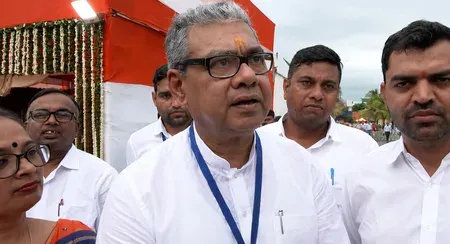
West Bengal Health Minister Dr Sharadwat Mukherjee has flagged teenage pregnancy as the state's most pressing public health challenge, stating that West Bengal leads the country on this indicator. The warning came as the BJP-led state government prepared to mark 100 days in office on Tuesday, 19 August 2025, with a report card spanning health, border security, and infrastructure.
Bengal Tops Teenage Pregnancy List, Minister Warns
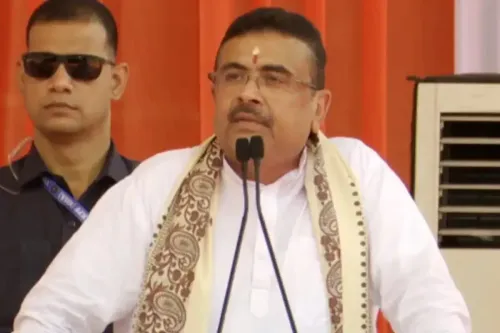
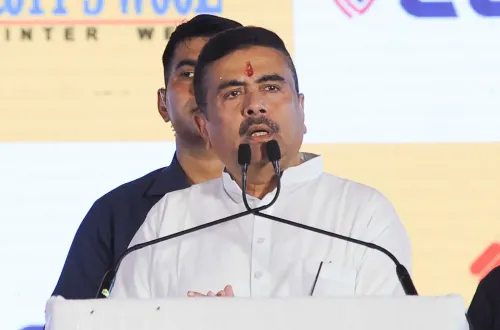
'Teenage pregnancy is the biggest concern. Unfortunately, Bengal tops the list. It is a serious problem, and we are making every possible effort to prevent it,' Dr Mukherjee said. He identified Murshidabad as one of the districts where the problem is especially concentrated, noting that in certain areas the issue is linked to a specific community and 'cannot be eliminated overnight.'
The minister outlined a multi-pronged response: local community doctors are being deployed in a door-to-door outreach campaign, and the state's child protection policy is expected to serve as an additional deterrent. 'We have to eliminate this problem from its roots,' he said. This comes amid broader national concerns over adolescent maternal health, where states with high poverty and low female literacy rates tend to record disproportionately elevated teenage birth rates.
Border Security Land Transfer: A Key 100-Day Achievement
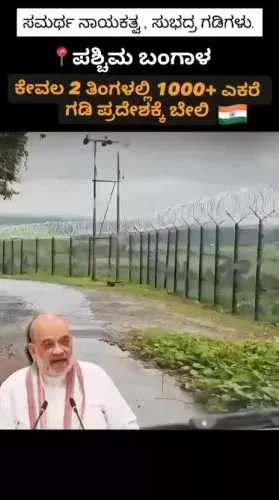
Among the government's highlighted achievements, sources at the state Secretariat in Nabanna pointed to significant progress on handing over land to central security forces for border fencing. According to data from the state Land and Land Reforms Department, more than 767 acres of land have already been transferred to the Border Security Force (BSF) across nine border districts to fence previously unfenced stretches of the India-Bangladesh border.
The state Cabinet has additionally approved the transfer of around 362 acres of land, bringing the total BSF allocation to over 1,100 acres. Separately, more than 44 acres have been allotted to the Sashastra Seema Bal (SSB) in Darjeeling, Jalpaiguri, and Alipurduar districts, while another 110 acres in Darjeeling have been earmarked for the battalion headquarters of the Indo-Tibetan Border Police (ITBP).
Infrastructure Push and Jute Mill Reopenings
The 100-day report is also expected to highlight expedited land allocation for key infrastructure projects, including the Sevok-Rangpo broad-gauge railway project, a 100-bed ESI hospital in West Midnapore district, government warehouses, and power substations. The government is set to detail the foundation stones laid for various projects, along with associated investment figures and estimated employment generation.
Notably, the reopening of 16 closed jute mills within the first 100 days is expected to feature prominently in the government's list of accomplishments — a significant signal for a sector that has historically been central to Bengal's industrial identity and labour economy.
What Comes Next
With the 100-day milestone serving as a political benchmark, the Bengal government faces scrutiny on whether stated targets — from teenage pregnancy reduction to border fencing completion — will be backed by measurable outcomes. The door-to-door health campaign and the child protection policy are yet to be assessed for reach and impact, and civil society groups are likely to demand district-level data before endorsing the government's health claims.
Point of View
But the two tracks require very different accountability frameworks. Until the government publishes district-level adolescent birth rate data and independent assessments of its outreach reach, the admission risks being a headline without a roadmap.
NationPress
2 Oct 2026
Frequently Asked Questions
Why is teenage pregnancy a concern in West Bengal?
West Bengal reportedly leads India in teenage pregnancy rates, according to Health Minister Dr Sharadwat Mukherjee. The problem is particularly acute in districts like Murshidabad, where it is concentrated within certain communities, compounding challenges around female education and maternal health.
What is the West Bengal government doing to address teenage pregnancy?
The state is running a door-to-door campaign using local community doctors to engage directly with affected populations. The government's child protection policy is also expected to play a role, though specific targets and timelines have not yet been publicly detailed.
How much land has West Bengal transferred to the BSF for border fencing?
More than 767 acres have already been handed over to the Border Security Force across nine border districts, with the state Cabinet approving an additional 362 acres, taking the total allocation to over 1,100 acres for fencing the India-Bangladesh border.
What are the key achievements of the BJP government's first 100 days in West Bengal?
The government's 100-day report highlights the BSF land transfer for border fencing, the reopening of 16 closed jute mills, land allocation for the Sevok-Rangpo railway project, a 100-bed ESI hospital in West Midnapore, and allotments to the SSB and ITBP for border security infrastructure.
Which districts are covered under the BSF land transfer in West Bengal?
Land has been transferred to the BSF across nine border districts. Additionally, over 44 acres have been allotted to the SSB in Darjeeling, Jalpaiguri, and Alipurduar, and 110 acres in Darjeeling have been earmarked for the ITBP's battalion headquarters.