West Bengal anti-social activities law 2026 comes into force

Synopsis
West Bengal's sweeping new public safety law — allowing preventive detention for up to a year and property confiscation — came into force on 13 July 2026. With an advisory board headed by a High Court judge as the only check on police powers, the Act has already drawn fierce opposition criticism and near-certain legal challenges.
Key Takeaways
The West Bengal Public Safety and Control of Anti-Social Activities Act, 2026 came into force after midnight on 13 July 2026 .
The Act was passed by the West Bengal Assembly on 29 June 2026 and received the Governor's assent before being notified.
Key provisions include preventive detention for up to one year and property confiscation for offenders.
An advisory board headed by a serving or former Calcutta High Court judge will oversee preventive detention decisions; detainees may appoint a representative.
An 'externment order' allows a District Magistrate or senior police officer to expel a person from a specific area or district for up to one year .
Opposition parties and civil society groups have called the preventive detention clause draconian ; CM Suvendu Adhikari has defended it as targeting repeat offenders, not ordinary citizens.
The West Bengal Public Safety and Control of Anti-Social Activities Act, 2026, a sweeping new state law targeting corruption, organised crime, and rowdy behaviour, came into force after midnight on Monday, 13 July 2026. The legislation, passed by the West Bengal Legislative Assembly on 29 June 2026 and subsequently assented to by the West Bengal Governor, grants significantly expanded powers to the police and general administration to curb anti-social conduct across the state.
Key Provisions of the New Law
The Act distinguishes itself from the Bharatiya Nyaya Sanhita (BNS), 2023 in two principal ways. The first and most contested provision allows for preventive detention of up to one year for any individual deemed a danger to public safety. The second empowers the state government to confiscate the property of persons convicted under the relevant BNS provisions.
Additionally, the law introduces an 'externment order' mechanism, under which a District Magistrate or a police officer of the rank of Superintendent or higher can mandate the removal of a known criminal or troublemaker from a specific area or an entire district for a period not exceeding one year. Police also gain the authority to expel or prohibit individuals from entering designated areas if their presence is assessed as a risk to public order.
Oversight Mechanism: The Advisory Board
To prevent arbitrary use of the preventive detention clause, the Act mandates the constitution of an advisory board that will assess whether detention in each individual case is justified. The board will be headed by a serving or former judge of the Calcutta High Court and will include two additional members qualified as High Court judges. Crucially, a detainee will be entitled to appoint a representative to argue their case before the board.
Opposition Calls It Draconian
Opposition parties and a section of civil society have sharply criticised the preventive detention provision, arguing it hands police unchecked authority to detain individuals based on subjective assessments — and could effectively be used to silence political opponents or critical voices. Critics contend that the broad framing of 'danger to public safety' leaves the clause open to misuse.
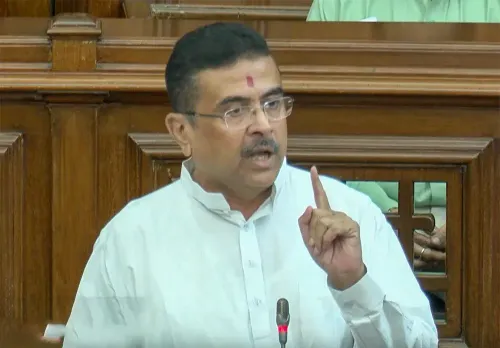
The ruling Bharatiya Janata Party (BJP), however, has pushed back, asserting that preventive detention will only be invoked after following a detailed procedural framework. Chief Minister Suvendu Adhikari has personally sought to allay public concern, stating that the provision is not intended for 'gentlemen' but for individuals with repeated criminal antecedents.
What Happens Next
With the Act now in force, implementation will depend heavily on how the advisory board is constituted and how swiftly the state moves to operationalise the externment and detention provisions. Legal challenges from civil liberties groups are widely anticipated, and the Calcutta High Court may be called upon to adjudicate the constitutional validity of the preventive detention clause. This law is being watched closely as a potential template — or cautionary tale — for other states navigating the balance between public order and civil liberties.
Point of View
And the advisory board safeguard — however well-intentioned — is unlikely to fully insulate it from legal challenge. The preventive detention clause mirrors provisions that courts have historically scrutinised closely under Articles 21 and 22 of the Constitution. What is notably absent from the government's defence is any independent audit mechanism or sunset review; the assurance that the law targets only 'repeat criminals' rests entirely on executive discretion. If the Calcutta High Court takes up a challenge, the outcome could set a precedent that affects similar legislation in other states.
NationPress
12 Oct 2026
Frequently Asked Questions
What is the West Bengal Public Safety and Control of Anti-Social Activities Act, 2026?
It is a new state law that came into force on 13 July 2026, granting expanded powers to the West Bengal police and administration to combat corruption, organised crime, and rowdy behaviour. The Act enables preventive detention for up to one year, property confiscation, and externment orders against known troublemakers.
What is the preventive detention provision in the new Bengal law?
Under the Act, a person identified as a danger to public safety can be detained for up to one year without a regular criminal trial. The detention must be reviewed by an advisory board headed by a serving or former Calcutta High Court judge, and the detainee is entitled to appoint a representative before the board.
Why are opposition parties opposing the West Bengal anti-social activities law?
Opposition parties and civil society groups argue that the preventive detention clause is draconian and gives police unchecked authority to detain individuals on subjective grounds. Critics contend the provision could be weaponised to silence political opponents or dissenting voices.
What is an externment order under the new West Bengal law?
An externment order allows a District Magistrate or a police officer of Superintendent rank or above to direct a known criminal or troublemaker to leave a specific area or an entire district for a period not exceeding one year, if they are assessed as posing a risk to public order.
How does the new West Bengal law differ from the Bharatiya Nyaya Sanhita?
The Act distinguishes itself from the Bharatiya Nyaya Sanhita (BNS), 2023 in two key ways: it introduces state-level preventive detention for up to one year, and it empowers the state government to confiscate property of offenders by invoking relevant BNS provisions — powers not directly available under the central code.