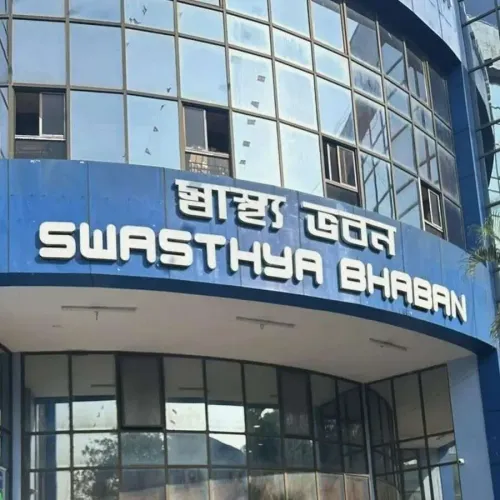
West Bengal colour-coded ID cards for healthcare staff: What each colour means

Synopsis
West Bengal is rolling out a colour-coded ID card system across all state-run hospitals and medical colleges in just four days — purple for doctors, brown for nurses, deep maroon for security. It is a sweeping identification overhaul for the entire public healthcare workforce, driven by a directive from the state's Director of Health Services.
Key Takeaways
The West Bengal health department began issuing colour-coded ID cards to all state healthcare personnel from 26 May 2025 , with completion targeted by 28 May 2025 .
Doctors receive purple cards; nursing staff get brown ; technicians are assigned orange ; administrative staff carry black .
Other categories: support staff (bottle green), security personnel (deep maroon), miscellaneous staff (mustard yellow), outsourced personnel (blue).
A dedicated nodal officer will be appointed in each building of every state medical entity to oversee the rollout.
Authorities have been directed to provide a high-speed broadband connection and office desk for registration at each site.
The West Bengal health department has begun issuing colour-coded official identity cards to all categories of personnel working across state-run medical entities — including government medical colleges, hospitals, and state-run health facilities. The rollout commenced on Monday, 26 May 2025, and is scheduled for completion by 28 May 2025, giving authorities a tight four-day implementation window.
The Colour Code System Explained
A formal notification issued by the Director of Health Services specifies distinct colours for each staff category. Doctors will carry purple cards, while nursing staff will be identified by brown. Technicians have been assigned orange, and administrative staff will carry black cards.
The remaining categories follow a similarly specific palette: support staff will wear bottle green, security personnel will carry deep maroon, miscellaneous staff will be assigned mustard yellow, and outsourced personnel will carry blue cards.
Why the Initiative Was Launched
According to the official notification, the colour-coded system is intended to maintain a professional appearance, enforce discipline, and ensure proper identification of all deployed personnel within state medical premises. The move comes following directives from the higher authorities of the state health department, though the notification does not specify what triggered the urgency of the four-day deadline.
Notably, this initiative arrives in the broader context of ongoing scrutiny over security and accountability at government hospitals in West Bengal — a concern that has drawn public attention in recent months.
How the Rollout Is Being Managed
Each building within a state medical entity will have one dedicated nodal officer authorised to coordinate and supervise the registration process. Medical entity authorities have been directed to arrange a high-speed broadband connection and a dedicated office desk to facilitate smooth implementation.
All employees have been advised to register their details at the designated desk immediately, given the compressed timeline. The health department has urged institutional authorities to notify staff without delay to meet the 28 May deadline.
What This Means for State Healthcare
The colour-coded ID system is a structural step toward formalising staff identification at a scale that covers the entire public healthcare workforce in West Bengal. If implemented effectively, it could streamline access control, reduce impersonation risks, and improve coordination during medical emergencies. The real measure of its success, however, will lie in consistent enforcement beyond the initial rollout phase.
Point of View
But in the context of West Bengal's government hospitals — where security lapses and staff accountability have been contested issues — it carries real operational weight. The four-day deadline is unusually compressed for a rollout spanning every state medical college and hospital, raising questions about whether registration infrastructure will be ready in time. The scheme's long-term value depends entirely on enforcement: without checks at entry points and consequences for non-compliance, the cards risk becoming a box-ticking exercise rather than a genuine accountability mechanism.
NationPress
10 Oct 2026
Frequently Asked Questions
What is the West Bengal colour-coded ID card system for healthcare staff?
It is an initiative by the West Bengal health department to issue official identity cards with distinct colours for each category of state healthcare personnel. The system covers doctors, nurses, technicians, administrative staff, security, support, miscellaneous, and outsourced workers across all state-run medical colleges and hospitals.
What colour code has been assigned to doctors and nurses in West Bengal?
Doctors have been assigned purple ID cards and nursing staff will carry brown cards. Technicians receive orange, administrative staff black, support staff bottle green, security personnel deep maroon, miscellaneous staff mustard yellow, and outsourced personnel blue.
When will the colour-coded ID card rollout be completed in West Bengal?
The rollout began on 26 May 2025 and is scheduled to be completed by 28 May 2025 — a four-day window. All employees have been asked to register their details at designated desks immediately.
Why is West Bengal introducing colour-coded ID cards for hospital staff?
According to the official notification from the Director of Health Services, the system is intended to maintain a professional appearance, enforce discipline, and ensure proper identification of all deployed personnel within state medical premises.
Who is responsible for implementing the ID card system at each hospital?
One dedicated nodal officer will be authorised per building in each state medical entity to coordinate and supervise the registration and issuance process. Authorities have also been asked to arrange high-speed broadband and a dedicated office desk for the purpose.