Bengaluru to get India's 2nd largest cricket stadium at Suryanagar
Synopsis
Karnataka is betting on an 80,000-seat cricket stadium at Suryanagar — funded entirely by the Karnataka Housing Board through ₹20,000 crore in land sales, with zero state budget outlay. If built as planned, it would be India's second-largest cricket venue, behind only the Narendra Modi Stadium in Gujarat. The move also signals a striking new direction for a housing board pivoting into sports infrastructure.
Key Takeaways
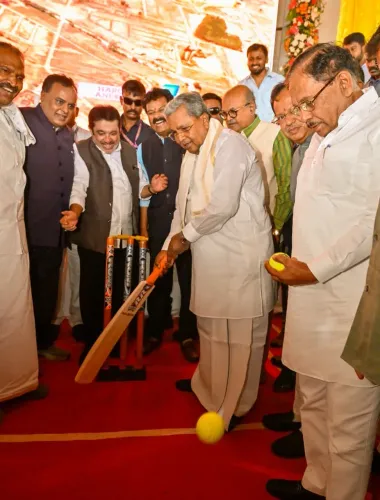
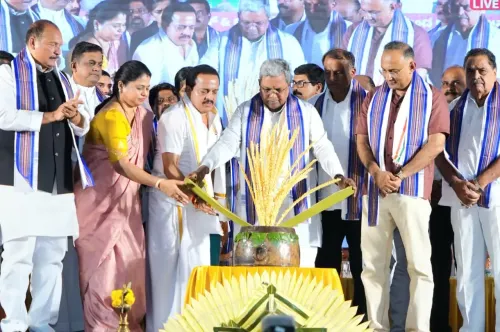
Karnataka CM Siddaramaiah laid the foundation stone for an 80,000-seat international cricket stadium at Suryanagar , near Bengaluru , on 23 May 2025 .
The stadium is projected to be India's second-largest , behind the Narendra Modi Stadium in Gujarat (capacity ~90,000).
The project will be funded entirely by the Karnataka Housing Board (KHB) , with no state government funds — financed via an estimated ₹20,000 crore from KHB land sales.
The event also saw the launch of the 'Namma Mane' housing scheme and foundation stones for two residential complexes.
The Housing Department has distributed more than three lakh houses and sites across Karnataka in the current phase.
Administrative approval granted for connecting roads in Jigani hobli to support area development.
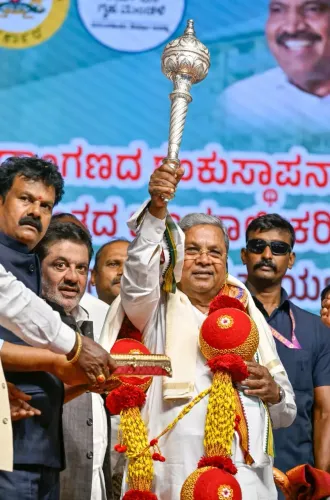
Karnataka Chief Minister Siddaramaiah on Saturday, 23 May laid the foundation stone for an international-standard cricket stadium at Suryanagar, near Bengaluru, which the state government claims will become the second-largest cricket stadium in India with a seating capacity of 80,000. The project, to be funded entirely by the Karnataka Housing Board (KHB), is being positioned as a catalyst for sports infrastructure, tourism, and employment in the region.
Key Developments at the Event
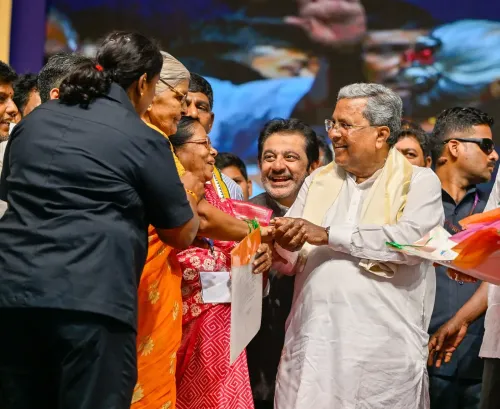
The foundation-laying ceremony at Suryagram was part of a broader event organised jointly by the Housing Department and the KHB, which also saw the launch of the Chief Minister's 'Namma Mane' housing scheme, foundation stones for the Suryashine and Surya Divine residential complexes, and the symbolic distribution of housing sites to landowners who provided land for the housing project.
Deputy Chief Minister D.K. Shivakumar, Home Minister G. Parameshwara, Housing Minister B.Z. Zameer Ahmed Khan, KHB Chairman and MLA Shivalingegowda, and several senior legislators and officials were present at the ceremony.
How the Stadium Will Be Funded
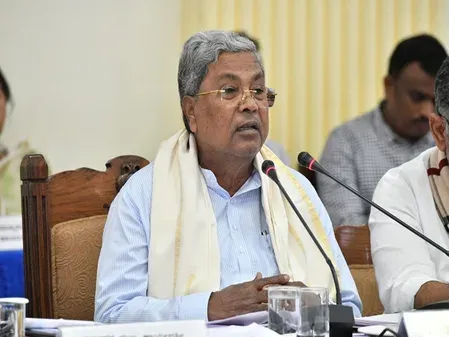
Siddaramaiah emphasised that the stadium would be constructed without any financial assistance from the state government, with the KHB bearing the entire cost. He cited estimates suggesting KHB could generate nearly ₹20,000 crore through the sale of its vacant residential sites, which would finance the project. He praised Housing Minister Zameer Ahmed Khan and KHB Chairman Shivalingegowda for spearheading the initiative.
Why the Stadium Matters for Bengaluru
Siddaramaiah drew a comparison with the Narendra Modi Stadium in Gujarat, which holds approximately 90,000 spectators, to underscore the scale of Karnataka's ambition. The proposed 80,000-seat venue would, if completed as planned, rank second nationally. The Chief Minister argued the stadium would accelerate tourism growth, improve the local economy of surrounding villages, and generate employment — a multi-sector development argument that goes beyond cricket alone.
Notably, this marks a significant strategic shift for the KHB, which has traditionally focused on housing construction. Venturing into large-scale sports infrastructure represents a new mandate for the board, according to Siddaramaiah.
Housing and Connectivity Announcements
Alongside the stadium, Siddaramaiah announced that administrative approval has been granted for key connecting roads in Jigani hobli to support the area's development, with officials instructed to begin work soon. He also noted that the Housing Department has already distributed more than three lakh houses and residential sites across Karnataka during the current phase. 'Every individual dreams of having a roof over their head. With land prices rising sharply, KHB is providing affordable housing sites for poor and middle-class families,' he said.
What Comes Next
No specific timeline for the stadium's completion was announced at the event. The project's execution will depend on KHB's ability to realise the projected ₹20,000 crore from land sales. Industry observers are likely to watch whether the funding model holds, given that large public sports infrastructure projects in India have historically faced cost overruns and delays. The connecting road approvals in Jigani hobli are expected to move forward in the near term as a precursor to broader area development.
Point of View
No legislative scrutiny of a line item — but it rests on a single assumption: that ₹20,000 crore in land sales will materialise on schedule. Public housing boards across India have a mixed record on monetising land assets at projected values, particularly when market conditions shift. The stadium itself, if delivered, would be a genuine infrastructure win for Bengaluru, a city that has long lacked a world-class cricket venue of its own. But the absence of a disclosed construction timeline and the novelty of KHB entering sports infrastructure are two variables that deserve closer tracking than the ceremony's optics suggest.
NationPress
9 Oct 2026
Frequently Asked Questions
Where will Karnataka's new international cricket stadium be built?
The stadium will be built at Suryanagar, near Bengaluru, Karnataka. The foundation stone was laid by Chief Minister Siddaramaiah on 23 May 2025 at an event in Suryagram.
What will be the seating capacity of the new Bengaluru cricket stadium?
The proposed stadium will have a seating capacity of 80,000, which would make it the second-largest cricket stadium in India, after the Narendra Modi Stadium in Gujarat, which holds approximately 90,000 spectators.
Who will fund the Suryanagar cricket stadium in Bengaluru?
The stadium will be funded entirely by the Karnataka Housing Board (KHB), with no financial contribution from the state government. KHB is expected to generate nearly ₹20,000 crore through the sale of its vacant residential sites to finance the project.
What other projects were announced alongside the stadium?
The same event saw the launch of the 'Namma Mane' housing scheme, foundation stones for the Suryashine and Surya Divine residential complexes, and administrative approval for connecting roads in Jigani hobli. The Housing Department has also distributed over three lakh houses and sites across Karnataka in the current phase.
When will the Bengaluru cricket stadium be completed?
No specific completion timeline was announced at the foundation-laying ceremony on 23 May 2025. The project's progress will depend on KHB's ability to realise the projected ₹20,000 crore from land sales.