Shekhawat Congratulates Bhapang Artist Ghafuruddin on Padma Shri
Synopsis
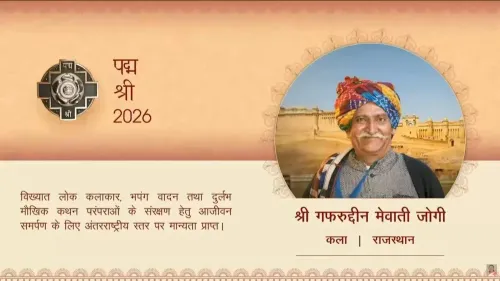
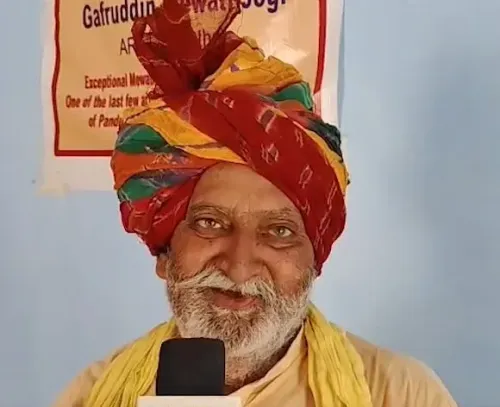
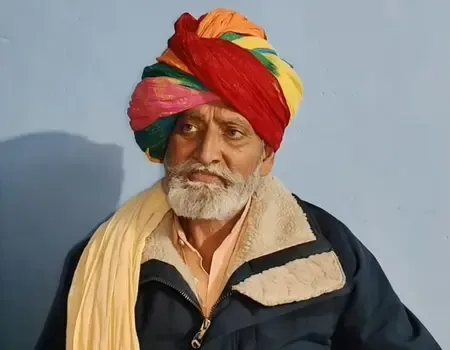
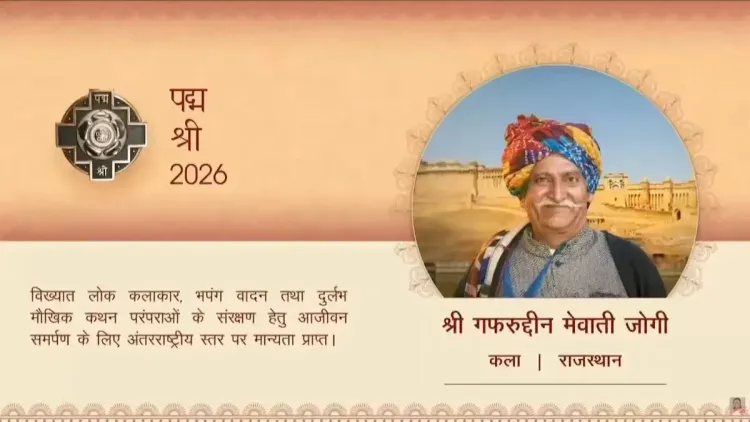
Union Culture Minister Gajendra Singh Shekhawat congratulated Rajasthani folk artist Ghafuruddin Mewati Jogi on receiving the Padma Shri at the 2026 Padma Awards for his decades-long work in popularising the traditional Bhapang string instrument globally, calling his contribution to folk culture 'exemplary for all.'
Key Takeaways
Union Culture and Tourism Minister Gajendra Singh Shekhawat publicly congratulated folk artist Ghafuruddin Mewati Jogi on 25 May 2026 .
Ghafuruddin Mewati Jogi received the Padma Shri , India's fourth-highest civilian honour, as part of the Padma Awards 2026 .
He is credited with bringing the Bhapang — a single-stringed folk instrument from the Mewat region — to national and international audiences.
The Padma Awards were instituted in 1954 and are conferred annually by the President of India for distinguished contributions across disciplines.
The recognition is expected to boost visibility and institutional support for folk traditions of Rajasthan and the broader Mewat cultural belt.
Union Culture and Tourism Minister Gajendra Singh Shekhawat on Monday, 25 May 2026 congratulated Rajasthani folk artist Ghafuruddin Mewati Jogi on receiving the Padma Shri, India's fourth-highest civilian honour, for his lifelong work in popularising the traditional string instrument known as the Bhapang.
Context
Posting on X, Minister Shekhawat wrote in Hindi: 'पारंपरिक वाद्य यंत्र भपंग आज दुनिया के लिए नया नहीं है' ('The traditional instrument Bhapang is no longer unknown to the world'), crediting Ghafuruddin Mewati Jogi with bringing it global recognition. He described the artist's dedication to his craft as 'illuminated by the light of inspiration' and called his contribution to folk culture 'exemplary for all of us.'
The minister extended his 'humble congratulations and best wishes' to the awardee, tagging the post with #PadmaAwards2026.
Policy Backdrop
The Padma Awards were instituted in 1954 and are conferred annually by the President of India to recognise distinguished service across disciplines including arts, culture, science and public affairs. The Padma Shri is the fourth tier in the hierarchy, below the Padma Vibhushan and Padma Bhushan.
Successive central governments have used the Padma honours to spotlight practitioners of regional folk traditions and intangible cultural heritage. Rajasthan, with its rich repository of performing arts, has over the decades produced several Padma-recognised folk musicians and craftspeople.
The Artist and the Instrument
Ghafuruddin Mewati Jogi is widely credited with taking the Bhapang — a single-stringed drone instrument indigenous to the Mewat region straddling Rajasthan and Haryana — beyond its rural origins to national and international stages. The instrument, played by tightening or loosening a string attached to a small drum resonator, produces a distinctive twanging sound associated with the Jogi community's oral traditions.
His performances have been instrumental in keeping alive a musical form that might otherwise have receded from public memory, making him a key figure in the preservation of intangible cultural heritage in northwestern India.
Stakeholders and Impact
The recognition is significant for the broader community of folk artists in Rajasthan and the Mewat belt, many of whom practise hereditary art forms with limited institutional support. A Padma honour typically increases visibility for an artist's genre, attracting cultural festival invitations, government grants and academic documentation interest.
The Ministry of Culture, which Shekhawat heads, oversees bodies such as the Sangeet Natak Akademi and the Zonal Cultural Centres that fund and promote exactly these folk traditions. His public acknowledgement signals continued ministerial attention to grassroots performing arts.
What's Next
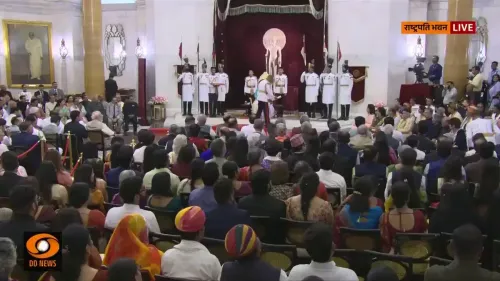
The complete Padma Awards 2026 list is expected to be released in full by the Government of India, with the formal investiture ceremony typically held at Rashtrapati Bhavan later in the year. Cultural observers will watch whether the Ministry of Culture announces any associated programmes — performances, documentation projects or master-class series — to leverage the heightened public interest in awardees such as Ghafuruddin Mewati Jogi.
For folk artists working in endangered or niche traditions, a Padma Shri can serve as a catalyst for institutional patronage, and the ministry's response in the weeks ahead will indicate how substantively the honour translates into sustained support for the Bhapang and its practitioners.
Point of View
The minister — himself a Rajasthan MP — reinforces a political narrative that links grassroots cultural preservation with national identity. The post also signals the Ministry of Culture's intent to position intangible heritage recognition as a policy priority ahead of what is likely to be a fuller announcement of the 2026 Padma list. Whether this translates into concrete programme funding for Bhapang and Mewati folk traditions will be the more telling measure of commitment.
NationPress
22 Sept 2026
Frequently Asked Questions
Who is Ghafuruddin Mewati Jogi and why did he get the Padma Shri?
Ghafuruddin Mewati Jogi is a Rajasthani folk artist who received the Padma Shri in 2026 for popularising the traditional Bhapang string instrument from the Mewat region across India and internationally.
What is the Bhapang instrument?
The Bhapang is a single-stringed drone instrument indigenous to the Mewat region of Rajasthan and Haryana. It is played by adjusting the tension of a string attached to a small drum resonator and is associated with the oral traditions of the Jogi community.
What is the Padma Shri award?
The Padma Shri is India's fourth-highest civilian honour, instituted in 1954. It is conferred annually by the President of India to recognise distinguished contributions in fields including arts, culture, science and public service.
What did Gajendra Singh Shekhawat say about the Padma Shri award?
Minister Shekhawat said that the Bhapang is no longer unknown to the world thanks to Ghafuruddin Mewati Jogi, describing the artist's dedication as 'illuminated by the light of inspiration' and calling his contribution to folk culture 'exemplary for all.'
When are the Padma Awards 2026 ceremony and full list expected?
The complete Padma Awards 2026 list is expected to be officially released by the Government of India, with the formal investiture ceremony typically held at Rashtrapati Bhavan later in the year.